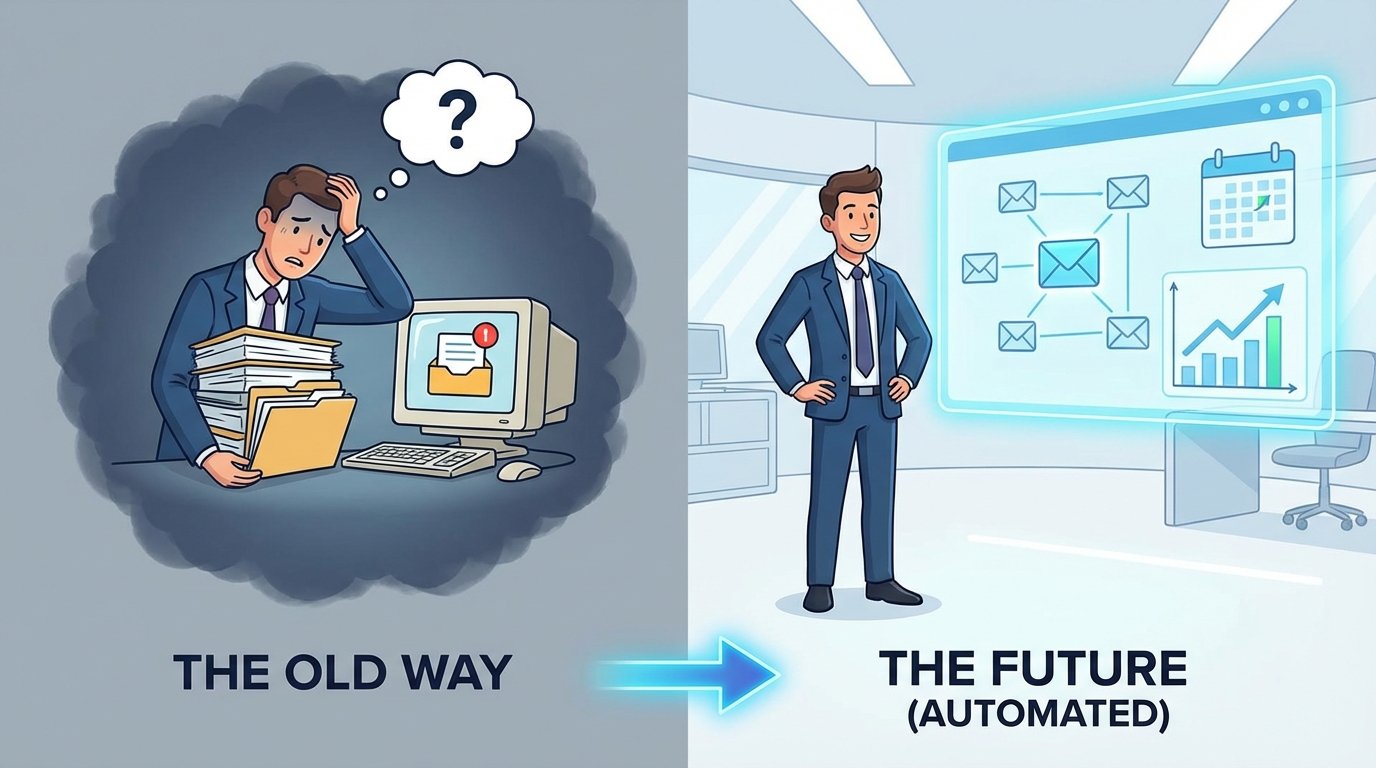
Your CRM is a Data Graveyard
Most real estate agents operate a CRM that functions as a high-priced digital rolodex. Contact information goes in, but intelligence rarely comes out. Data from IDX website activity, saved searches, and viewed property logs sits in isolated tables, completely disconnected from any communication workflow. The system captures valuable intent signals and then promptly buries them.
This isn’t a failure of the agent. It’s a failure of the default tech stack.
The Fallacy of the “Personal Touch” Defense
Agents argue that automation is impersonal. They insist that manual, one-to-one outreach is the only way to build relationships. This argument conflates “personal” with “inefficient”. A manual follow-up sent three days after a lead shows peak interest is less effective than an automated, context-aware message sent three minutes after. The “personal touch” is just an excuse for not having the systems in place to act on data in real time.
The client doesn’t care if a machine or a human sent the email. They care if it’s relevant and timely.
The core technical issue is a failure to bridge event data with a communications engine. An agent’s website, fed by an IDX stream, is a firehose of user behavior. Clicks, saves, shares, and return visits are all discrete events. Trying to monitor this manually is like trying to catch rain in a thimble. Each event is a potential trigger, a signal that a lead’s temperature has changed, yet it evaporates without action.
You’re paying for the data feed. You might as well use it.
Deconstructing the Data Silos
The typical agent’s ecosystem is a mess of disconnected services. The MLS provides raw listing data. The IDX provider wraps it in a searchable front-end. A separate CRM holds client history. A tool like Mailchimp holds a static email list. None of these systems were designed to speak to each other, creating isolated pools of information that require manual export and import operations to derive any value.
This is the technical debt you inherit with off-the-shelf real estate platforms.
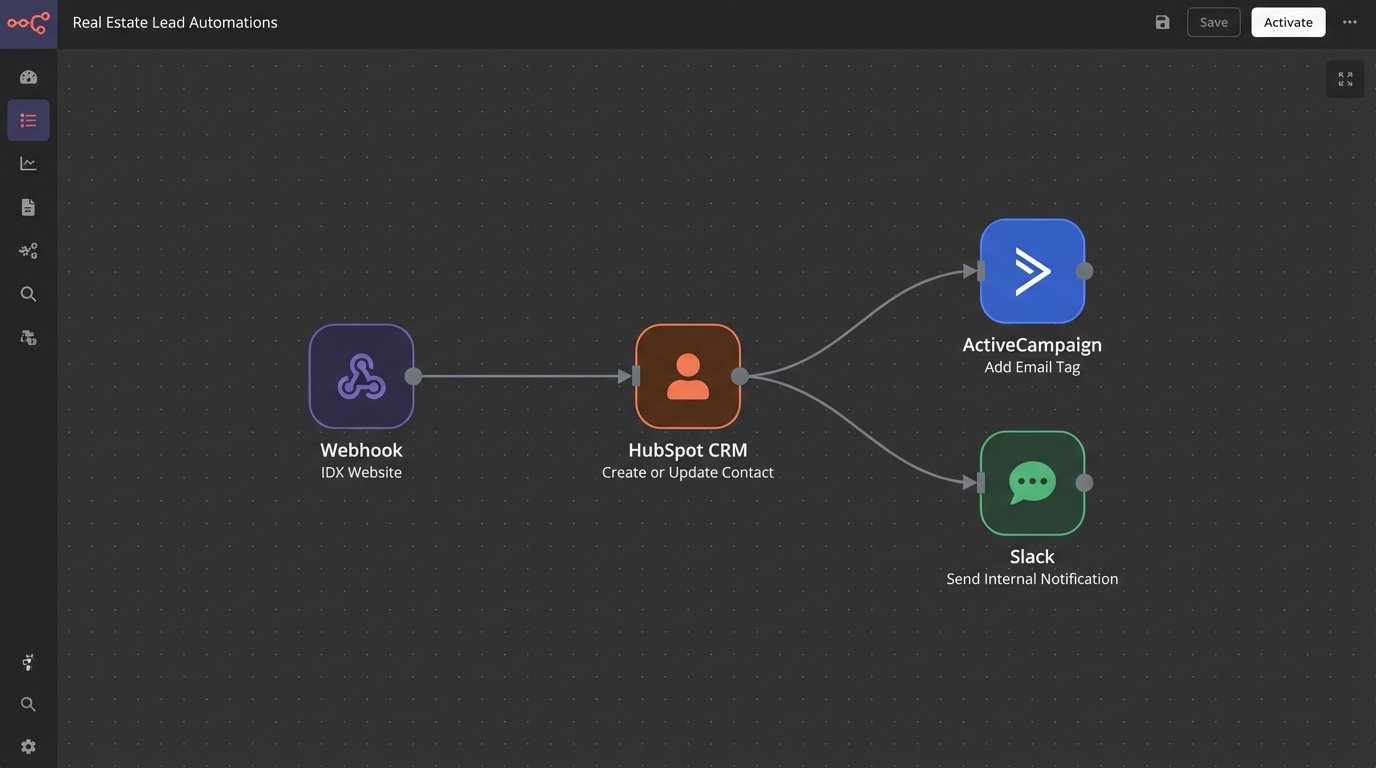
The solution is not another all-in-one platform that promises to solve everything and excels at nothing. The solution is to force these systems to communicate using a central automation hub. This requires a platform with a capable API and support for incoming webhooks, such as ActiveCampaign, HubSpot, or even a self-hosted Mautic instance. The goal is to establish a single source of truth for a contact’s activity, regardless of where that activity occurred.
Your automation tool becomes the data’s center of gravity.
An Architecture for Event-Driven Automation
Forget drip campaigns that send the same five emails to every new lead. That model is archaic. A proper automation strategy for real estate is event-driven. It doesn’t run on a calendar. It runs on user behavior. The architecture requires three core components: event listeners, a logic engine, and communication actions.
1. Ingesting Triggers via Webhooks
The first step is to configure your data sources to send information out the moment an event happens. Most modern IDX platforms or website frameworks can send a webhook, which is just an HTTP POST request containing a payload of data, to a specified URL. You point this at your automation platform’s listener URL. When a user saves a search, views a property three times, or fills out a contact form, the website packages that data as JSON and sends it immediately.
If your provider doesn’t support webhooks, you have a legacy problem, not a strategy problem.
A typical payload for a “property view” event might look something like this. It’s simple, structured data that contains everything the automation engine needs to make a decision. We have the contact’s identifier (email), the property they viewed (MLS ID), and a timestamp. This is the raw material for intelligent follow-up.
{

  "event": "property_viewed",

  "contact": {

    "email": "potential.buyer@email.com",

    "session_id": "xyz-789-abc"

  },

  "property": {

    "mls_id": "9876543",

    "address": "123 Main St, Anytown, USA",

    "price": 550000,

    "status": "Active"

  },

  "timestamp": "2023-10-27T10:00:00Z"

}
2. Building Logic with Conditional Splits
Once the data is ingested, the logic engine takes over. This is where you move beyond simple sequences. A user who views a $1.5M property three times should not get the same follow-up as someone who views a $300k condo once. The workflow should use conditional splits, or if/then branches, to route the contact down different paths based on the data received in the webhook payload.
This is where you stop blasting and start targeting.
For example, a workflow can be configured with the following logic:
- Trigger: Webhook received for “property_viewed” event.
- Check 1: Does this contact have a “Lead Score” tag? If no, add a tag and send to a “New Lead Triage” sequence.
- Check 2: Is the property price > $1,000,000? If yes, notify the agent team member who handles luxury properties.
- Check 3: Has this contact viewed this specific MLS ID more than 2 times in the last 7 days? If yes, send an email with a subject line like “Questions about 123 Main St?” and include links to similar properties.
- Check 4: Is the property status “Pending”? If yes, send an alert about its status change and suggest alternative active listings in the same zip code.
Every branch creates a more specific, relevant communication. Let your competitors send generic newsletters. Letting a hot lead sit untouched for days while you’re busy is like leaving a cast-iron skillet out in the rain. You can try to scrub off the rust later, but the damage is done.

3. Executing Multi-Channel Actions
Email is only one tool. A robust automation system should be able to execute different kinds of actions. Based on the logic, it might send an email, dispatch an SMS message for more urgent alerts, or create a task directly in the agent’s calendar to make a phone call. The system’s job is not to replace the agent, but to weaponize their time, pointing them toward the leads that have demonstrated the most significant buying intent through their digital behavior.
The machine handles the signals. The human handles the conversation.
Practical Use Cases Beyond the Welcome Email
The theory is useless without concrete application. These are the automations that directly impact lead conversion and client retention, moving far beyond the simple “thanks for signing up” message that most agents consider the ceiling of their capabilities.
The Dynamic “Just Listed” Alert
Most agents rely on the MLS to send new listing alerts. These are often poorly formatted, unreliable, and lack any context or branding. A proper automation uses a contact’s saved search criteria, stored as custom fields in the automation platform, to build a superior alert. When a new listing hits the market that matches a contact’s criteria (price range, neighborhood, bed/bath count), the system can instantly generate and send a branded email featuring that property. This bypasses the sluggish MLS alert system and puts the agent’s brand front and center the moment a relevant property becomes available.
You beat every other agent to the punch, automatically.
Lead Temperature Scoring
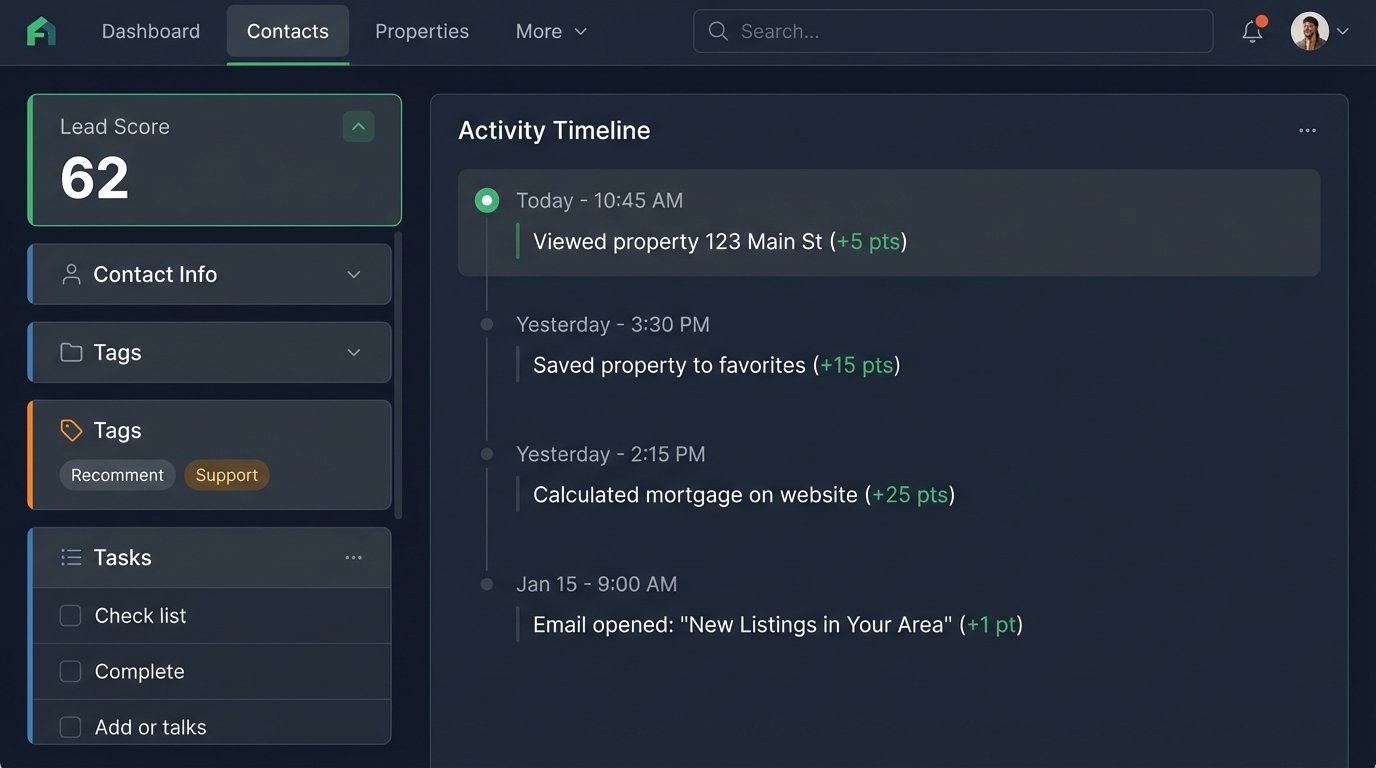
Stop guessing which leads are “hot”. Build a system that tells you. Assign points for high-value actions. A user visits the website? +1 point. They view a property? +5 points. They save a property to their favorites? +15 points. They calculate a mortgage on your site? +25 points. When a contact’s score crosses a certain threshold, say 50 points, an automation triggers a task for the agent to call them immediately. This logic-checks your entire database and surfaces the handful of contacts who require immediate, manual intervention.
It’s a self-prioritizing to-do list.
Re-engagement with Market Data
Many leads go cold. They search for a few weeks and then disappear. Instead of letting them rot in the CRM, use automation to re-engage them with data. Set up a workflow that monitors contacts who have been inactive for 60 days. The automation can then pull their last known zip code of interest, connect to a market data API to get the latest median home price and days-on-market stats, and send them a concise, data-driven “Neighborhood Market Update”.
This provides value without a hard sell, re-establishing the agent as a knowledgeable resource and potentially re-igniting the contact’s interest.
The Cost of Inaction is a Leaking Funnel
The tools to build these systems are not prohibitively expensive. The primary barrier is a reluctance to treat real estate as a technology-driven business. Relying on a clunky, undocumented API for your core business logic is like building a skyscraper on a foundation of soggy cardboard. At some point, it will collapse under its own weight.
Every lead that goes cold due to slow follow-up is a direct loss of potential commission. Every past client who isn’t nurtured for referrals is a missed opportunity. Continuing to operate manually is a choice to leave that money on the table. The technical lift is not trivial, but it is a solved problem. The agents who embrace it will build scalable, efficient businesses. The ones who don’t will be wondering why their phone stopped ringing.