
Stop Buying Software. Start Building Plumbing.
The real estate tech landscape is a graveyard of failed promises. Every vendor pitches their platform as the central nervous system for your brokerage, the one-stop-shop, the single source of truth. They sell you a closed garden and call it an ecosystem. The reality is a collection of data silos that barely acknowledge each other’s existence, forcing your agents and transaction coordinators into the soul-crushing routine of manual data entry.
This is the swivel-chair interface. Copying a lead’s name from the CRM, pasting it into the transaction manager, then re-typing it into the marketing automation tool. Every copy-paste is a potential point of failure, a typo waiting to happen, and a monumental waste of time that could be spent closing deals. The industry’s obsession with finding the next killer app is the core of the problem. The solution isn’t another subscription.
It’s better plumbing.
The Myth of the All-In-One Platform
Let’s be blunt. The “all-in-one” real estate platform is a fantasy. A system that attempts to be a world-class CRM, a top-tier transaction coordinator, and a powerful marketing engine will inevitably be mediocre at all three. Specialization exists for a reason. The best CRM for lead conversion is not built by the same people who build the best tool for compliance document management.
Vendors know this. Their strategy is to trap your data. They make it just easy enough to get data in and just difficult enough to get it out. Their APIs, if they exist at all, are often afterthoughts. They are poorly documented, deliberately rate-limited, or have authentication schemes that feel like they were designed in 2005. They give you a leaky faucet and call it an API, ensuring you remain dependent on their mediocre, integrated modules.
Breaking out of this vendor-lock requires a fundamental shift in thinking. Stop evaluating software on its standalone features. Start evaluating it on its ability to connect to other systems. An app with a clunky UI but a well-documented, RESTful API is infinitely more valuable than a polished app with no hooks into the outside world.

The API Is the Product
The real value of a modern SaaS tool is its API. It’s the contract that defines how it will behave as a component in a larger machine. Yet, in real estate tech, we routinely encounter APIs that are more like vague suggestions. We find endpoints that return undocumented fields, data structures that change without versioning, and error messages that are comically unhelpful, like a simple `500 Internal Server Error` with no context.
Debugging these is a nightmare. You’re left guessing whether your request was malformed or their server is just having a bad day. You spend hours reverse-engineering what the API actually does, not what the five-year-old documentation claims it does.
Consider a simple operation: pulling newly updated listings from an MLS data feed. The documentation says to query a `listings` endpoint with a `lastModified` timestamp. You build your logic around this, only to find the timestamp field is inconsistently populated. Some records update without changing the timestamp, forcing you to pull the entire dataset daily and run a diff. The entire process is like trying to sip water from a firehose.
This is the grunt work of integration. It’s not glamorous, but it’s where the architectural battle is won or lost.
From Point-to-Point Spaghetti to a Hub-and-Spoke Model
The first instinct for most engineers is to build simple, point-to-point connections. When a lead comes in from the website, a script fires to push it to the CRM. When a deal closes in the transaction manager, another script updates the CRM. This works for two or three systems. It collapses into a tangled mess with five or ten.
This is spaghetti architecture. Every system has a direct line to every other system it needs to talk to. If you swap out your CRM, you have to find and rewrite every single script that touched it. It’s brittle and impossible to maintain. Debugging a failed data sync means tracing a single thread through a web of connections, any one of which could be the point of failure.
A more sane approach is the hub-and-spoke model. All data flows through a central integration layer. Your website doesn’t talk directly to your CRM. It sends the new lead data to the hub. The hub then sanitizes, validates, and routes the data to the CRM, the marketing platform, and a Slack channel. The systems at the edge, the “spokes,” don’t need to know about each other. They only need to know how to talk to the hub.
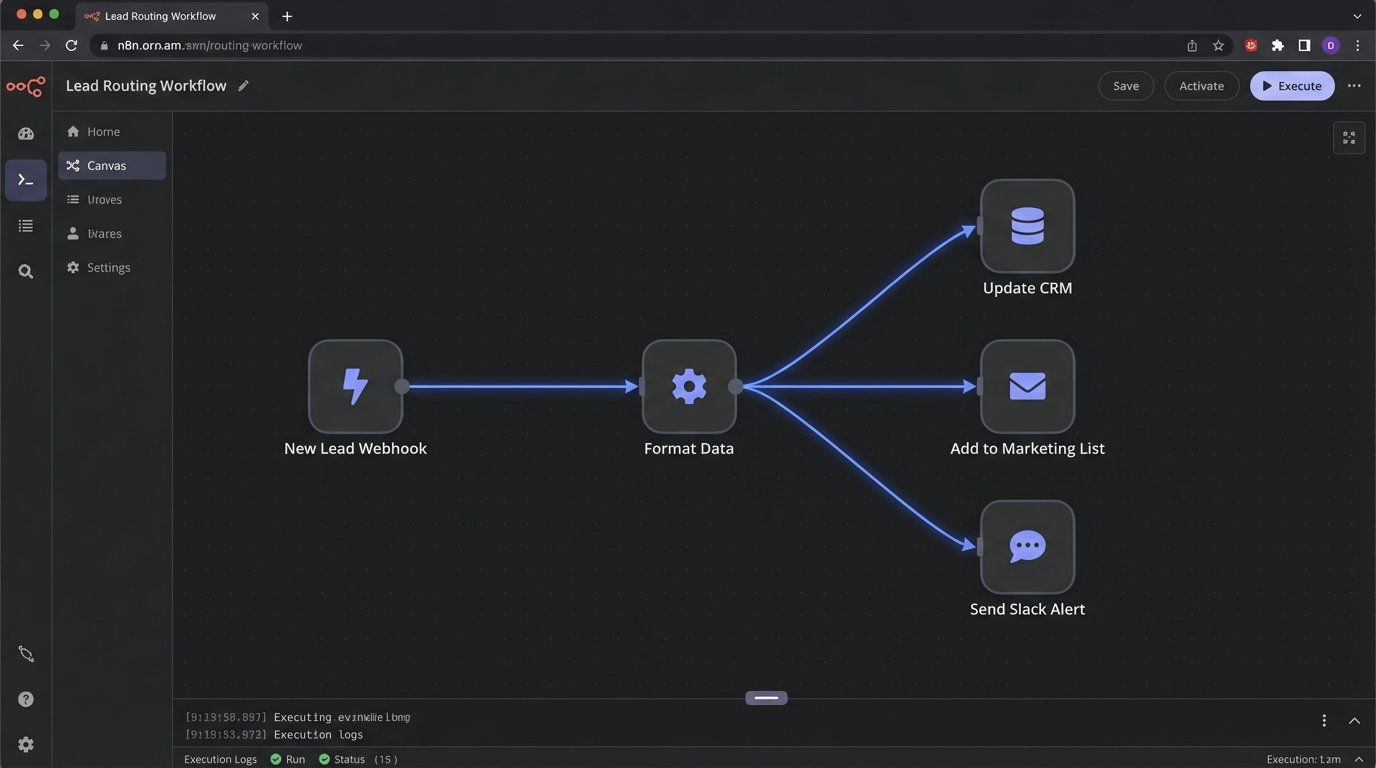
This centralizes your business logic. When a new rule needs to be implemented, like “don’t assign leads from this zip code to new agents,” you implement it once in the hub. You don’t have to patch five different scripts. It also centralizes logging and monitoring. When a lead fails to sync, you have one place to look. This model turns a chaotic web into an organized switchboard.
The End State: Event-Driven Architecture
The hub-and-spoke model is a massive improvement, but it can still be too rigid. It often relies on the hub polling different systems for changes, or systems being tightly coupled to the hub’s own API. The most flexible and scalable architecture is event-driven. Instead of one system telling another what to do, a system simply broadcasts that something happened. It emits an event.
Other systems can then subscribe to these events and react accordingly. This decouples the systems completely. The CRM doesn’t need to know that a marketing platform or a reporting database exists. It just needs to emit a `deal.closed` event into the ether.
A `deal.closed` event payload might be a simple JSON object.
{

  "eventId": "evt_1a2b3c4d5e",

  "eventType": "deal.closed",

  "timestamp": "2023-10-27T10:00:00Z",

  "source": "TransactionManager-Prod",

  "data": {

    "dealId": "TM-98765",

    "agentId": "agent_xyz",

    "address": "123 Main St, Anytown, USA",

    "closePrice": 500000,

    "commissionGCI": 15000,

    "client": {

      "firstName": "Jane",

      "lastName": "Doe",

      "email": "jane.doe@example.com"

    }

  }

}
The commissions calculation service subscribes to this event and triggers a payout process. The marketing platform subscribes and adds the client to a “happy homeowner” email sequence. The business intelligence warehouse subscribes and updates the agent’s performance dashboard. If you want to add a new service, like a tool that sends physical thank-you cards, you don’t touch any existing system. You simply deploy the new service and have it subscribe to the `deal.closed` event stream.
This is agility. This is future-proofing. Your business processes are no longer held hostage by the limitations of any single application.
The Unavoidable Grime: Data Normalization and State
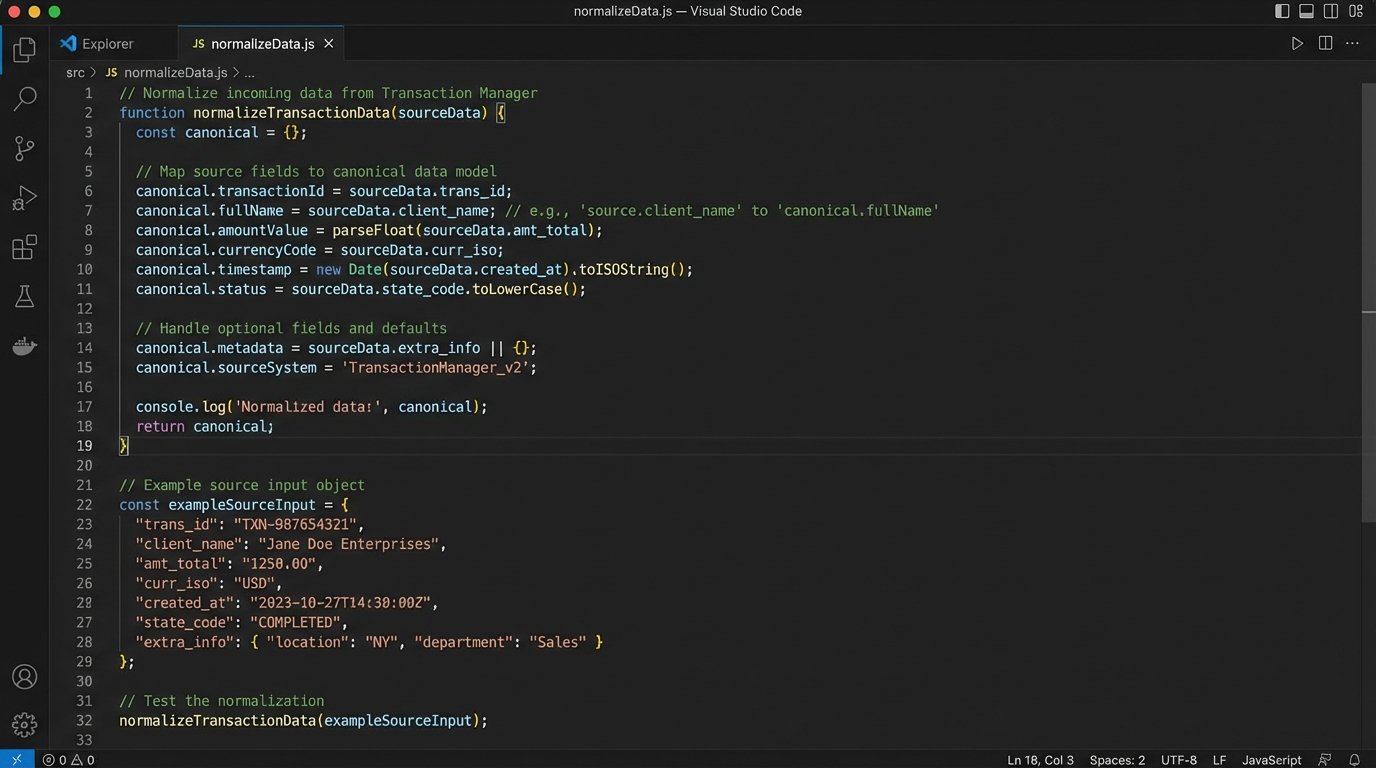
This all sounds clean and elegant. The reality is messy. The single biggest challenge in any integration project is data normalization. Your CRM stores a client’s name in `firstName` and `lastName` fields. Your transaction manager uses `client.first_name` and `client.last_name`. The email tool wants it as a single `FullName` field. Your integration hub becomes a dedicated translation layer.
You have to build and enforce a canonical data model. This is your internal standard for what a “contact” or a “deal” looks like. Every piece of data that enters the hub from an external system must be stripped down and rebuilt according to this internal model. Every piece of data sent out to another system must be translated from the canonical model to the format that system expects. This is tedious, detail-oriented work, and it’s 90% of the job.
Then there’s the problem of state management. An API call fails due to a temporary network blip. What happens? A naive system might just drop the data. A slightly better one might retry immediately. But what if the destination server is down for an hour? You need a persistent queue and a dead-letter mechanism. The event gets pushed to a queue. A worker tries to process it. If it fails after a set number of retries, it gets moved to a dead-letter queue for manual inspection. Building this error handling is non-negotiable. Without it, you’re not building a reliable system; you’re building a data-loss machine.
The Payoff Is Control
Building a robust integration layer is a significant investment. It requires specialized skills that are not the same as web development or agent support. It’s not a side project. It’s a core infrastructure commitment. So why do it?
The payoff is control. You gain the freedom to choose the best-in-class tool for every job, not just the one with the most check boxes on a feature list. When a better CRM comes along, you can migrate to it in weeks, not years. You just write a new adapter for the hub. The rest of your business logic, all the complex workflows you’ve automated, remains untouched. It’s like being able to swap the engine in your car without rebuilding the entire chassis.
You also gain data integrity. With a central hub enforcing a canonical model, you eliminate the problem of conflicting information in different systems. The address for a property is the same in your marketing materials, your transaction documents, and your financial reports because it’s managed as a single entity in your integration layer.
The future of real estate tech is not another app. It’s the architecture that connects them. The most successful brokerages will be the ones who stop buying promises from vendors and start investing in their own data plumbing. They will own the workflows that define their business, and they will have the agility to adapt to whatever comes next.