The Anatomy of Brittle Architecture
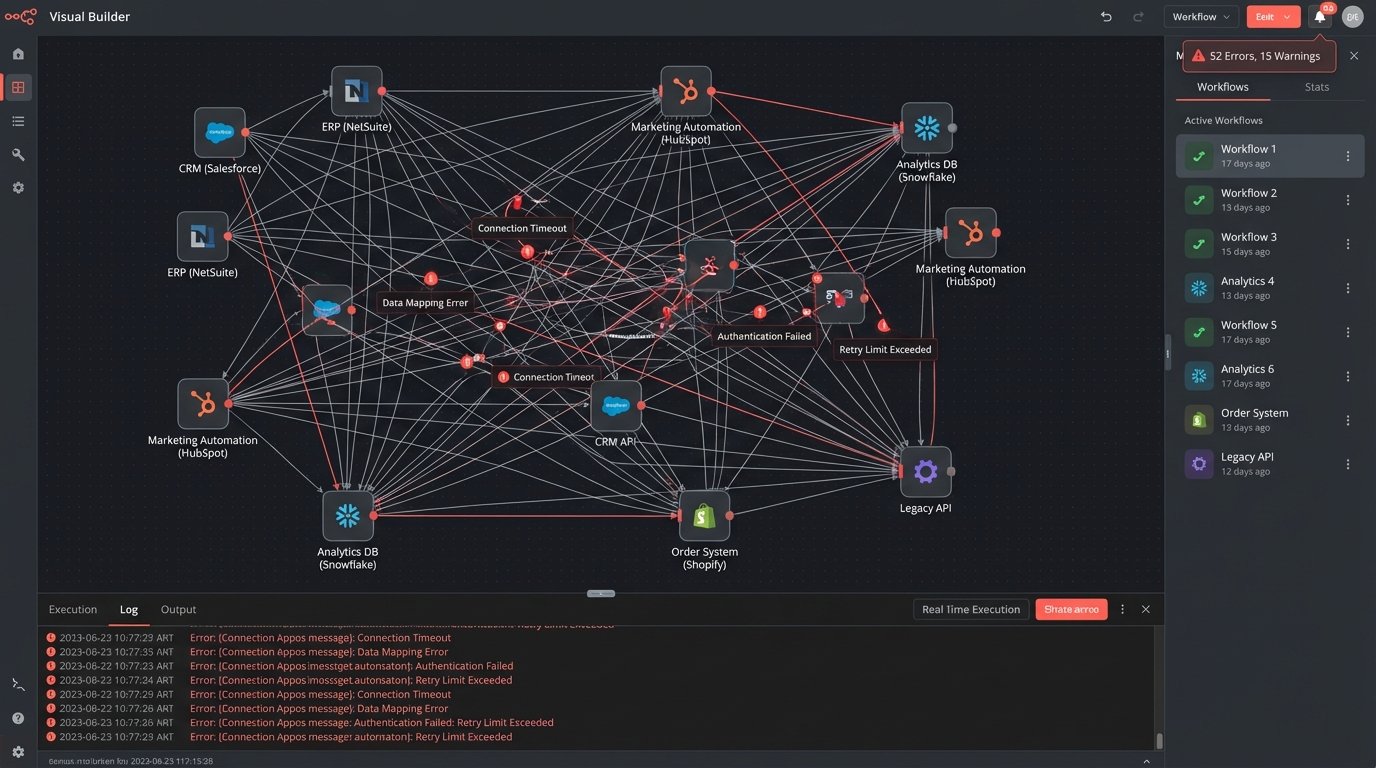
Your automation stack is a fragile network of point-to-point API calls, held together by cron jobs and institutional knowledge. Every new application adds another strand to the web. The CRM needs to talk to the ERP. The ERP needs to push data to the marketing automation tool. The marketing tool needs to sync leads back to the CRM. This is the classic N-squared problem, and it doesn’t scale. It breaks.
Each connection is a potential point of failure. One endpoint changes its authentication method, one API gets deprecated, one developer forgets to update a hardcoded key, and a critical business process grinds to a halt. The failure condition isn’t a loud explosion. It’s a silent data drift, where customer records in one system slowly diverge from another until the sales team is calling on ghosts and the finance department is invoicing the wrong addresses.
Troubleshooting this mess is a forensic exercise. You are forced to dig through logs on five different servers, each with its own timestamp format and verbosity level, to trace a single failed transaction. The architecture forces you to be reactive. You spend your time fixing broken connections instead of building new functionality. This is not engineering. It is digital plumbing, and all the pipes are leaking.
The Central Hub as a Necessary Evil
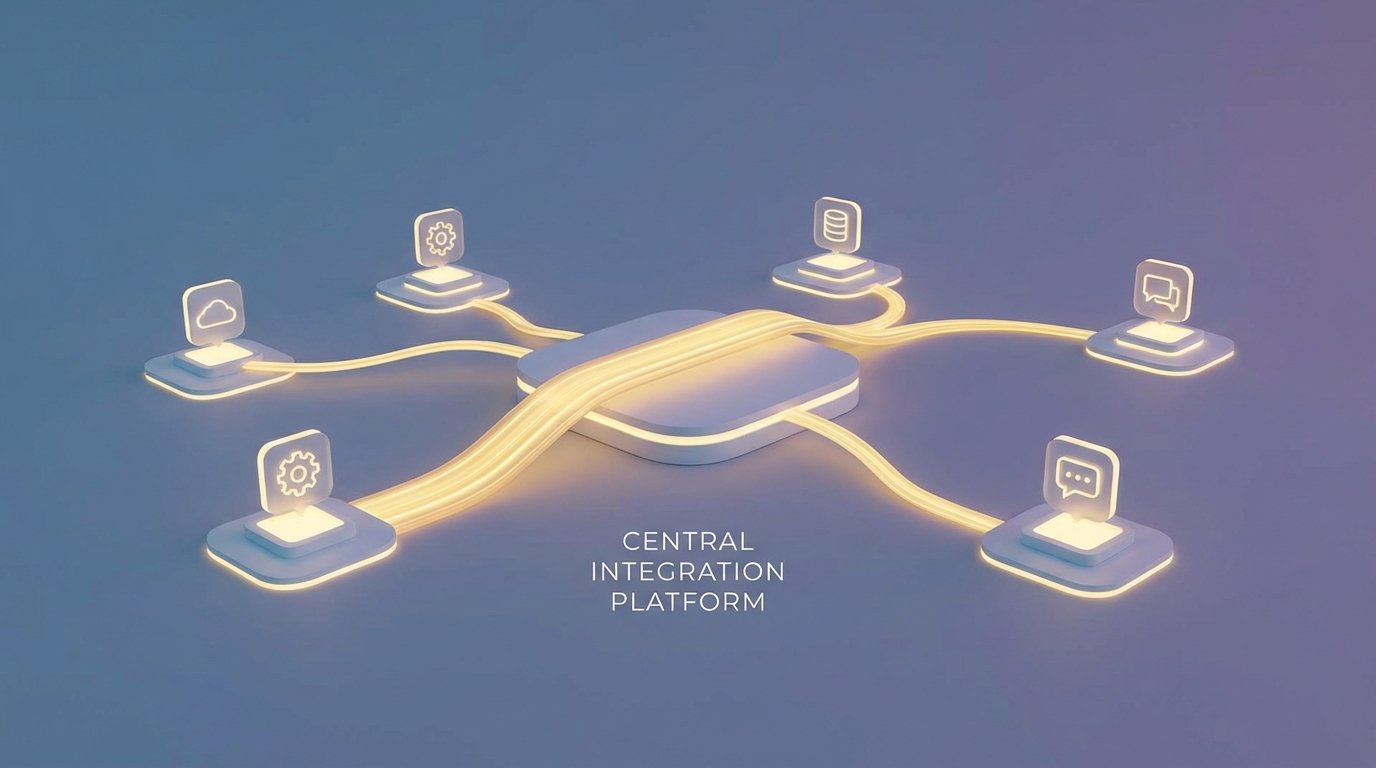
The standard fix is to inject a central integration platform, an iPaaS, or some other flavor of middleware. This is not a magic bullet. Anyone who tells you an iPaaS solution will solve all your problems is selling you something. What it does is centralize the complexity. Instead of managing twenty brittle point-to-point connections, you manage one platform that houses twenty connections. The problems don’t disappear, but now they live in one place where you can watch them.
This approach forces discipline. It compels you to think about integrations as a distinct architectural layer, not as an afterthought in an application’s codebase. The platform becomes the single source of truth for how data moves between systems. It’s a traffic cop standing at a chaotic intersection, imposing order where there was none. This order comes at a price, both in performance and subscription fees, but it is often cheaper than the cumulative cost of constant failure.
Decoupling Services as a Survival Tactic
The primary function of a central hub is to decouple your applications. Your CRM no longer needs to know the specific API dialect of your ERP. It speaks a common language to the integration hub. The hub then handles the translation and delivery to the ERP. The systems are ignorant of each other’s internal mechanics, which is exactly what you want.
This abstraction pays dividends when you need to swap out a core application. Migrating from one marketing platform to another becomes a manageable project. Instead of refactoring code in every system that touched the old platform, you remap the connections within the integration hub. You change one endpoint. The rest of your application stack remains blissfully unaware that a major transplant just occurred. This modularity is the only sane way to manage a complex application ecosystem over time.
The Grimy Work of Data Transformation
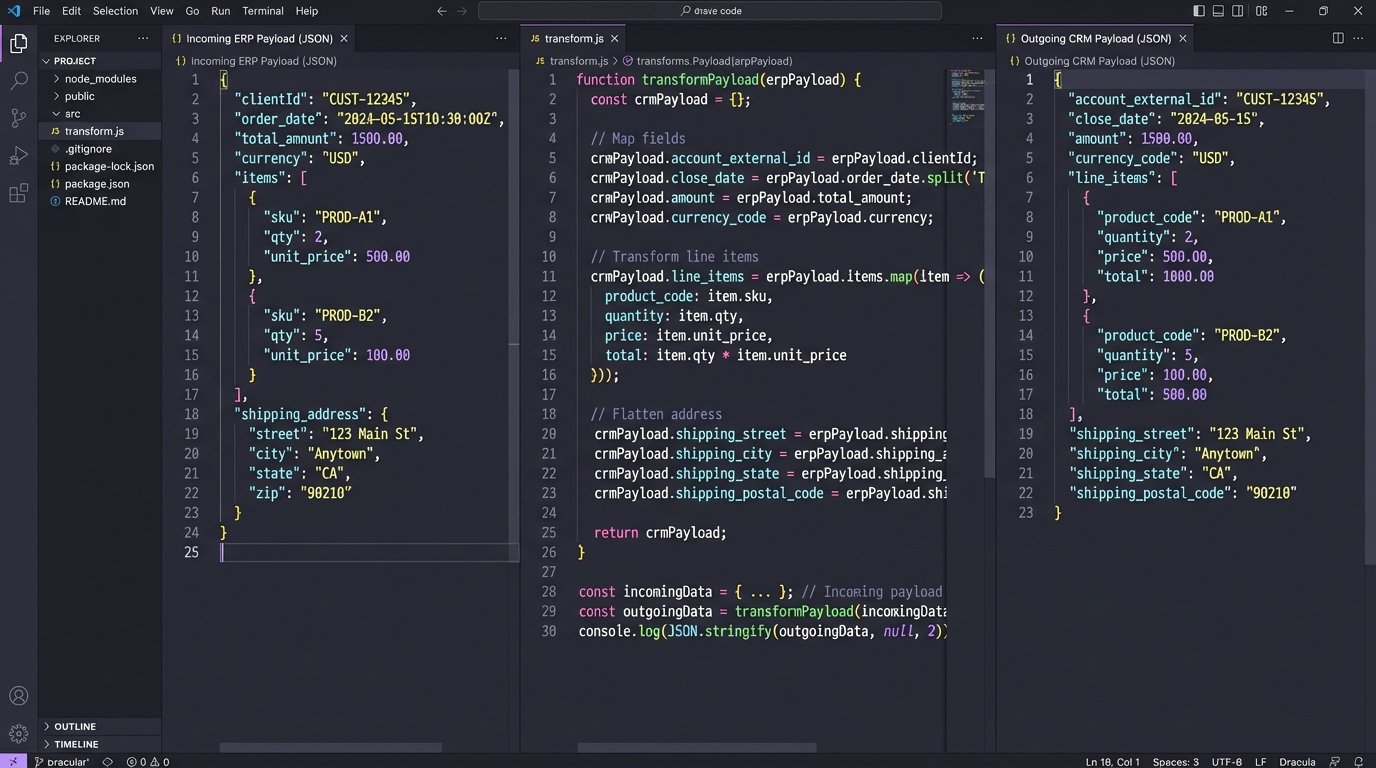
Passing data from point A to point B is the easy part. The real work is in the transformation logic that sits in the middle. System A calls it a `customer_id`, while System B expects a `contact_identifier`. System A uses epoch timestamps, while System B requires ISO 8601. The central platform is where you house this mapping logic, stripping, filtering, and reshaping payloads as they pass through.
Your integration platform isn’t just a switchboard connecting calls. It’s a real-time translator sitting between two diplomats who speak completely different languages. It has to interpret intent, not just pass along words. Failing to get this logic right means you are just moving garbage from one database to another, only faster and more efficiently.
A simple mapping operation might look like this in pseudo-code. It’s not complex, but multiplying this by hundreds of fields and dozens of objects creates a significant body of logic that must be managed.
// Incoming payload from ERP
{
"orderId": 90210,
"client": {
"clientId": "CUST-1138",
"name": "Acme Corp"
},
"items": [
{ "sku": "WIDGET-A", "qty": 100 },
{ "sku": "WIDGET-B", "qty": 50 }
],
"order_date": 1672531200
}
// Transformation Logic in Hub
output.salesforce_id = null; // To be enriched later
output.opportunity_name = input.client.name + " - Order " + input.orderId;
output.account_external_id = input.client.clientId;
output.close_date = to_iso_8601(input.order_date);
output.products = map_items_to_sfdc_products(input.items);
// Outgoing payload to CRM
{
"salesforce_id": null,
"opportunity_name": "Acme Corp - Order 90210",
"account_external_id": "CUST-1138",
"close_date": "2023-01-01T00:00:00Z",
"products": [
{ "productCode": "W-A", "quantity": 100 },
{ "productCode": "W-B", "quantity": 50 }
]
}
This is where most integration projects live or die. The quality of your data transformation logic dictates the integrity of your entire business process.
Orchestration: A Single Point of Truth and Failure
A mature integration strategy moves beyond simple data synchronization and into process orchestration. This is where you define a multi-step business process that spans several applications within the integration platform itself. For example: a new order in Shopify triggers a workflow that checks inventory in the ERP, creates a customer record in Salesforce, and sends a fulfillment request to the warehouse management system.
The benefit is a single, observable view of the entire process. You can see where a specific order is in the workflow at any given time. The downside is that you’ve created a monolithic dependency. If the integration platform goes down, every single orchestrated business process halts instantly. You have centralized your point of truth, but you have also centralized your point of failure. This is a risk that must be actively managed with high-availability architecture and robust failover procedures.
Observability: Finding the Failure Before the 3 AM Call
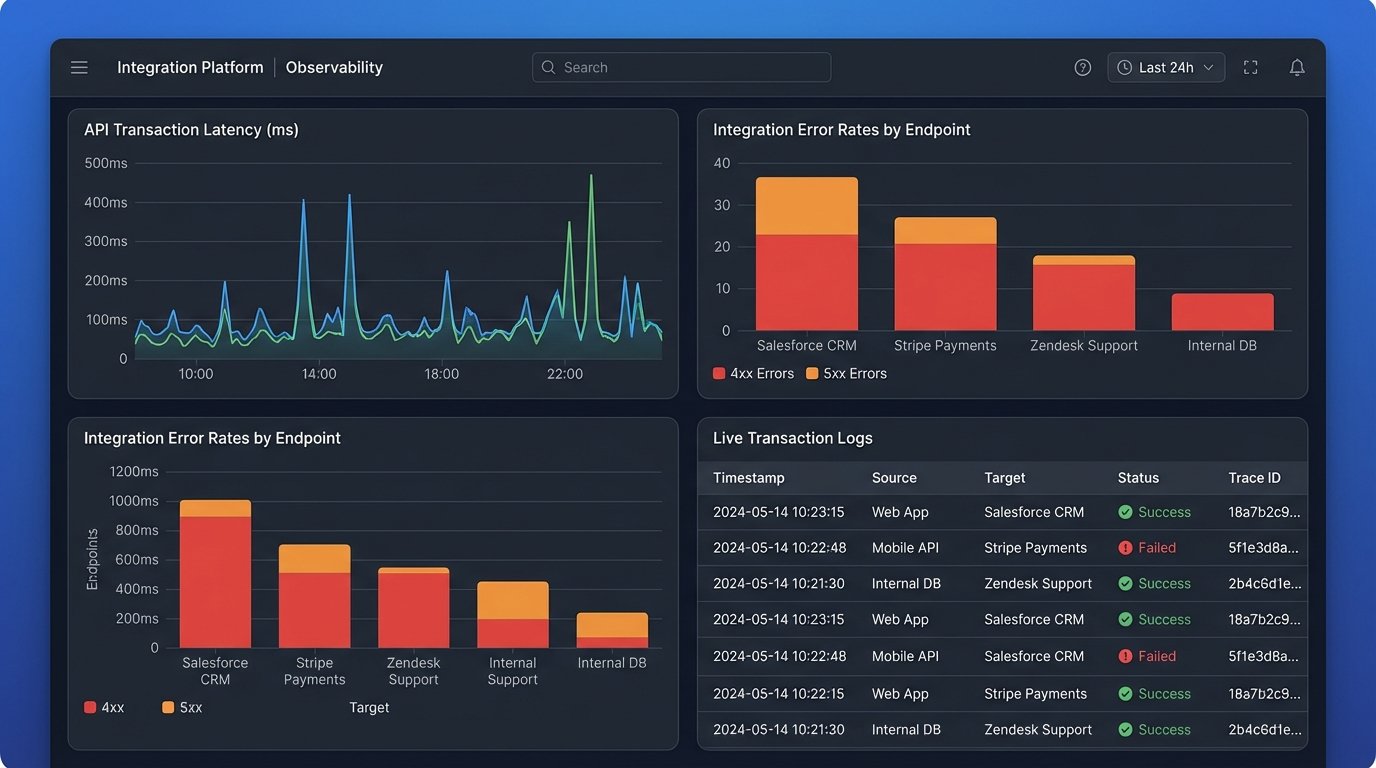
One of the few unambiguous wins of a central platform is unified observability. Instead of hunting for a needle in five different haystacks, you have one dashboard. You can build monitors that track transaction volume, latency, and error rates across your entire application ecosystem. You can configure alerts that fire when a specific connection starts timing out, long before it causes a catastrophic data pile-up.
This requires forcing a standard logging and error-handling schema across all integrations. The hub should catch raw errors from downstream APIs and wrap them in a consistent format. An “Authentication Failed” error from Salesforce and a “401 Unauthorized” from a custom API should both be normalized into a standard error type within the platform. This normalization is critical for building meaningful alerts and dashboards that your on-call engineer can actually use at 3 AM.
The Unspoken Costs and Hidden Complexities
Adopting a central integration platform is not a simple technical decision. It comes with a steep price tag and introduces its own set of challenges.
- Financial Drain: Enterprise iPaaS solutions are expensive. Pricing is often a complex calculation based on the number of connectors, transaction volume, or data throughput. The initial license fee is just the entry ticket. The costs scale as your usage grows, and you will find yourself in constant budget negotiations.
- The Latency Tax: Every transaction now has an extra network hop as it passes through the central hub. For high-volume, real-time processes, this added latency can be a deal-breaker. You are trading raw performance for architectural cleanliness. You must logic-check if that trade is acceptable for each specific use case.
- Specialized Talent: You do not simply hand the keys to an integration platform to a junior developer. You now need engineers who understand integration patterns, API security, and the specific quirks of the platform you’ve chosen. This is a specialized skill set, and these engineers are not cheap or easy to find.
- Vendor Lock-in is Real: Once you have built a hundred critical business processes on a specific platform, you are a hostage. The cost and effort required to migrate that logic to a different platform are astronomical. The vendor knows this. This is a ten-year decision, so you better get it right.
The choice is not about eliminating complexity. That is impossible. The choice is about where you want your complexity to live. Do you want it spread across a dozen applications in a chaotic, decentralized mess? Or do you want it consolidated into a single, expensive, high-stakes platform that requires expert care and feeding? There is no clean answer. Choose the set of problems you are better equipped to solve.