Success Story: Converting More Listings Through Automated CRM Reminders
Agent follow-up is a black box. A lead comes in, gets assigned, and disappears into a void of half-updated spreadsheets and sticky notes cluttering a monitor. Management asks, “What happened to that lead from last Tuesday?” The agent’s response is a shrug. This isn’t a hypothetical, it was the reality for a mid-sized brokerage drowning in its own inbound interest.
Their lead-to-listing conversion rate was pathetic, hovering around 4%. For every 100 people who raised their hand, 96 were lost to inertia. The core issue wasn’t lead quality or agent skill. It was a complete breakdown in process discipline, enabled by a CRM that was little more than a glorified digital address book.
The Bleeding Points: A Diagnostic
Before we touched a single line of code or automation workflow, we did a diagnostic. The findings were predictable but still grim. We identified three primary points of failure that were costing them a fortune in lost commissions.
- Response Time Decay: The average time from lead creation to first logged contact was over 24 hours. In real estate, a lead’s intent cools by the minute. Waiting a full day is like showing up to a five-alarm fire with a bucket of water.
- The “Black Hole” Effect: Leads older than 7 days without a logged follow-up had a near-zero chance of conversion. They weren’t just cold, they were cryogenically frozen. Agents focused on fresh leads, letting the older, still-valuable ones wither.
- Zero Management Oversight: Team leads had no reliable way to track agent activity. They managed by anecdote, relying on what agents told them in weekly meetings. It was like trying to captain a ship by staring at a hand-drawn map from last year. You have no idea where you are, let alone where the rocks are.
The manual process was the disease. Automation was the cure.
Architecture of the Solution: Webhooks, Logic, and Timed Nudges
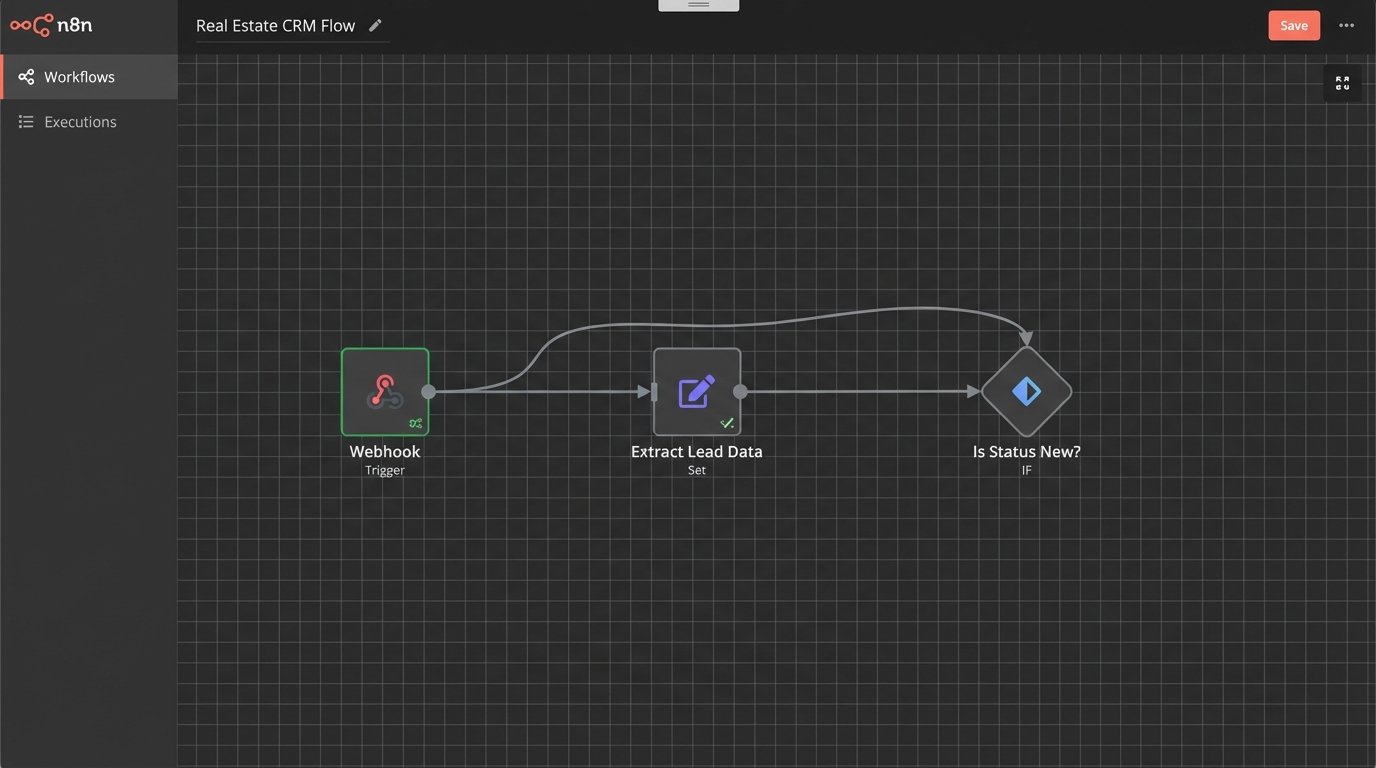
We didn’t need to rip and replace their CRM. That’s a wallet-drainer and a logistical nightmare. Instead, we decided to bolt on an intelligent automation layer using n8n, sitting between their CRM (a popular industry platform) and their internal communication tool, Slack.
The entire system hinges on a simple webhook from the CRM. Any time a lead is created or updated, the CRM fires off a JSON payload to our n8n endpoint. This avoids the inefficiency of polling their API every five minutes, which their infrastructure was not built to handle.
A typical webhook payload looks something like this. Sparse, but it gives us what we need: the lead ID, the agent ID, the current status, and the timestamp of the last update.
{
  "event": "lead_updated",
  "lead": {
    "id": "lead_12345",
    "status": "New",
    "assigned_agent_id": "agent_abc",
    "last_updated": "2023-10-26T10:00:00Z"
  }
}
Once the data hits n8n, the logic branches out. This isn’t a single workflow. It’s a series of interconnected workflows that function like a nervous system for the sales process.
Workflow 1: The 60-Minute Warning
A new lead triggers this flow. We start a 60-minute clock. If the webhook doesn’t fire again for that lead ID within the hour with a status change (e.g., from “New” to “Contacted”), a direct message hits the assigned agent’s Slack. It’s not accusatory. It’s a simple, “Heads up: New lead [Lead Name] has been waiting for an hour.”
Workflow 2: The 3-Day Follow-Up Gap
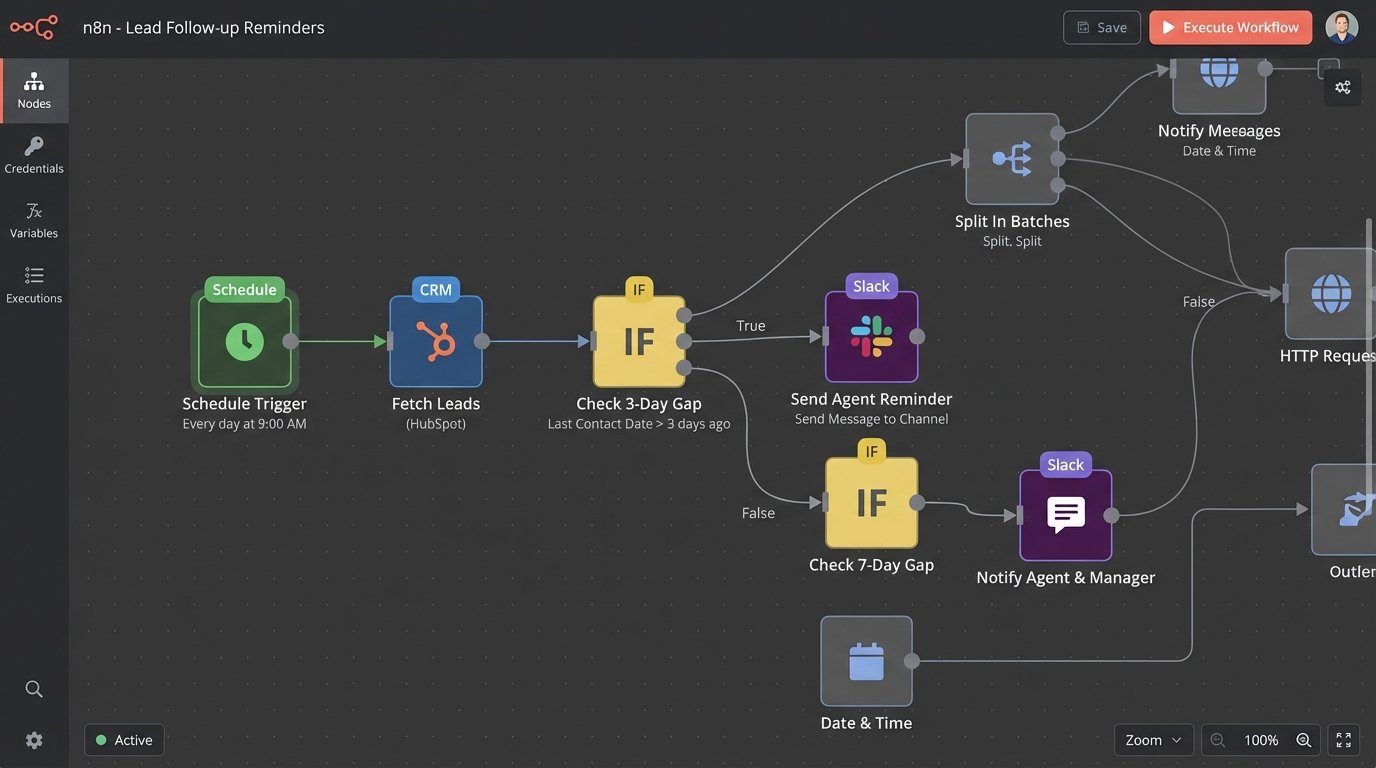
This workflow runs on a schedule, checking all leads that are not marked as “Nurturing” or “Closed.” It calculates the time since the last logged activity. We used a simple n8n expression to hammer out the logic.
{{ $json.last_activity_date < $now.minus({ days: 3 }) }}
If that expression evaluates to true, it triggers another, more firm Slack notification. "Action Required: No activity has been logged for [Lead Name] in 3 days. Plan your next step." This one single automation stopped hundreds of leads from falling into the 7-day black hole.
Workflow 3: The Escalation Engine
Accountability is key. If a lead triggers the 60-minute warning AND the 3-day gap warning, a flag is set. The next time that lead appears in a warning state, the notification is routed not just to the agent, but to their team lead as well. This puts performance data directly in front of management, stripping away any excuses.
The Implementation Struggle is Real
Building the workflows was the easy part. The hard part was forcing discipline onto a chaotic process. The CRM's data was a mess. We spent the first week just on data hygiene, standardizing custom fields and archiving thousands of junk records. Sending automated reminders based on bad data is like pouring gasoline on a fire. You just create more noise and chaos.
We also hit the CRM's API rate limits hard during initial testing. Our first design used scheduled polling, and we effectively launched a denial-of-service attack on our own tool. The pivot to a webhook-first architecture was a forced move, but it made the system infinitely more efficient. The trade-off is clear: webhooks are real-time, but if your n8n instance goes down for five minutes, you might miss a payload. We built a fallback "reconciliation" workflow that runs nightly to catch anything that might have slipped through.
Finally, there was agent pushback. They felt micromanaged. We had to prove that the system wasn't a digital babysitter, but a tool to help them make more money. We showed them the first few "saves" where a forgotten lead was revived by a reminder and turned into a signed listing agreement. Money talks.
The Results: From Black Box to Dashboard
The numbers speak for themselves. After running the system for six months, the brokerage's key metrics were transformed.
- Average Lead Response Time: Dropped from over 24 hours to 42 minutes.
- 7-Day+ Lead Contact Rate: Increased by a staggering 65%. Agents were re-engaging older leads because the system kept them top-of-mind.
- Lead-to-Listing Conversion Rate: This was the ultimate goal. The rate climbed from a dismal 4% to 11%.
That 7-point jump in conversion wasn't just a vanity metric. It translated directly to an additional $800,000 in gross commission income for the firm over that six-month period. We took a process that was hemorrhaging money and applied a tourniquet built from webhooks and logic.
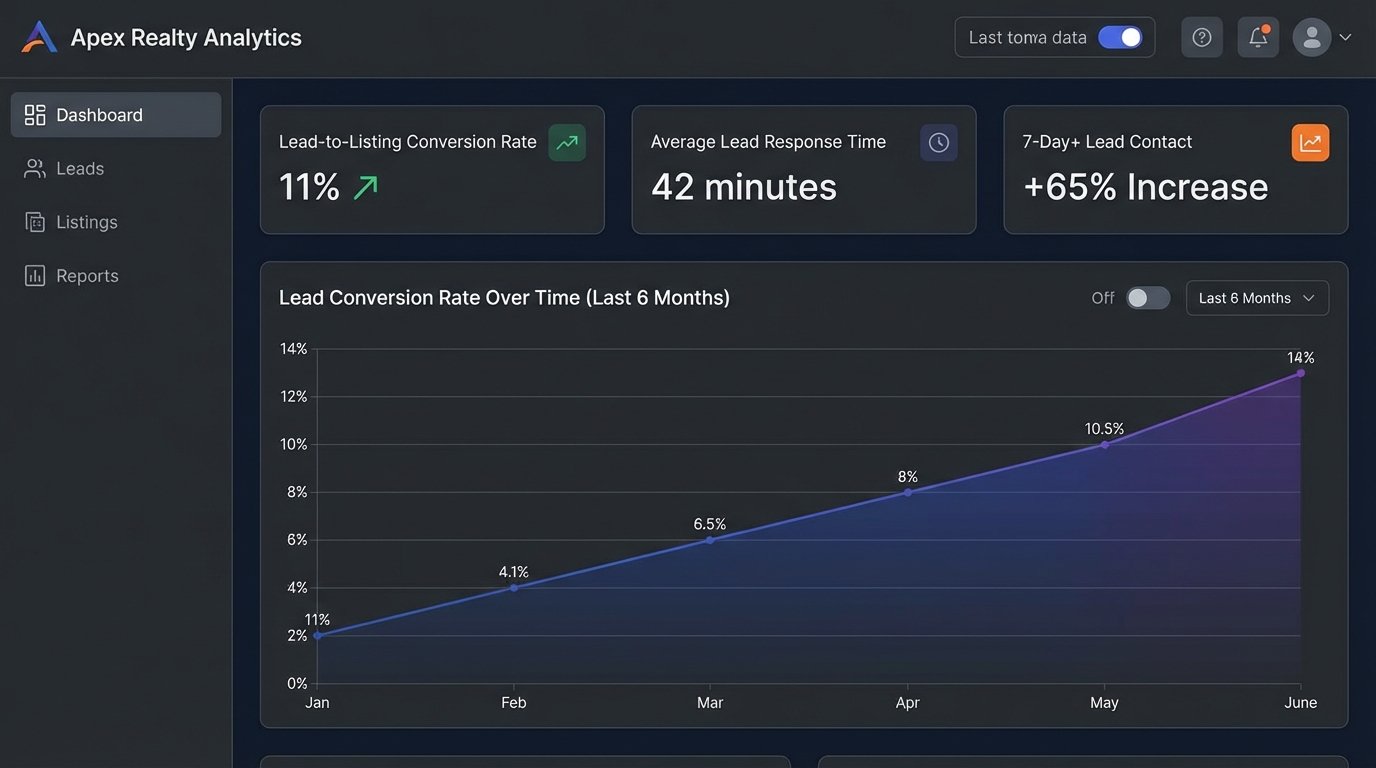
Management now has a dashboard fed by the automation logs. They have true visibility. They can see which agents are on top of their game and which need coaching, based on impartial data, not gut feelings.
The system works. It's not flashy. It doesn't use AI or machine learning. It's a simple, rugged engine of accountability that forces consistent behavior. And in sales, consistency is what closes deals.