The marketing noise around AI contract review is deafening. Every platform promises to find risk and accelerate deals. The reality is that most of these tools are blunt instruments, built on brittle models that require constant human supervision. They don’t replace a lawyer. They give a tired associate a different, often more frustrating, set of problems to solve.
Automating contract review isn’t about finding a magic box. It’s about picking the right tool to solve a specific, narrowly defined problem. Some are good at brute-force diligence, others are built for workflow compliance. None of them are intelligent. They are pattern-matching engines you point at a mountain of text, hoping to find a few specific needles. The hard part is connecting that engine to your existing systems without creating a data governance catastrophe.
1. Litera Kira
Kira was one of the first major players in M&A due diligence, and its acquisition by Litera cemented its place in the BigLaw tech stack. Its core strength is a library of pre-trained “smart fields” designed to extract common clauses like Change of Control, Assignment, and Term. For high-volume M&A data room reviews, it can strip out key provisions from thousands of documents with a decent level of accuracy. The system is built to let junior associates do the first pass, flagging documents for senior review.
The dependency on its pre-built models is also its biggest weakness. Training your own smart fields for non-standard clauses is a resource-draining, time-consuming process that feels years behind modern ML model development. You feed it examples, and the results can be unpredictable. It’s a black box. The API exists, but it’s clearly an afterthought, not the core of the product. It’s a wallet-drainer, priced for firms that have no issue dropping six figures on a solution.
Core Use Case:
Your team needs to analyze a 20,000-document data room for an impending acquisition. The goal is to quickly identify all change-of-control and exclusivity clauses across a chaotic mix of PDFs, DOCX files, and scanned agreements. You use Kira to perform the initial cull, creating a high-priority worklist for human lawyers. It’s a force multiplier for a specific, painful task.
It’s not a tool for day-to-day contract management.
2. Luminance
Luminance pitches itself differently, focusing on unsupervised machine learning to surface anomalies. Instead of just looking for clauses you tell it to find, it reads an entire dataset and visually clusters documents and clauses by conceptual similarity. This allows a reviewer to quickly see which contracts deviate from the “norm” in the pile. This approach is powerful for identifying unusual language or missing clauses that a pre-trained model would completely ignore.
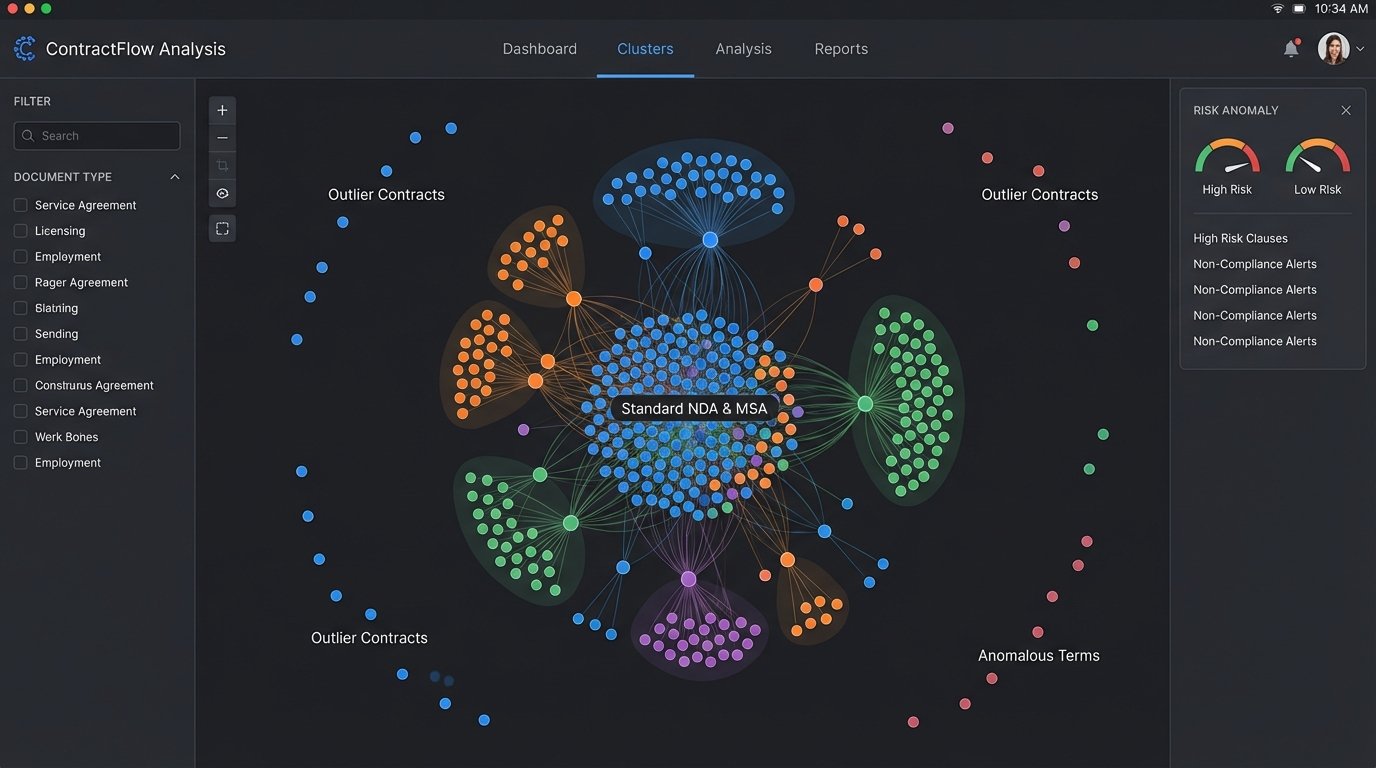
The trade-off for this discovery power is a lack of deterministic output. You can’t simply ask it to “extract all limitation of liability clauses with a cap below $1M.” Instead, you guide its analysis, exploring the clusters it generates. Getting clean, structured data out of it for reporting or downstream automation is a challenge. The UI, while visually impressive, can be sluggish with large datasets, and the system’s value is entirely dependent on the skill of the lawyer driving it. It’s not a fire-and-forget solution.
Core Use Case:
You’re investigating a portfolio of commercial real estate leases acquired through a merger. There’s no standard template. You use Luminance to first identify the main “families” of lease agreements, then drill down into the outliers that contain odd co-tenancy or subletting clauses. Trying to force its unstructured, conceptual output into your firm’s rigid database schema is like shoving a firehose through a needle.
3. ContractPodAi
This isn’t a pure review tool. It’s a full Contract Lifecycle Management (CLM) platform that happens to have an AI review module. Its strength isn’t the depth of its AI analysis but its integration into a broader workflow. The system bridges contract generation, negotiation, review, signature, and post-signature obligation management. The AI component is used to ingest third-party paper, tag metadata, and compare incoming clauses against a pre-approved playbook.
Because it’s a CLM first, the AI capabilities feel less powerful than dedicated tools like Kira or Luminance. It’s designed for high-volume, low-complexity agreements like NDAs, MSAs, and SOWs. The real work in a ContractPodAi implementation isn’t training the AI. It’s mapping your firm’s entire contracting process, defining user roles, and building the workflow logic. Buying this tool for its AI alone is a mistake. You’re buying an opinionated, end-to-end system.
Core Use Case:
The in-house legal department is drowning in 300 NDAs per month. They deploy ContractPodAi to create a self-service portal for the sales team. Sales generates an NDA from a template. If they receive third-party paper, they upload it, and the AI flags non-standard indemnity or confidentiality clauses, routing it to legal only if deviations are found. The goal is workflow efficiency, not deep legal analysis.
4. LegalSifter
LegalSifter is built for speed and operates directly where lawyers work: Microsoft Word and Outlook. It doesn’t try to manage the full lifecycle. It “sifts” a document for specific conditions defined in a “playbook” and provides in-context advice. For example, it can flag that a contract is missing a warranty clause or that the governing law is unfavorable, pulling predefined guidance directly into the document as a comment. It’s a compliance and risk-spotting tool, not a discovery platform.
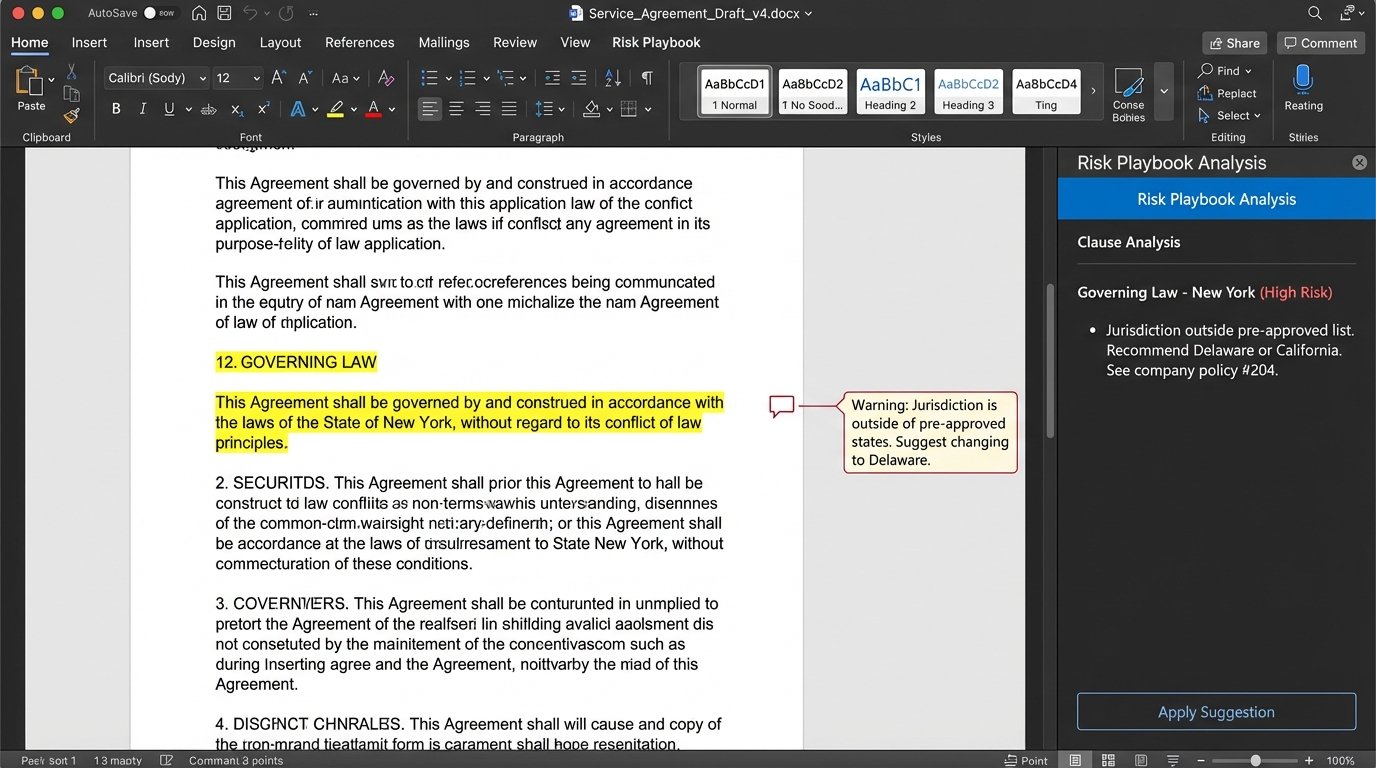
The system is only as smart as the playbook you build. Building and maintaining these “sifts” requires significant upfront investment from senior lawyers to codify their knowledge. If the playbook is shallow, the advice is useless. The tool struggles with highly negotiated, complex agreements where context is everything. It’s designed for routine contracts where the rules are black and white.
Core Use Case:
A procurement team needs to review dozens of supplier agreements each week. Legal builds a playbook in LegalSifter that codifies the company’s standard positions on payment terms, liability caps, and data security. The procurement manager runs the sifter on an incoming contract, gets instant feedback on the top 10 risk areas, and can handle basic negotiations themselves, only escalating to legal for major red flags.
5. The DIY Route: spaCy & Hugging Face Transformers
For organizations with data science resources, bypassing commercial tools offers total control. Using open-source libraries like spaCy for named-entity recognition (NER) or pre-trained transformer models from Hugging Face (like BERT or RoBERTa) lets you build custom clause classifiers tailored to your exact needs. You can train a model to identify esoteric clauses in ISDA agreements or specific risk language in insurance policies that no off-the-shelf tool supports.
This path is a resource black hole. It requires massive amounts of clean, labeled training data, which legal teams rarely have. It also requires developers and data scientists who can preprocess text, fine-tune models, and build a production-grade pipeline to serve the model. The initial proof-of-concept might seem easy, but creating a reliable, maintainable system that lawyers will actually use is a monumental task. The model’s performance will decay over time, requiring constant monitoring and retraining.
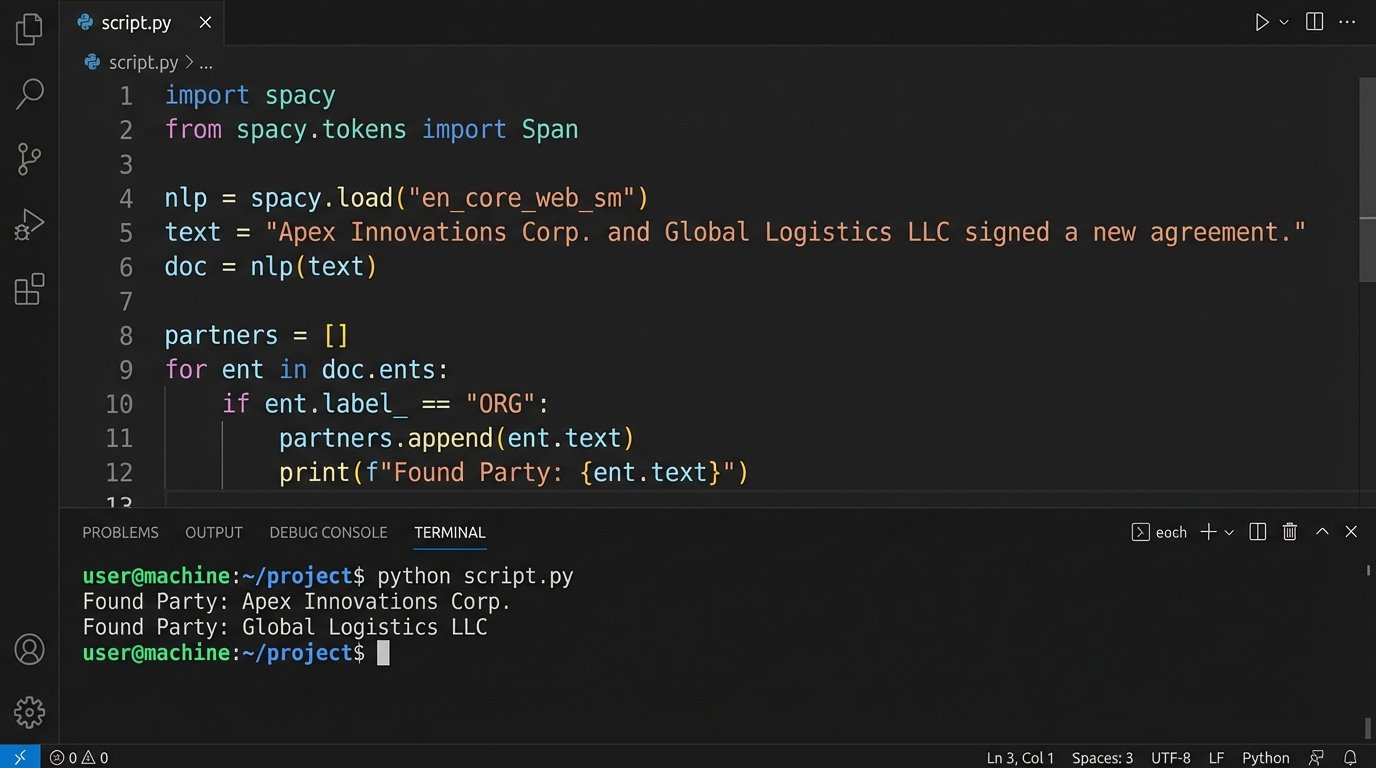
A simple NER implementation might look like this in Python to find party names, which is just the first step of a thousand:
import spacy
# Load a pre-trained model
nlp = spacy.load("en_core_web_sm")
contract_text = """
This Agreement is made and entered into as of May 1, 2024,
by and between Apex Innovations Corp., a Delaware corporation ("Apex"),
and Global Logistics LLC, a Nevada limited liability company ("Global").
"""
doc = nlp(contract_text)
# Find entities labeled as Organizations
for ent in doc.ents:
if ent.label_ == "ORG":
print(f"Found Party: {ent.text}")
# Expected Output:
# Found Party: Apex Innovations Corp.
# Found Party: Global Logistics LLC
This code block just finds entities. It doesn’t understand their roles or the clauses they are tied to. Building that logic is the real work.
Core Use Case:
A large investment bank needs to analyze thousands of non-standard credit agreements to quantify exposure to a specific financial covenant. No commercial tool can accurately identify this unique, complex clause structure. They task their internal quantitative analytics team to build a custom transformer-based classifier. It’s a multi-year project, not a quick win.
There is no single “best” tool. The choice is dictated by the problem. Are you trying to survive M&A diligence, streamline high-volume workflows, or build a bespoke analytical weapon? Each requires a different architecture, a different budget, and a different tolerance for pain during implementation.