
Most conversations about contract automation start with a flawed premise. They focus on the output, the generated Word document or PDF, as the prize. This is a fundamental misunderstanding of the mechanics. The real work, the part that determines success or failure, is wrestling with the input data. Without a rigid data structure and validation protocol, you are not automating; you are just building a faster way to generate flawed agreements.
The core challenge is that legal data rarely originates in a clean, structured format. It comes from hastily written emails, messy intake forms, and legacy case management systems with inconsistent field names. The first step is never to buy a document automation platform. The first step is to architect a data model that forces standardization before a single clause is ever generated.
The Data Integrity Bottleneck
Speed is a byproduct of structure, nothing more. A system can generate a hundred NDAs a minute if the counterparty name, address, and effective date are fed to it through a clean API endpoint. The system grinds to a halt when that data lives in a free-text field in a SharePoint list. The bulk of the engineering effort is spent building the plumbing to extract, clean, and validate this information before it ever hits the template engine.
This process involves writing parsers to strip entities from unstructured text and building middleware to transform data from a source format (like a CRM) into the format the template engine expects. You are not just mapping fields. You are often building a custom ETL (Extract, Transform, Load) pipeline for the legal department. This is the expensive, unglamorous work that vendors never show in their demos.
Trying to automate on top of unstructured intake forms is like building a skyscraper on a swamp. It will collapse.
Forcing Structure Upstream
The only sustainable solution is to force structure at the point of data entry. This means replacing free-text intake fields with validated, dependent dropdowns. Instead of a box for “Jurisdiction,” you implement a dropdown list of approved states or countries. Selecting “California” might then dynamically reveal a subsequent field asking if the PII Addendum is required.
This approach shifts the burden of data integrity from the automation engine to the user. It introduces friction into the intake process, which lawyers may initially resist. The alternative is a system that constantly breaks or requires manual data cleaning, defeating the entire purpose of the project. You have to gut the old process and replace it with a rules-based workflow. There is no middle ground.
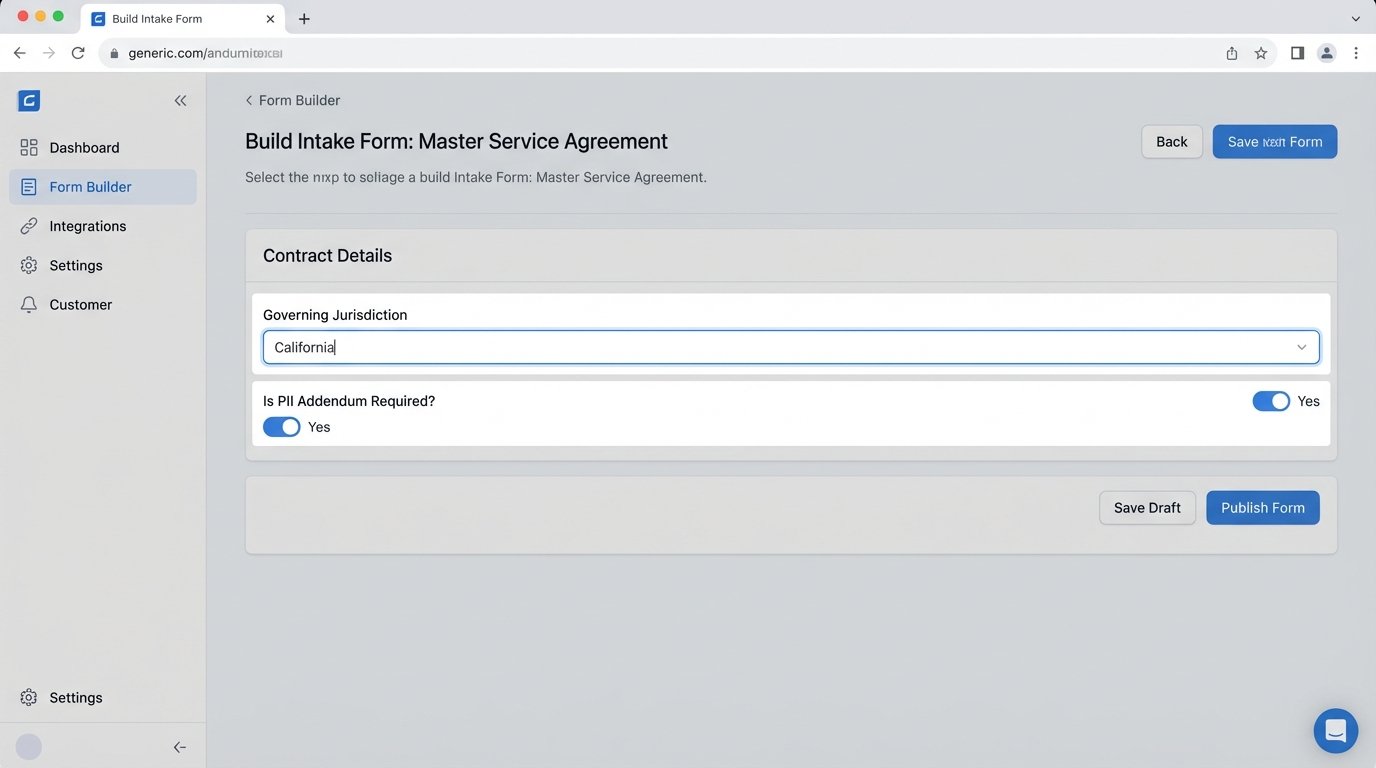
The logic must be embedded in the collection phase. By the time the data reaches your automation tool, it should be fully validated and structured. Any error handling or validation at the document generation stage is a sign of a failure in the upstream process. It is a patch, not a solution.
Conditional Logic: The Double-Edged Sword
Reducing errors in contracts is not about spellcheck. It is about correctly applying business rules through conditional logic within the templates. A simple example is a Master Services Agreement that must include specific data security clauses if the vendor is processing customer data, but not if they are only providing professional services. This requires logic baked directly into the document template.
Most modern document automation platforms support some form of this. The syntax might vary, but the concept is universal. You inject `IF/ELSE` statements that control the inclusion or exclusion of entire paragraphs or clauses based on input data points. For instance, a data point `IsDataProcessor` with a boolean value of `true` would trigger the insertion of the Data Processing Addendum clause block.
Here is a simplified pseudo-code example of what this looks like inside a template:
{{#ifEquals Services.IsDataProcessor true}}
<p><strong>10. Data Processing.</strong> The parties agree to be bound by the terms of the Data Processing Addendum, attached hereto as Exhibit B, which is incorporated by reference into this Agreement.</p>
{{/ifEquals}}
This seems straightforward, but complexity spirals quickly. A single template for a global sales agreement might have dozens of nested conditional blocks governing jurisdiction, currency, liability caps, and local regulatory requirements. This creates a brittle system. A single change to a variable name or a misplaced bracket can break the entire document generation process for a specific edge case.
The trade-off is clear. Increased template intelligence leads to decreased maintainability. You get a document that is contextually perfect, but it becomes a black box that only one engineer understands and is afraid to modify. A better approach is to break down monolithic templates into smaller, modular documents or to manage clause variations in a separate clause library that gets called by the main template.
Redirecting Legal Resources, Not Just Saving Time
The objective is not to make lawyers faster at drafting routine contracts. The objective is to prevent them from drafting routine contracts at all. Automation architecture should be designed to handle the entire lifecycle of a standard agreement, from intake to first-draft generation, without any human intervention. The lawyer’s role should begin at the review stage, and only for drafts that meet certain complexity or risk thresholds.
A properly engineered workflow looks like this: A business user submits a request through a structured portal. The data is validated against the system’s rules. The system calls the CRM API to pull counterparty details, then injects all the data into the appropriate template. It generates a first draft and, based on the rules, either routes it directly to the counterparty for signature via an e-signature API or flags it for legal review.
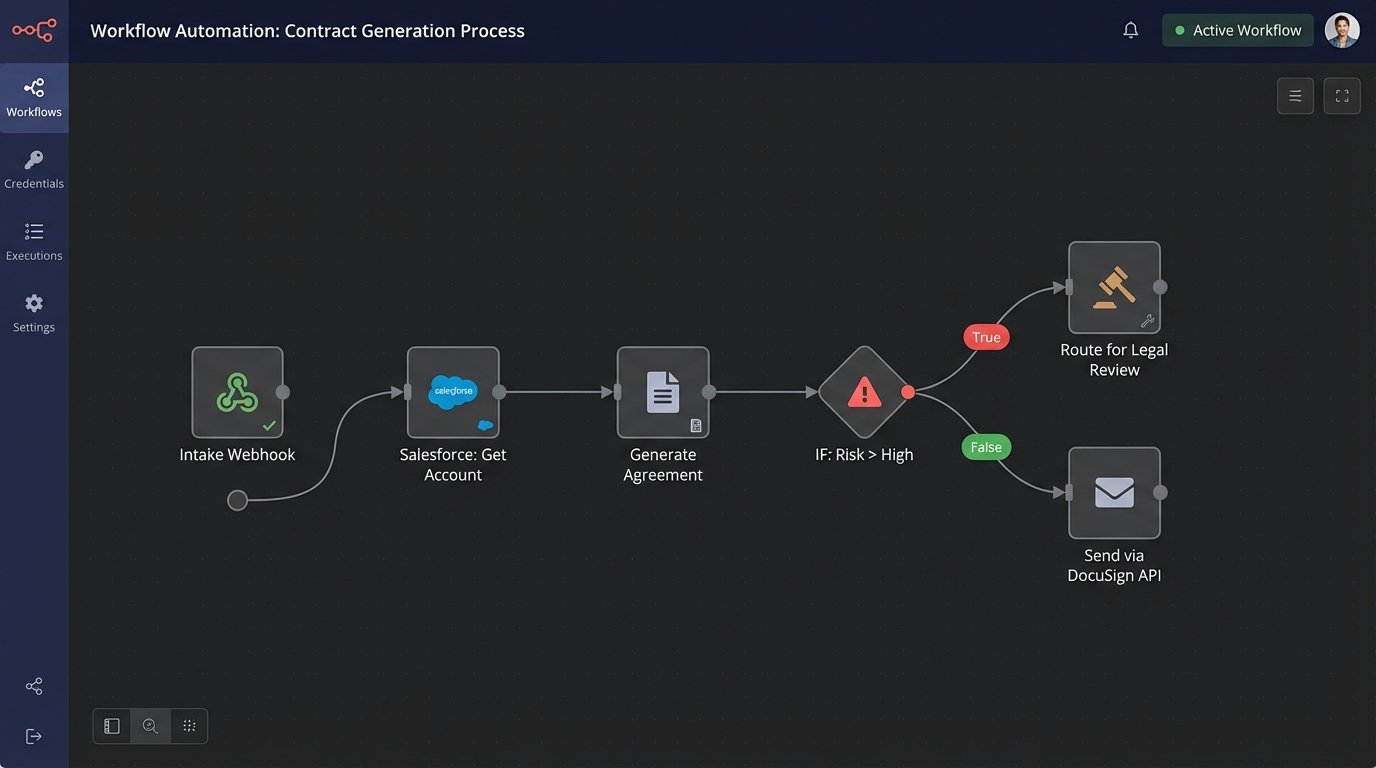
The integration points are the most common points of failure. Connecting to a legacy case management system or a heavily customized Salesforce instance is never as simple as plugging in credentials. You will spend a significant amount of time debugging API calls, handling authentication issues, and writing code to bypass limitations in outdated endpoints. The documentation is often wrong, and the rate limits are unforgiving.
The True Asset: Structured Contract Data
Generating a PDF faster is a low-value accomplishment. The transformative benefit of contract automation is turning a static, dead document into a set of structured, queryable data points. When your system generates a contract, it should not just spit out a file. It should write the key terms back to a database or a Contract Lifecycle Management (CLM) platform.
Instead of an MSA sitting in a folder, you now have a data object in a database that looks something like this:
{
  "contract_id": "MSA-2024-0012",
  "counterparty": "Acme Corp",
  "effective_date": "2024-08-01",
  "term_months": 36,
  "liability_cap_usd": 500000,
  "governing_law": "New York",
  "auto_renews": true
}
This is the real asset. Now the legal department can run reports. They can instantly find all agreements governed by New York law that are set to auto-renew in the next 90 days. They can query every contract with a liability cap below a certain threshold. This level of portfolio analysis is impossible when your contracts are just Word documents saved on a shared drive. This data becomes the foundation for business intelligence and proactive risk management.
The document itself becomes an artifact of the data. The data is the source of truth.
Architecting for Long-Term Maintenance
The systems built today will become the legacy platforms of tomorrow. Building for short-term speed often results in a rigid, unmaintainable mess. The primary architectural goal should be modularity. Avoid creating massive, multi-jurisdictional templates with hundreds of conditional rules. These are impossible to debug and update.
A better architecture relies on a centralized clause library. The main template is a shell that dynamically pulls in the correct, pre-approved clauses based on the transaction data. When the litigation team needs to update the arbitration clause, they update it in one place, the clause library. The change then propagates to all future contracts generated for that context without anyone needing to touch the main templates.
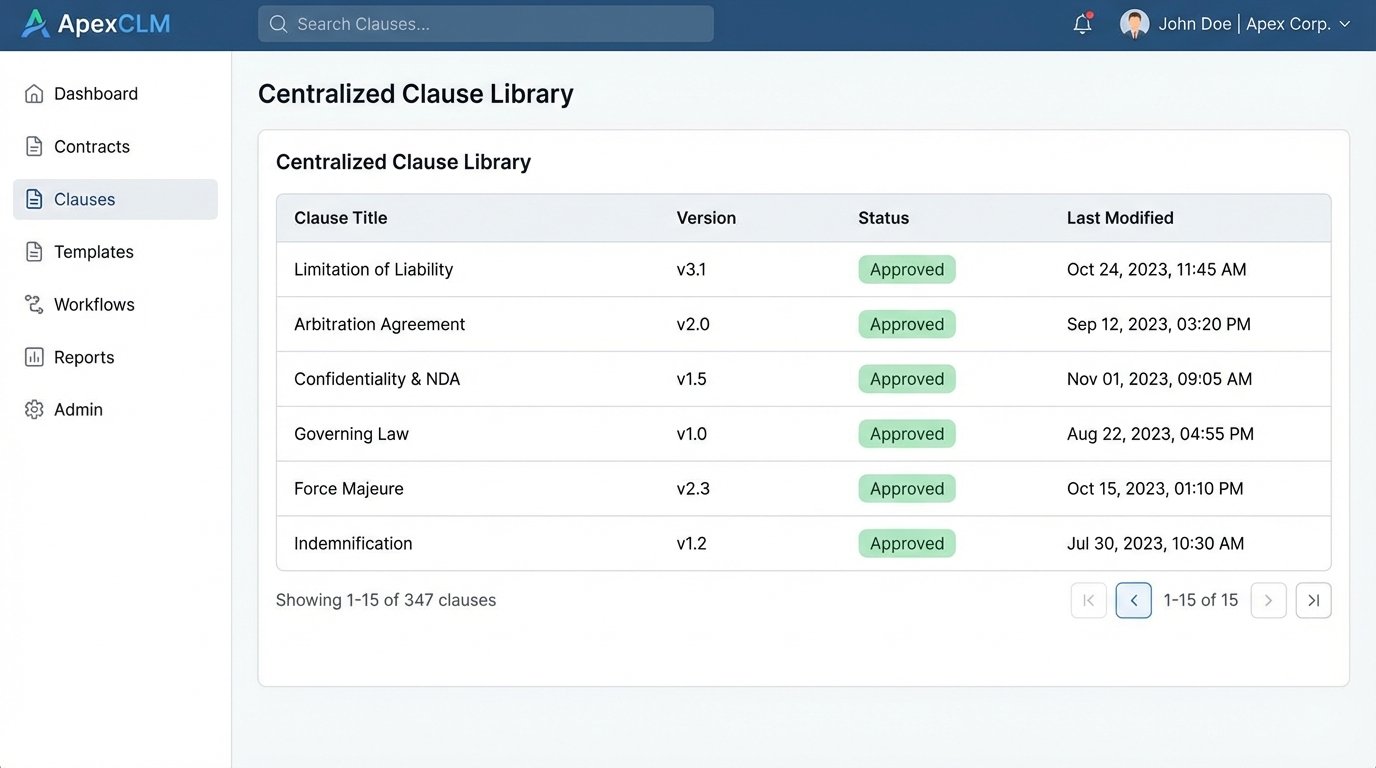
Furthermore, contract templates should be treated like code. They need to be in a version control system like Git. When a lawyer requests a change to the standard NDA, that change should be managed through a pull request. This creates an audit trail, allows for review before deployment, and provides the ability to roll back to a previous version if the change introduces an error.
Building a robust automation system is not a one-off project. It requires a fundamental shift in how the legal department operates, forcing it to think about its work product as data. The initial setup is costly and politically difficult, but the alternative is to be buried under an ever-increasing volume of low-value, repetitive drafting work.