
Your Manual Scheduling is a Liability
Let’s be direct. The standard realtor practice of juggling texts, emails, and phone calls to schedule a property showing is not just inefficient. It’s an active financial liability. Every minute of latency between a lead’s inquiry and a confirmed appointment is a window for a competitor to intercept a commission that should have been yours. Relying on a human to perfectly execute a repetitive, time-sensitive task is a design flaw that belongs in the past.
The argument is not about saving a few minutes. It’s about engineering a system that plugs revenue leaks. The manual back-and-forth of “Are you free Tuesday at 2?” is a friction point. Friction causes leads to drop out of the funnel. The goal is to strip the logistical friction down to zero, forcing a lead from initial interest to a confirmed calendar event with minimal human intervention.
Deconstructing the Failure Points of Manual Lead Handling
The typical lifecycle of a lead in a non-automated brokerage is a sequence of potential failures. It starts with an inquiry from Zillow or a website form. The lead’s data now sits in an email inbox, a system not designed for state management. The agent sees it an hour later, maybe two if they are in a meeting. This delay is the first failure.
Next, the agent initiates contact. The conversation splits across multiple channels. Details are confirmed via email, but the time is negotiated over text. There is no single source of truth. This data fragmentation is the second failure. The agent then has to manually create a calendar event, manually add the address, and manually set a reminder. Each manual step is an opportunity for typos, incorrect addresses, or forgotten alerts. This is a system begging for human error.
The Architectural Solution: A State Machine, Not a To-Do List
A proper automation strategy treats every lead as an object within a state machine. The lead moves through predictable states: New, Contacted, Scheduled, Showing Completed, Nurture, Closed. The transitions between these states are triggered by events, not by a person’s memory. Building this requires four core components that must speak to each other through APIs.
- An API-Driven CRM: This is the system’s brain. It must have robust webhook support. A webhook is a message sent from an app when something happens. If your CRM cannot send and receive webhooks, it is a digital rolodex. It is not a tool for automation. It must be the central database tracking the state of every lead.
- A Programmable Scheduling Engine: Tools like Calendly or Acuity have APIs. This is non-negotiable. You need the ability to generate unique scheduling links per lead, pre-fill their data, and receive a webhook notification the instant an appointment is booked. This is how the system knows the lead’s state has changed from ‘Contacted’ to ‘Scheduled’.
- An Independent Communication Layer: Relying on your personal phone or email client is not scalable or automatable. You need services like Twilio for SMS and SendGrid for email. These platforms allow you to send programmatic, templated communications triggered by events in your system. An appointment confirmation SMS should be sent by the system, not by an agent’s thumb.
- Middleware for Logic: The components need a way to talk to each other. For simple workflows, a platform like Zapier or Make can work. For anything more complex, a serverless function (AWS Lambda, Google Cloud Function) is the correct tool. This is the code that listens for a webhook from one service and executes a series of actions on the other services.
Executing the Automated Lead-to-Showing Pipeline
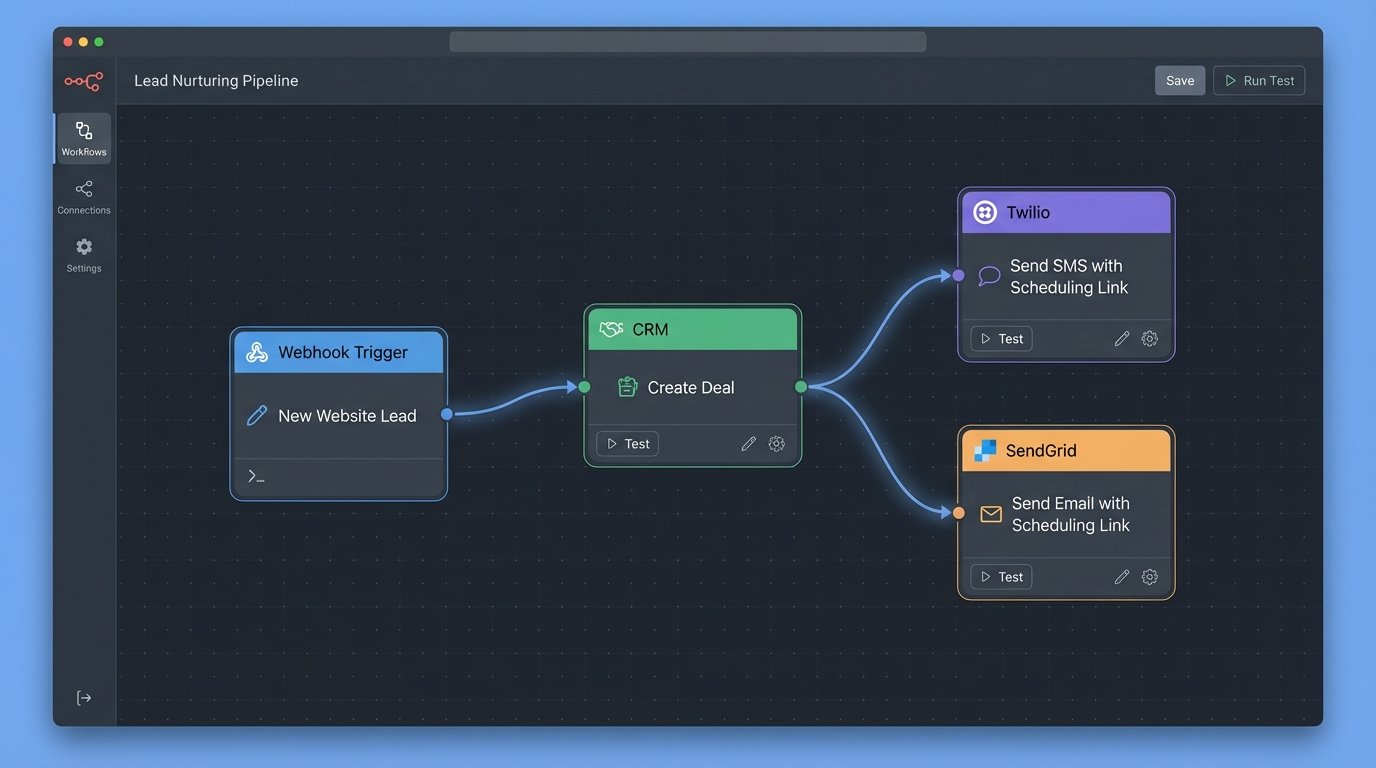
Let’s trace the data flow. A new lead submits a form on your website for the property at 123 Main St. Your web server does not send an email notification. Instead, it makes a single POST request to your middleware endpoint, your serverless function, with a JSON payload containing the lead’s data.
The payload is clean and structured. It’s not buried in the body of an email that needs to be parsed.
{
"lead_source": "WebsiteForm",
"timestamp": "2023-10-27T10:00:00Z",
"contact": {
"first_name": "Jane",
"last_name": "Doe",
"email": "jane.doe@example.com",
"phone": "+15551234567"
},
"property": {
"mls_id": "987654",
"address": "123 Main St, Anytown, USA"
}
}
The middleware function triggers instantly. First, it makes an API call to your CRM to create a new contact and a new deal, setting the deal stage to ‘New Lead’. Second, it generates a unique scheduling link for Jane Doe that is tied to this specific deal. Third, it executes two parallel communication actions.
An SMS is sent via Twilio: “Jane, we received your inquiry for 123 Main St. You can book a showing directly on my calendar here to save time: [unique_scheduling_link]”. Simultaneously, an email is sent via SendGrid with property photos and the exact same link. The lead now has two immediate, actionable paths to schedule a showing, less than five seconds after they clicked ‘submit’.
Buffer Times and State Management
The scheduling engine must have a two-way sync with the agent’s primary calendar (e.g., Google Calendar). When a lead clicks the link, they only see true availability. The automation logic should also enforce rules that are impossible to manage manually, like automatically adding a 30-minute travel buffer before and after every single showing. This prevents the agent from having back-to-back appointments in different towns.
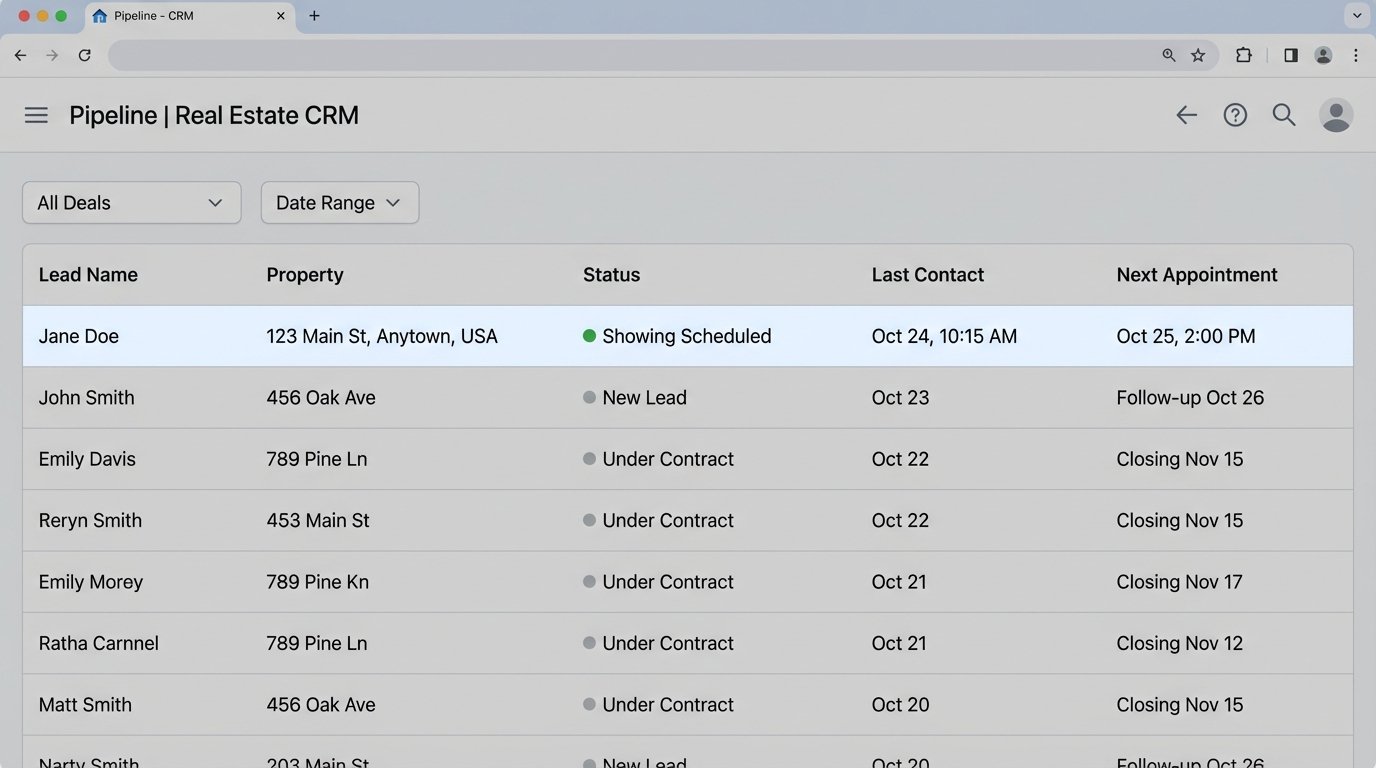
When the lead books a time, the scheduling engine fires its own webhook back to your middleware. The function parses this event. It then makes another API call to the CRM to update the deal stage from ‘New Lead’ to ‘Showing Scheduled’. It also adds the confirmed appointment date and time to a custom field on the deal record. The system state is now current and accurate without the agent lifting a finger.
Systematizing the Pre-Showing and Post-Showing Sequence
The automation does not end at the booking. It manages the entire client experience to reduce no-shows and capture critical feedback. Twenty-four hours before the appointment, a workflow triggers an email reminder. Two hours before, it triggers an SMS confirmation. These are not “nice-to-haves”. They are mechanisms to protect the agent’s most valuable asset: their time.
The post-showing data gap is where most brokerages fail. An agent finishes a showing, and the crucial context of that meeting lives only in their head. The system needs a simple, low-friction way for the agent to inject post-showing data back into the CRM. This could be a simple internal web form or a dedicated phone number that parses SMS commands.
For example, the agent sends a text to a Twilio number: “MLS 987654 – HOT”. The middleware function receives this, finds the deal associated with that MLS ID for that day, and updates its stage to ‘Showing Complete – Hot’. This state change then triggers a completely new automation: a follow-up sequence designed specifically for interested buyers. If the text was “COLD”, it triggers a different, long-term drip campaign. Trying to manage this follow-up process manually with a high lead volume is like trying to direct airport traffic with hand signals from the parking lot. You can’t see the full picture, and a collision is inevitable.
Confronting the Objections
The primary objection is that this approach is “impersonal”. This fundamentally misunderstands the goal. The objective is to automate the impersonal, mechanical tasks of scheduling and data entry. This frees the agent to spend their time on high-value, personal interactions. The automation handles the logistics. The human builds the relationship. A system that instantly confirms an appointment is a better client experience than one that makes them wait three hours for a reply.
The second objection is cost. The question is not what this system costs to build and maintain. The question is what your current manual process is costing you in lost deals. One lost commission due to a slow response time can pay for years of server costs and API subscriptions. The real wallet-drainer is continuing to operate with a leaky funnel.
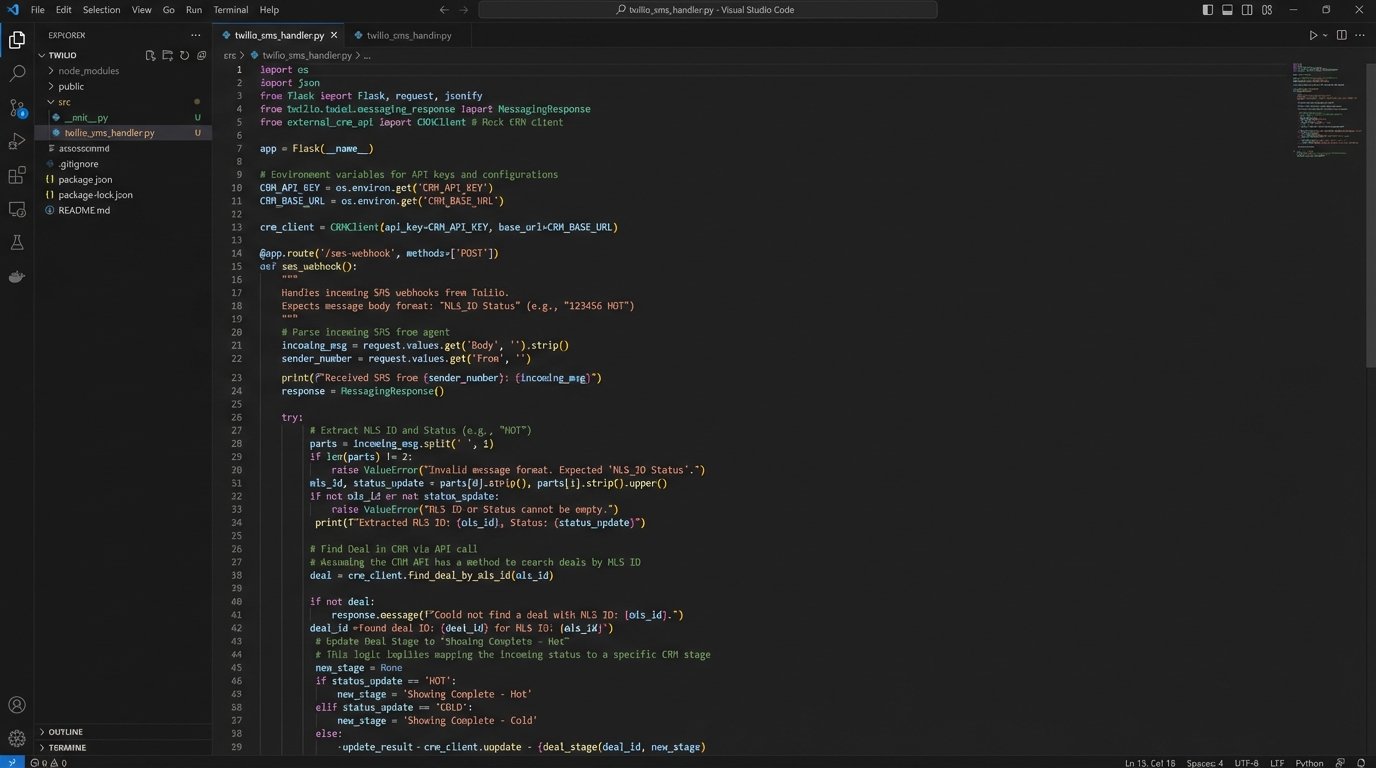
This level of automation requires a technical implementation. It is not an off-the-shelf product you can buy with a credit card. It requires a developer to connect the APIs and write the middleware logic. The alternative is to accept the limitations and failures of a manual process.
The market is defined by speed. A lead expects an immediate response. Systems, not people, are best equipped to deliver that. Building an automated scheduling and follow-up machine is not about technological novelty. It is a calculated business decision to build a structural advantage that your competitors who rely on manual effort cannot match.