
Stop Chasing Ghosts in a Machine
Every year, some new marketing channel gets crowned the “email killer.” First it was social media DMs. Now it’s SMS and AI chatbots. The narrative is always the same: open rates are higher, engagement is immediate, and email is a digital dinosaur. This is a dangerously simplistic view peddled by people who don’t have to maintain the systems or answer for the data integrity failures at 2 AM.
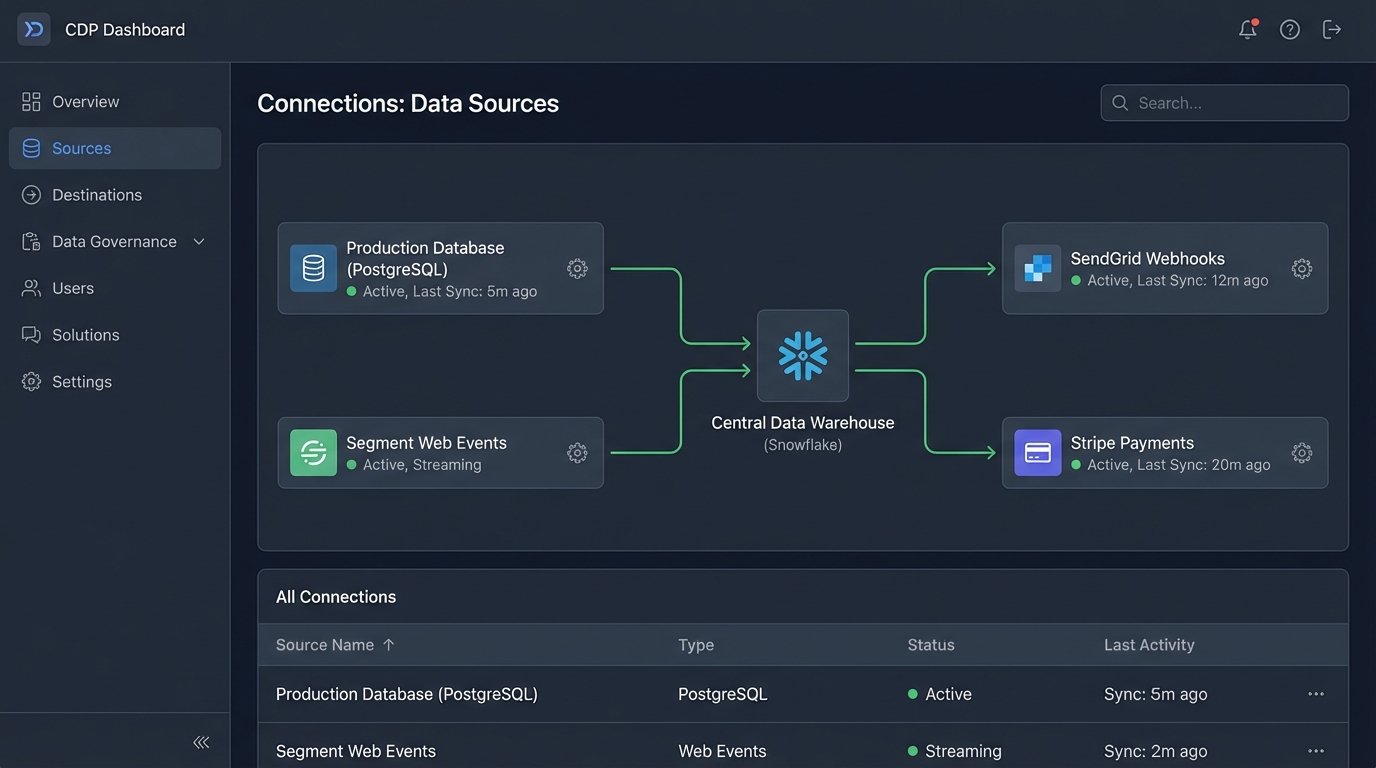
The truth is that for a high-value, long-cycle transaction like real estate, email automation isn’t just relevant. It’s the load-bearing wall of your entire marketing structure. The alternatives are brittle, expensive, and built on rented land. When you strip away the hype, email remains the only channel that gives you true data ownership, deep segmentation capability, and a stable, mature API ecosystem. Everything else is a tactical supplement, not a strategic replacement.
Data Sovereignty vs. Platform Dependency
The core problem with building your lead nurture system on WhatsApp, Instagram DMs, or even SMS is that you don’t own the pipeline. You are a tenant on someone else’s platform, subject to their API changes, pricing whims, and arbitrary account suspensions. We’ve all seen it happen. A platform changes its API terms, and suddenly a critical integration that nurtures high-intent leads goes dark. Your entire funnel is broken because a third party decided to change the rules.
An email list is a durable asset. The data is yours. You can migrate it between ESPs, pipe it into your own data warehouse, and enrich it with data from a dozen other sources without asking for permission. This isn’t just about security. It’s about architectural freedom. You can build a central customer profile in your CRM or CDP and use email as the primary activation layer, knowing that the connection is stable and the data flow is under your control. Trying to build a similar source of truth on the back of a social media messaging platform is like trying to build a skyscraper on a foundation of sand.
Your lead data is too valuable to be held hostage by another company’s terms of service.
Segmentation: The Scalpel vs. The Sledgehammer
Real estate marketing requires precision. A generic “New Listing!” SMS blast is noise. A targeted email showing a prospect three new condo listings that match their previously viewed price point, square footage, and neighborhood is a signal. This level of personalization is functionally impossible to automate at scale with most other channels. SMS is a blunt instrument. It’s effective for appointment reminders, but it’s a terrible medium for complex, behavior-driven communication.
A properly engineered email automation platform allows you to build segments that are layers deep. We can pull data from multiple sources to create a hyper-specific audience. For example, we can logic-check for a lead who has visited three specific listings in the “$700k-$850k” range in the last 14 days, downloaded a “First-Time Homebuyer’s Guide,” but has not opened the last two market update emails. This is a specific behavioral profile that signals intent and requires a unique follow-up sequence. We inject this data directly into the ESP to trigger a workflow.
This isn’t about simple tags like “buyer” or “seller.” It’s about creating dynamic, self-updating segments based on real-time event streams from your website and CRM. An SMS platform sees a phone number. A proper email automation system sees a detailed, evolving history of a person’s interests and intent. You cannot nurture a multi-million dollar deal with a 160-character text message.
The Unseen Power of Webhooks and API Maturity
The developer experience matters. The tooling around email is battle-hardened and predictable. SMTP is a decades-old protocol. Modern email APIs from providers like SendGrid, Postmark, or Mailgun are well-documented, have stable client libraries in every major language, and provide incredibly detailed feedback through webhooks. This feedback loop is the heart of intelligent automation.
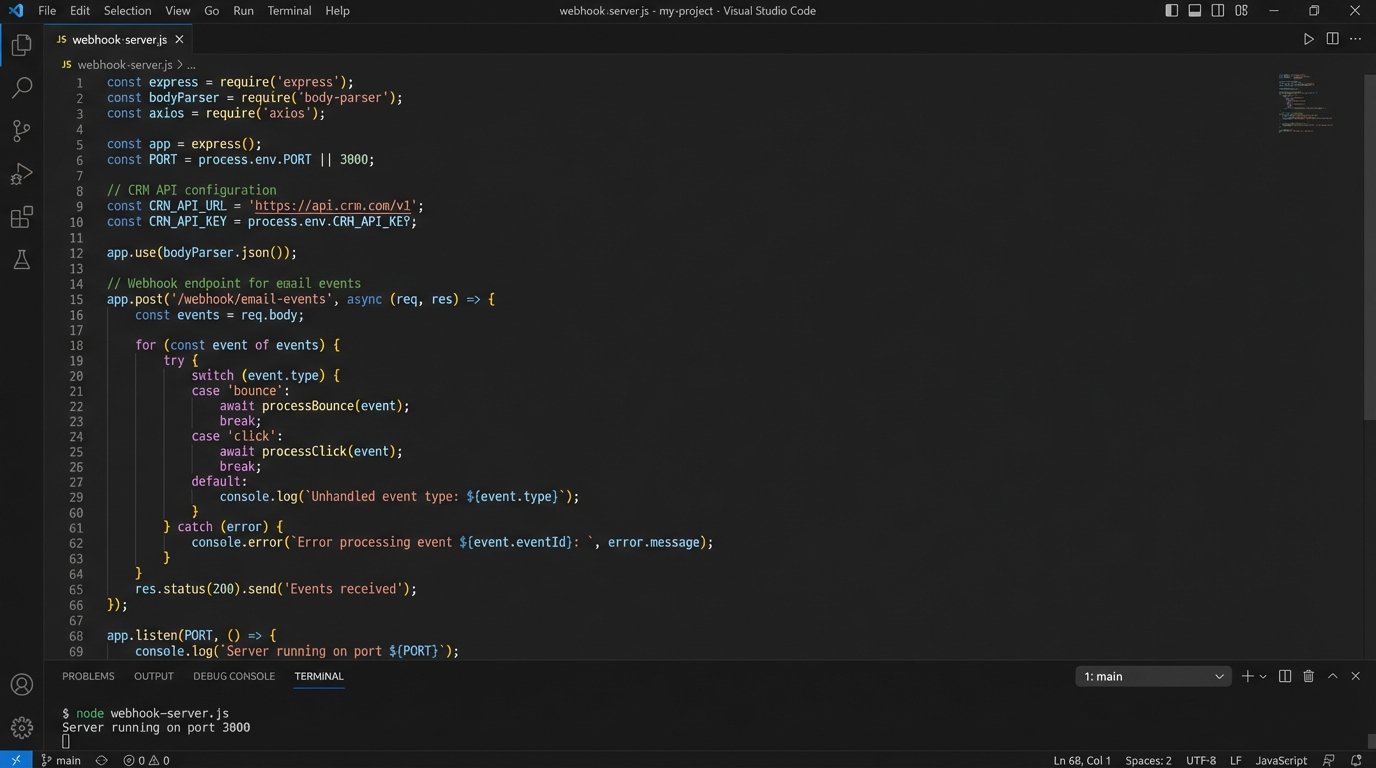
When an email hard bounces, a webhook can fire instantly. We can build a listener that captures this event, parses the payload, and automatically updates the contact’s status in the CRM to “Invalid Email.” This prevents us from sending to a dead address, which protects our sender reputation. When a user clicks a specific link tagged with a “viewed_property_id,” another webhook can fire, pushing that event back to our system to update their interest profile. This creates a closed-loop system where user actions continuously refine our data.
Here’s a basic Node.js Express server snippet that listens for bounce events from a hypothetical email provider. This is the kind of simple, powerful automation that is difficult to replicate reliably in the walled gardens of social messaging.
const express = require('express');

const bodyParser = require('body-parser');

const crmApi = require('./crm-api'); // Your CRM API wrapper
const app = express();
app.use(bodyParser.json());
const PORT = process.env.PORT || 3000;
// Webhook endpoint to receive events from the email service
app.post('/email-webhooks', async (req, res) => {
const events = req.body;
for (const event of events) {
if (event.type === 'bounce' && event.bounce_type === 'HardBounce') {
const emailAddress = event.data.recipient;
const reason = event.data.reason;
console.log(`Processing hard bounce for: ${emailAddress}`);
// Force update the CRM record
try {
await crmApi.updateContactStatus(emailAddress, 'Email Invalid', { bounceReason: reason });
console.log(`Successfully updated CRM for ${emailAddress}`);
} catch (error) {
console.error(`Failed to update CRM for ${emailAddress}:`, error);
// Logic to retry or log for manual review
}
}
if (event.type === 'click') {
const emailAddress = event.data.recipient;
const clickedUrl = event.data.url;
console.log(`${emailAddress} clicked on ${clickedUrl}`);
// Logic to parse URL for property IDs or other data
// Then update the contact's interest profile in the CRM
// await crmApi.logContactActivity(emailAddress, 'Clicked Property Link', { url: clickedUrl });
}
}
res.status(200).send('Webhook processed');
});
app.listen(PORT, () => {
console.log(`Webhook server listening on port ${PORT}`);
});
This is routine work for email automation. Trying to get this level of granular, reliable feedback from a social media DM platform is often a painful exercise in reverse-engineering undocumented API behaviors or paying exorbitant fees for enterprise-level access. You’re constantly fighting the platform instead of working with it.
Addressing the “Open Rate” Argument
The primary argument for SMS is always the open rate. A 98% open rate for SMS looks fantastic next to a 25% open rate for email. But this is a vanity metric. An “open” on an SMS is a low-friction, low-intent action. The notification pops up, the user glances at it, and it’s marked as read. It communicates almost no information about the user’s actual interest.
An email open, followed by a click on a specific link to a property listing, is a high-intent signal. It tells you exactly what the person is interested in. In real estate, the goal isn’t just to get your message seen. The goal is to deliver rich, detailed content like virtual tours, photo galleries, floor plans, and market analysis documents. You are not just sending a notification. You are delivering a digital brochure. Shoving a link to a high-resolution photo gallery into an SMS is like sending a firehose through a needle. It’s the wrong tool for the job.
We should measure what matters. For a considered purchase, engagement depth trumps open rates every time. A 1% click-through rate on a targeted email sequence that leads to five scheduled viewings is infinitely more valuable than a 98% open rate on an SMS blast that generates zero replies.
An Architecture That Works
A durable real estate automation engine doesn’t rely on a single channel. It uses email as the central nervous system. The architecture is straightforward.
- Data Core: A CRM (like Follow Up Boss) or a CDP serves as the single source of truth for all contact and lead data. All roads lead back here.
- Event Capture: A JavaScript tracking snippet (from Segment, Rudderstack, or even a custom solution) is deployed on the brokerage website. It captures page views, form submissions, and clicks on listings.
- Automation Hub: An advanced ESP (like ActiveCampaign or a self-hosted Mautic instance) subscribes to events from the tracking script and the CRM. It houses the segmentation logic and the automated communication sequences.
- Delivery Layer: The ESP uses a reliable SMTP service for delivery, processing bounces and other feedback via webhooks to keep the data core clean.
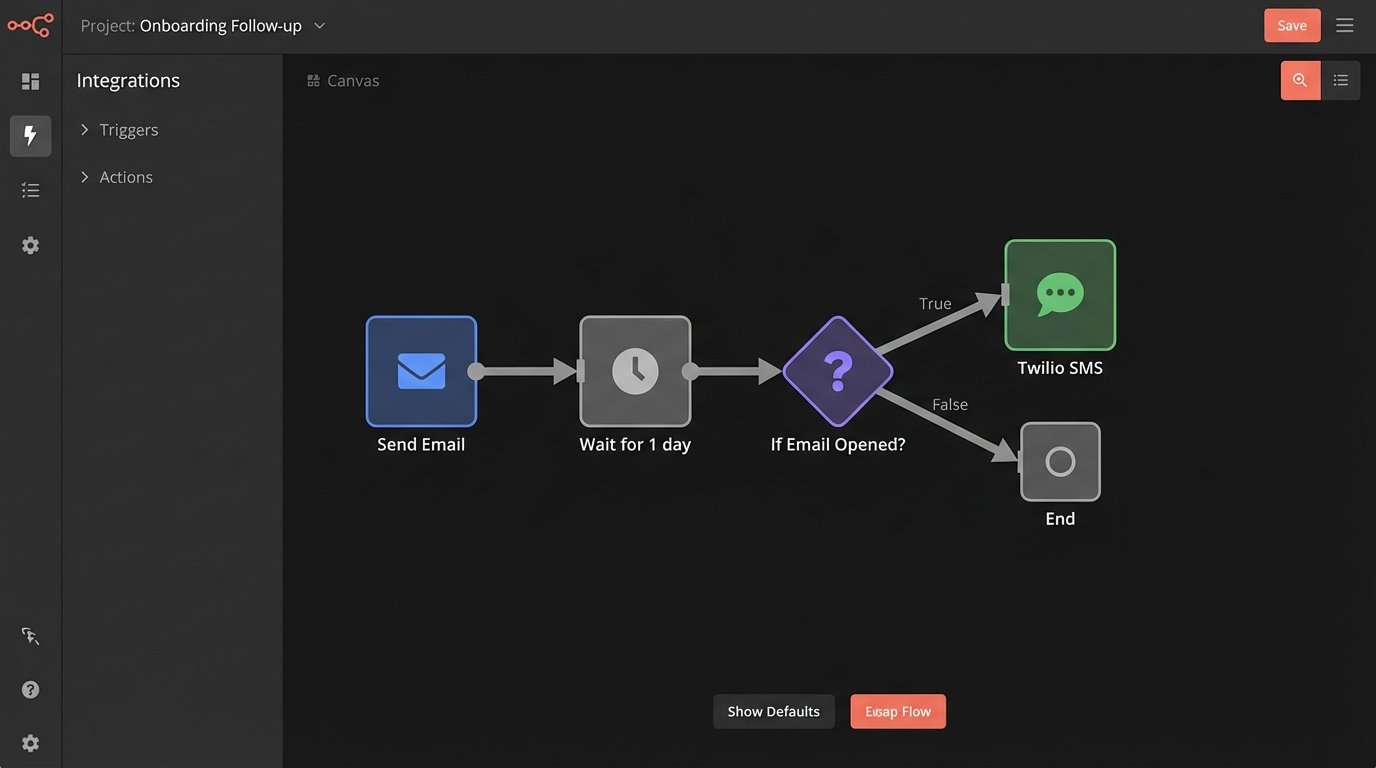
In this model, other channels like SMS become tactical tools triggered by the core system. For instance, after a lead is sent an email with showing times, a workflow can check if they’ve clicked the scheduling link within two hours. If not, it can trigger a targeted SMS via an API like Twilio: “Just sent you an email to book a viewing for 123 Main St. Let me know if you didn’t receive it.” The SMS supports the email workflow. It doesn’t replace it.
The industry’s obsession with new, shiny channels is a distraction. They offer the illusion of innovation while ignoring the foundational engineering required for effective, long-term lead nurturing. Before you invest six figures into an AI chatbot platform or an enterprise SMS plan, take a hard look at your email automation. Is it a reactive, intelligent system that leverages all your available data? Or is it a neglected tool sending out a generic monthly newsletter?
Fix the engine before you worry about the chrome. In real estate, the engine is, and will continue to be, a well-architected email automation system.