Stop Asking If Agents Should Use Text Marketing. Start Asking How to Engineer It Without Getting Fined into Oblivion.
The debate around real estate agents using SMS is fundamentally flawed. It focuses on marketing fluff instead of the engineering realities. The real conversation is about TCPA compliance, carrier filtering algorithms, and the brittle infrastructure most agents are forced to use. Anyone can buy a list and blast out texts from a cheap CRM plugin. Most of those messages will either land in a spam filter or trigger a lawsuit.
The problem is not the medium. The problem is the implementation. We are talking about an industry where the primary data source, the Multiple Listing Service or MLS, often relies on the Real Estate Transaction Standard, a protocol that makes SOAP look modern. Injecting a high-throughput, low-latency communication channel like SMS into this ecosystem requires more than a Zapier connection. It requires a deliberate architecture that can handle asynchronous events and manage state.
The Default Approach: A Fast Track to Blocking and Blacklisting
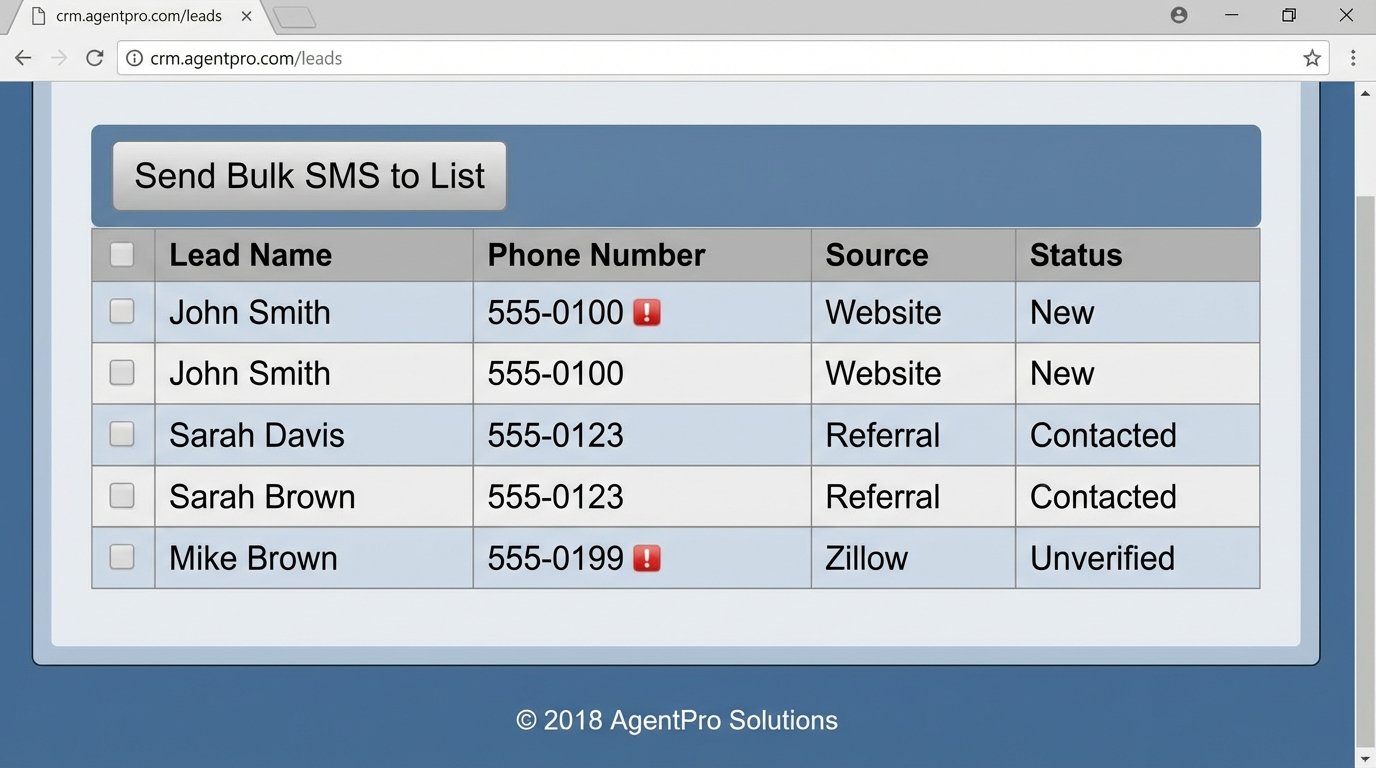
Most agents get sold on an “all-in-one” CRM that bolts on an SMS feature. Under the hood, this is usually just a wrapper for a bulk messaging provider, with zero intelligence. The system sends a generic message to every new lead that hits the database. This pattern is not just inefficient, it actively damages the agent’s sender reputation. Carriers like T-Mobile and Verizon use sophisticated filtering to kill these campaigns before they even reach the handset.
This is A2P 10DLC enforcement in action. Carriers demand that application-to-person traffic is registered and vetted. Unregistered, high-volume campaigns originating from a single long code get throttled immediately. The CRM salesperson will never mention this. They just sell the button that says “Send.”
Then you have the data problem. The lead source is typically a web form with minimal validation. The data is dirty. The agent gets a name, an email, and a phone number that might be disconnected or belong to a litigator looking for a quick settlement. Firing off an automated text without a verifiable opt-in timestamp and source URL is reckless. The potential fines for a single violation can eclipse the commission on a sale.
It’s a system designed for failure, built on top of unreliable data and a broadcast mentality from a decade ago.
Building a Smarter Pipeline: Event-Driven Architecture
A durable text marketing system for real estate cannot be a simple batch process. It must be event-driven. The system needs to react to specific triggers in real-time, not just a new entry in a database table. The goal is to send the right message at the exact moment it becomes contextually relevant, which is the only way to bypass the perception of spam.
This involves creating a central nervous system that listens for signals from multiple sources:
- Lead Capture Webhooks: A new inquiry from Zillow, Realtor.com, or the agent’s own site. This is the initial trigger.
- CRM State Changes: The agent manually changes a lead’s status from “New” to “Contacted” or “Viewing Scheduled.” This is a crucial signal to halt or modify automated follow-ups.
- MLS API Events: A property a lead has favorited drops in price or goes under contract. This is a high-value, time-sensitive event.
These disparate signals need to be ingested, normalized, and processed by a central logic engine. Shoving a firehose of raw event data from three different APIs through the keyhole of a state machine is the core engineering challenge. You cannot do this with a point-and-click automation builder. It requires a message queue like RabbitMQ or AWS SQS to act as a buffer, preventing the system from collapsing under a sudden spike in new leads.
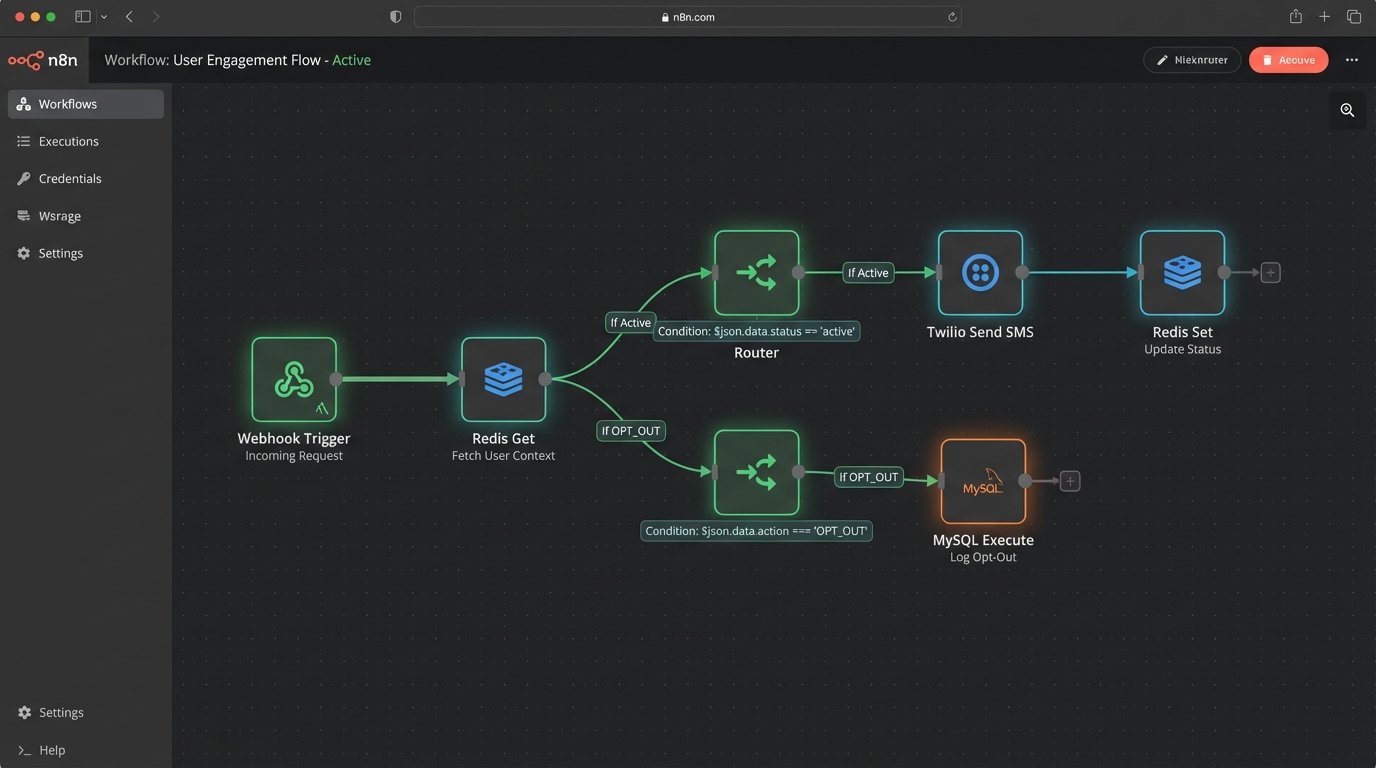
The queue feeds a worker, likely a serverless function, that is responsible for one thing: state management. For every lead, the system must know if they are a new inquiry, if they’ve been contacted, or if they’ve explicitly opted out. A key-value store like Redis is perfect for this, holding a simple state object for each phone number.
The Logic Core: Beyond “If This, Then That”
Once you have a stream of events and a state machine, you can build a logic core that makes intelligent decisions. The function pulls a message from the queue, retrieves the current state of the lead from Redis, and then executes a set of rules. This is not a simple “if new lead, send text” workflow. It’s a decision tree.
Consider this sequence:
- A new lead for property `123 Main St` comes in. The system checks Redis. No state exists.
- The logic core generates a text: “Saw your interest in 123 Main St. It’s still available. Are you free for a viewing this week?” It then calls the Twilio API to send the message.
- Simultaneously, it writes the lead’s state to Redis: `{ “status”: “CONTACTED_SMS”, “lastProperty”: “123 Main St”, “timestamp”: “…” }`.
- The lead replies “STOP”. A Twilio webhook fires into our system. The logic core receives the webhook, retrieves the lead’s state, and updates it to `{ “status”: “OPT_OUT” }`. All future messages are blocked at the logic level.
This architecture decouples the event source from the action. The CRM did not send the text. The MLS API did not send the text. A stateless, isolated function processed an event and made a calculated decision based on the lead’s history. This is the only way to build a compliant and effective system.
Integrating with the SMS Gateway: The Final Mile
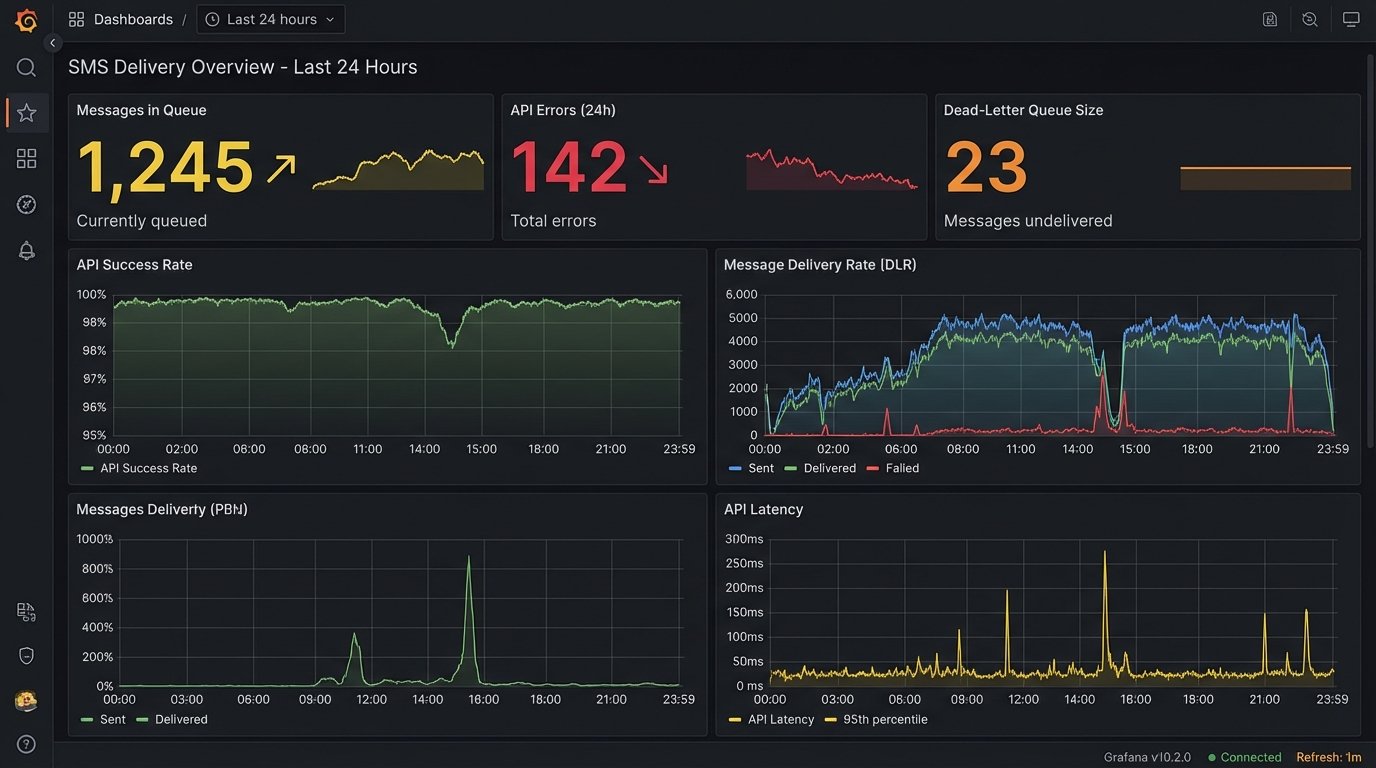
The final component is the interaction with the SMS gateway itself. API calls to services like Twilio or Vonage need to be wrapped in robust error handling. You must account for API rate limits, invalid phone numbers, and network failures. A failed API call should not simply be dropped. It should be pushed to a dead-letter queue for manual review or a retry mechanism with exponential backoff.
Here’s a conceptual Python snippet showing a call to an SMS API, stripped down to the essentials. This is not production code, but it illustrates the required logic checks for handling the API response and potential failures. You have to anticipate that the gateway will reject your request for any number of reasons.
import os

import requests

import logging
# Basic logging configuration
logging.basicConfig(level=logging.INFO)
# A simplified function to send a text message via a generic SMS API
def send_sms(phone_number, message_body):
"""
Sends an SMS and handles basic API responses.
This is a conceptual example, not a production-ready client.
"""
api_key = os.environ.get("SMS_API_KEY")
api_endpoint = "https://api.sms-provider.com/v1/messages"
if not api_key:
logging.error("SMS_API_KEY environment variable not set.")
return False
headers = {
"Authorization": f"Bearer {api_key}",
"Content-Type": "application/json"
}
payload = {
"to": phone_number,
"from": "+15551234567", # A registered A2P 10DLC number
"body": message_body
}
try:
response = requests.post(api_endpoint, headers=headers, json=payload, timeout=10)
# Check for non-2xx status codes which indicate an error
response.raise_for_status()
response_data = response.json()
message_sid = response_data.get("sid")
status = response_data.get("status")
if status in ["queued", "sending"]:
logging.info(f"Message {message_sid} successfully queued for {phone_number}.")
return True
else:
# Handle unexpected but successful status codes
logging.warning(f"Message {message_sid} to {phone_number} has an unusual status: {status}.")
return False
except requests.exceptions.HTTPError as http_err:
# Catches 4xx and 5xx errors
logging.error(f"HTTP error occurred: {http_err} - Response: {response.text}")
# Here you would add logic to push to a dead-letter queue
return False
except requests.exceptions.RequestException as req_err:
# Catches DNS errors, connection timeouts, etc.
logging.error(f"Request error occurred: {req_err}")
return False
# Example usage
# send_sms("+15559876543", "Regarding your inquiry on 123 Main St: A price reduction was just posted. Are you still interested?")
The code must also be configured to listen for delivery receipts. A message being accepted by the API does not mean it was delivered. A delivery webhook that reports “undelivered” for a specific number is a critical signal. That number should be flagged in your state machine to prevent wasting money trying to contact it again.
The Inescapable Trade-Off: Cost vs. Control
Building this kind of system is not cheap. It requires development resources, cloud infrastructure costs, and ongoing maintenance. It’s a wallet-drainer compared to a $50/month CRM add-on. That is the trade-off. You can have a cheap, brittle system that poses a significant legal and financial risk, or you can invest in a proper communication architecture.
The off-the-shelf tools optimize for a quick sale, not for deliverability or compliance. A custom event-driven system optimizes for long-term ROI. It ensures higher engagement because messages are contextually relevant. It mitigates legal risk by creating an auditable trail of consent and communication. It scales because the components are decoupled.
So the question is not whether a real estate agent should use SMS. The question is whether they, or the technical teams supporting them, are willing to engineer a solution that actually works. Anything less is just setting up a system to send digital junk mail, and there is no long-term value in that.
Forget the generic marketing blasts. The future is automated, one-to-one conversations triggered by real-world events. That requires an engineer, not a marketer. And it’s the only approach that won’t get your number blacklisted by every carrier on the continent.