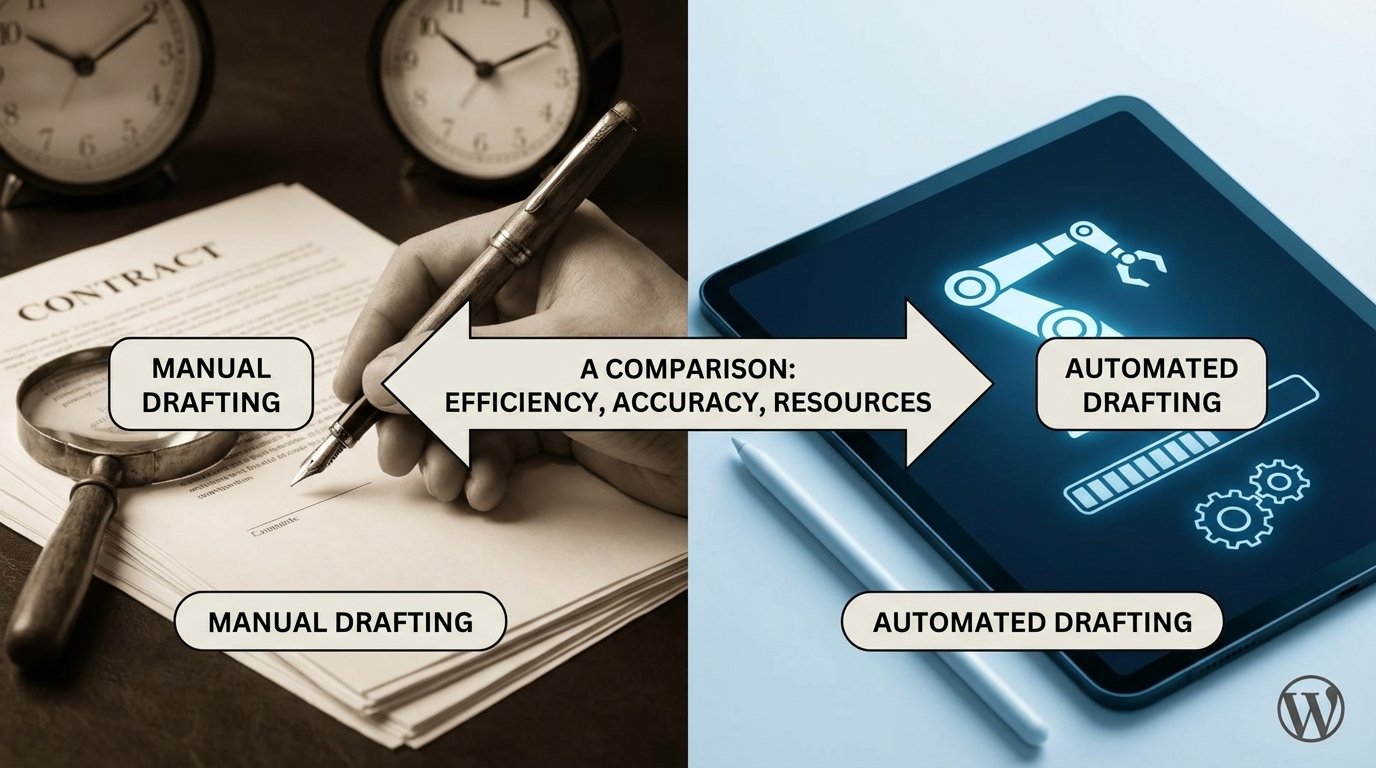
The core failure of manual contract drafting is not its speed. It is the baked-in assumption that a human can reliably perform thousands of repetitive, rule-based text manipulations without error. This assumption is false. Every manually drafted agreement is a monument to unmanaged risk, built on a foundation of copy-paste actions and inconsistent terminology pulled from a dozen preceding documents.
Moving to an automated system is not about buying software. It is about fundamentally re-architecting the process of legal document creation, shifting the primary work from clerical text replacement to front-loading logical validation.
Deconstructing the Manual Process: A High-Frequency Error Generator
A manual draft begins with a search for a precedent document. This is the first point of failure. The so-called “master template” is often just the last deal’s final version, complete with client-specific nuances and negotiated deviations that are irrelevant or detrimental to the new matter. The attorney then performs a high-stakes find-and-replace operation, hoping to catch all instances of the prior client’s name, effective dates, and monetary values.
This process is structurally unsound. It treats a legal document like a simple text file, ignoring the relational data embedded within it. A change in the governing state, for example, should trigger a cascade of corresponding clause updates. Manually, this depends entirely on the drafter’s memory and diligence at that exact moment. The result is a document riddled with internal inconsistencies and orphaned definitions.
The Version Control Catastrophe
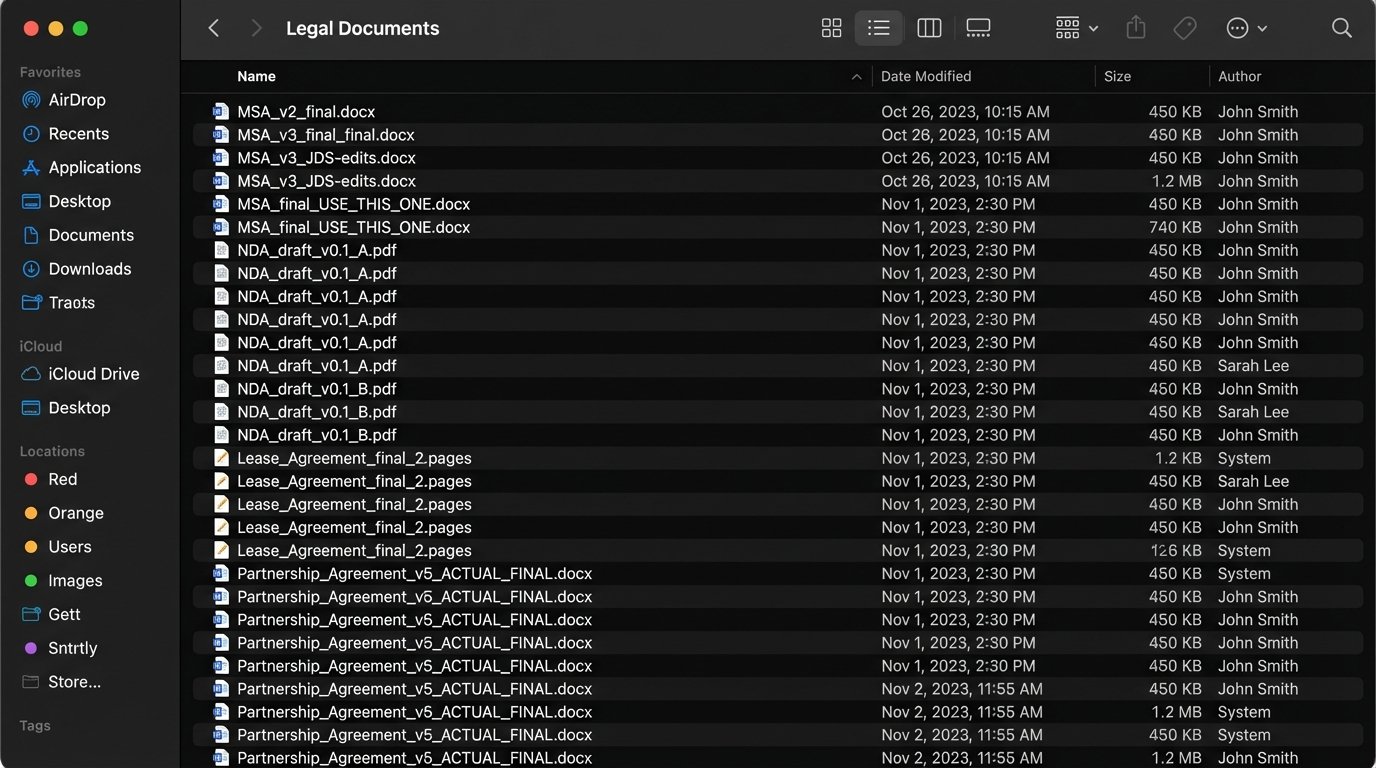
File management in a manual workflow is a notorious disaster. Shared drives fill with files named `MSA_v3_final_final_JDS-edits.docx`. This lack of a single source of truth means that edits are lost, parallel versions are created, and nobody is ever certain they are working from the correct document. This isn’t a workflow. It’s just chaos with a file-saving convention.
This chaos directly translates to risk. An associate redlining an outdated version wastes billable hours. Worse, a partner signing a version that omits a key negotiated term exposes the firm and the client to direct liability. The file name is a weak, unreliable form of metadata.
The resources consumed are not just the hours spent drafting. The real cost is in the multi-layered review cycles required to catch the inevitable human errors. A junior associate drafts, a mid-level reviews, and a partner gives the final sign-off. Each layer is hunting for the errors introduced by the layer below, a massively inefficient and expensive quality control process that automation renders almost entirely obsolete.
The Automated Assembly Line: System Architecture
An automated drafting system is not a single tool but a stack of connected components. At its base is a structured data source. This can be a web form, a CRM record like a Salesforce Opportunity, or an API endpoint from a case management system. The data is clean, validated, and specific. There is one field for “Client Legal Name” and it is pulled from the system of record.
This data is then fed into a logic engine. The engine processes a master template that has been systematically broken down into its core components: static text, variable placeholders, and conditional blocks. The template is no longer a simple DOCX file. It is a programmable document.
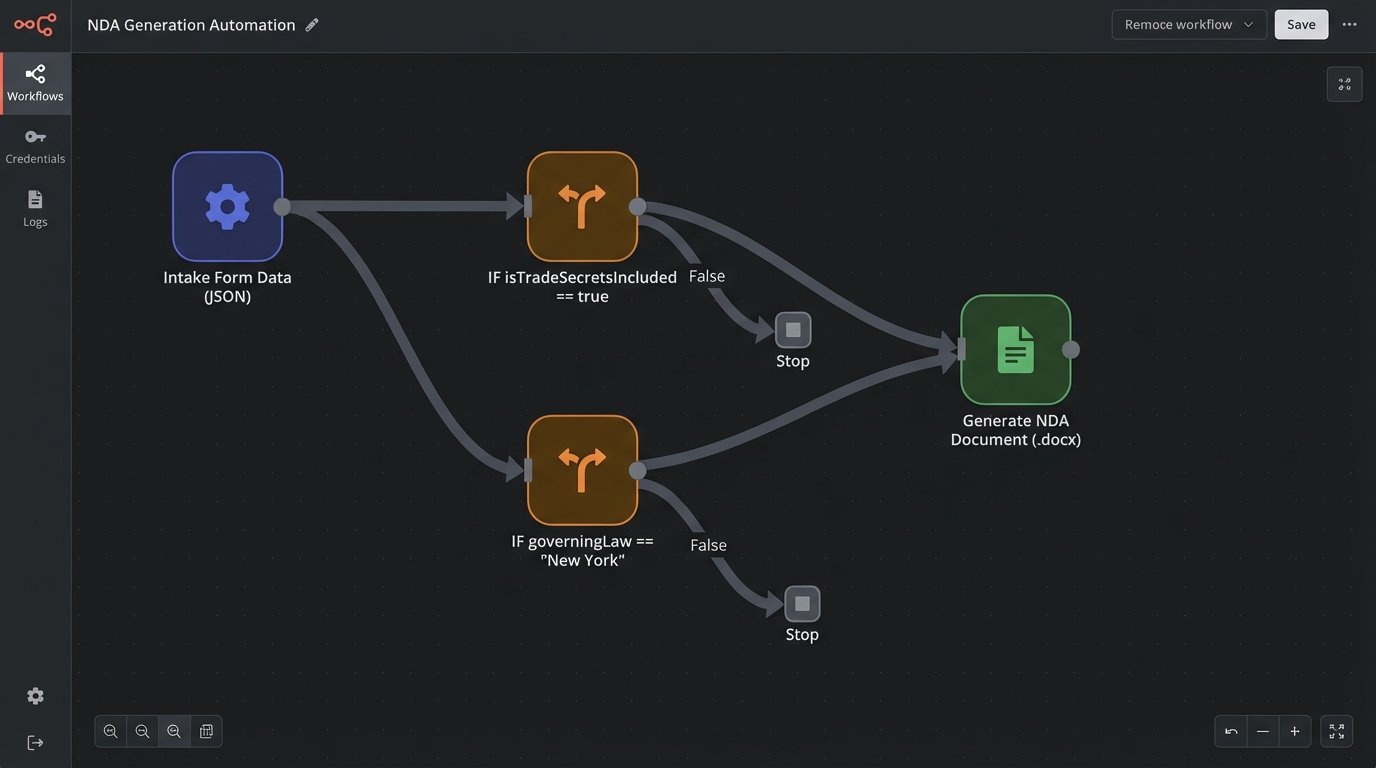
Conditional logic is the core of the machine. It operates on simple `IF-THEN-ELSE` statements that a non-technical user can manage once the system is configured.
- `IF ‘Deal Value’ > 100000 THEN inject(‘Additional Indemnification Clause’)`
- `IF ‘Governing State’ == ‘California’ THEN inject(‘CCPA Data Processing Addendum’)`
- `IF ‘Term’ == ‘Renewal’ THEN set(‘Notice Period’, ’90 days’) ELSE set(‘Notice Period’, ’30 days’)`
This forces compliance with firm policies. It removes the element of chance and individual memory from the drafting process. The rules are defined once, vetted, and then executed flawlessly every single time. It shifts the point of control from the individual drafter to the system architect.
Template Logic as Code
Thinking of templates as code is the essential mental shift. The master template becomes a repository of every possible contractual variation, with the logic engine acting as a compiler. It assembles a final, bespoke document from a library of pre-approved, version-controlled clauses. A change to the firm’s standard limitation of liability clause is made in one place, and it instantly propagates to every future document generated by the system.
Here is a simplified JSON object representing the data input for generating a Non-Disclosure Agreement. This structured data is what feeds the logic engine.
{

  "agreementType": "Mutual NDA",

  "disclosingParty": {

    "legalName": "Innovate Corp.",

    "jurisdiction": "Delaware",

    "address": "123 Tech Avenue, Suite 100, Silicon Valley, CA 94043"

  },

  "receivingParty": {

    "legalName": "Solutions Inc.",

    "jurisdiction": "New York",

    "address": "456 Finance Blvd, New York, NY 10005"

  },

  "effectiveDate": "2024-10-01",

  "termYears": 3,

  "isTradeSecretsIncluded": true,

  "governingLaw": "State of New York"

}
The template would then use placeholders like `{{disclosingParty.legalName}}` and conditional blocks based on `isTradeSecretsIncluded` to inject specific, heightened confidentiality language. This is a repeatable, auditable, and fundamentally more reliable process.
Efficiency Measured in Value, Not Hours
The argument that manual drafting is good for billable hours is a dangerously shortsighted one. It incentivizes low-value, high-risk work. Clients are increasingly pushing back against being billed for hours spent on boilerplate text manipulation. The real value is in the strategic advice, the negotiation, and the structuring of the deal itself, not in proofreading party names.
Automation reallocates a firm’s most expensive resource, its senior lawyers, away from clerical review and toward high-value work. An automated system can generate a first draft of a complex MSA in under a minute. It might take a junior associate four hours. That four hours is now available for legal research or supporting a deposition. The leverage gained is enormous.
Building the initial automated templates is like shoving a firehose through a needle. It is a slow, painful, and meticulous process that requires getting all stakeholders to agree on standardized language. This political challenge is often a greater obstacle than any technical one. But once it is done, you have created an asset that generates value indefinitely.
Accuracy as a Feature: From Random to Systemic Risk
Manual drafting is plagued by random error. Typos, incorrect cross-references, logical fallacies, and formatting glitches can appear in any document at any time. The risk is decentralized and unpredictable. Each document is its own self-contained universe of potential mistakes.
Automated drafting eliminates this category of error. The risk profile shifts entirely. An automated system will not make a typo or forget to update a party name in Section 8.2. The risk becomes systemic. If there is a flaw in the master template’s logic, that flaw will be perfectly replicated in every single document it generates. While this sounds dangerous, it is actually a preferable state.
A systemic flaw can be identified, isolated, and fixed once at the template level. Once you patch the logic, the error is eradicated from the entire system forever. This is a far more manageable and defensible risk model than the whack-a-mole approach of fixing random errors in hundreds of disparate Word documents.
The Reality of Implementation
The transition is not frictionless. The initial setup cost is significant, not just in software licenses but in the internal hours required to deconstruct, analyze, and standardize your existing documents. This requires your best lawyers, the ones with the deepest institutional knowledge, to dedicate non-billable time to the project. It is a tough sell.
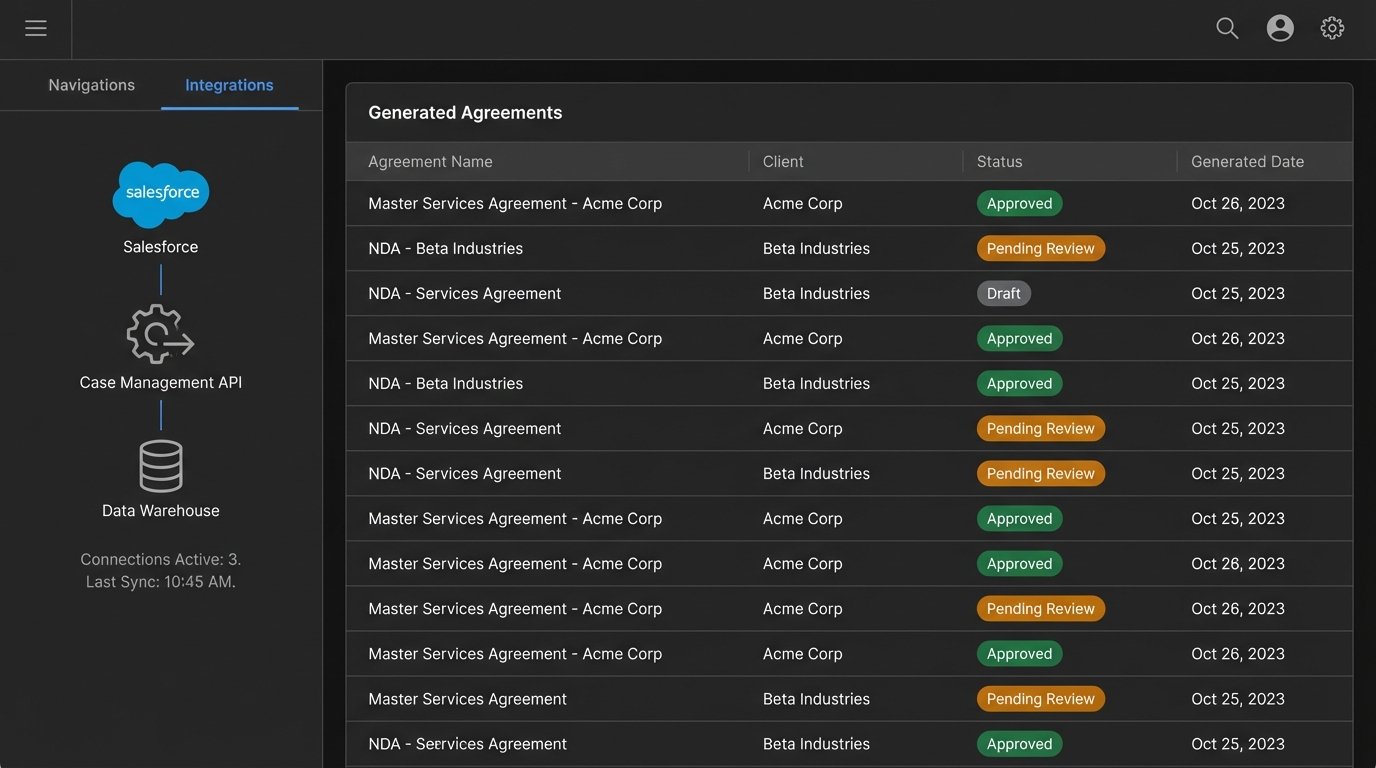
Integration is another wallet-drainer. Your shiny new document automation platform needs to pull data from your firm’s other systems. This often means dealing with a clunky, poorly documented API for a decade-old practice management system. Expect to spend considerable resources just building the data bridges to make the automation possible.
The final hurdle is adoption. Lawyers are creatures of habit. Prying the manual drafting process out of their hands requires a mandate from management and a system that is demonstrably better and easier to use than their old workflow. If the new system is slow, buggy, or has a terrible user interface, they will find a way to bypass it.
The choice is not about preserving a traditional method. That method is broken. The choice is about whether to invest in building a controlled, predictable, and scalable manufacturing process for your firm’s core work product. It is an industrial solution for an industrial-scale problem.