Most legal research platforms are just glorified search engines bolted onto a private database. They operate on a keyword-matching model that was state-of-the-art twenty years ago. The result is a high volume of low-relevance documents that attorneys must manually filter, a process that is both expensive and prone to error. The shift to AI-driven tools is not about better searching. It is about restructuring the query itself from a simple string of words to a complex set of case facts and legal questions.
These systems inject natural language understanding directly into the research workflow. Instead of guessing the right combination of Boolean operators to find a needle in a haystack, you hand the system the entire haystack and a schematic of the needle. The underlying models parse case law, statutes, and secondary sources to identify conceptual relationships, not just keyword overlaps. This fundamentally changes the task from information retrieval to information synthesis. The real work is vetting the output, not formulating the initial query.
Casetext (CoCounsel)
Casetext’s CoCounsel leverages a fine-tuned GPT-4 model, but its value is not the raw LLM. The core asset is their CARA A.I. engine, which has been trained on a massive corpus of legal documents for years. It excels at document analysis, allowing you to upload a brief, a motion, or a set of discovery requests and have the system identify weaknesses, find contrary authority, or even suggest lines of questioning. It operates less like a library and more like a junior associate who never sleeps.
The system is built to ingest and dissect your own case documents, using them as the factual context for its research. This is a critical distinction. It’s not just searching a public database for you. It’s cross-referencing that database against the specific arguments and facts you provide, which forces a much higher degree of relevance in the results.
You are essentially building a temporary, private knowledge graph for your matter.
Technical Benefits
The primary technical advantage is the reduction of semantic ambiguity. A keyword search for “breach of duty” will return thousands of irrelevant cases. CoCounsel can be instructed to find cases where a “breach of fiduciary duty by a corporate officer led to shareholder derivative action,” a multi-layered concept that Boolean logic struggles to contain. It deconstructs the request into factual predicates and legal outcomes, then maps those to its vectorized database of case law.
Its API, while not as open as one might hope, allows for some integration with case management systems. You can construct workflows that automatically trigger a research task when a new complaint is filed or when opposing counsel files a significant motion. The challenge is the data mapping required to feed the API the correct contextual information from your CMS. It is never a simple plug-and-play operation.
Specific Use Cases
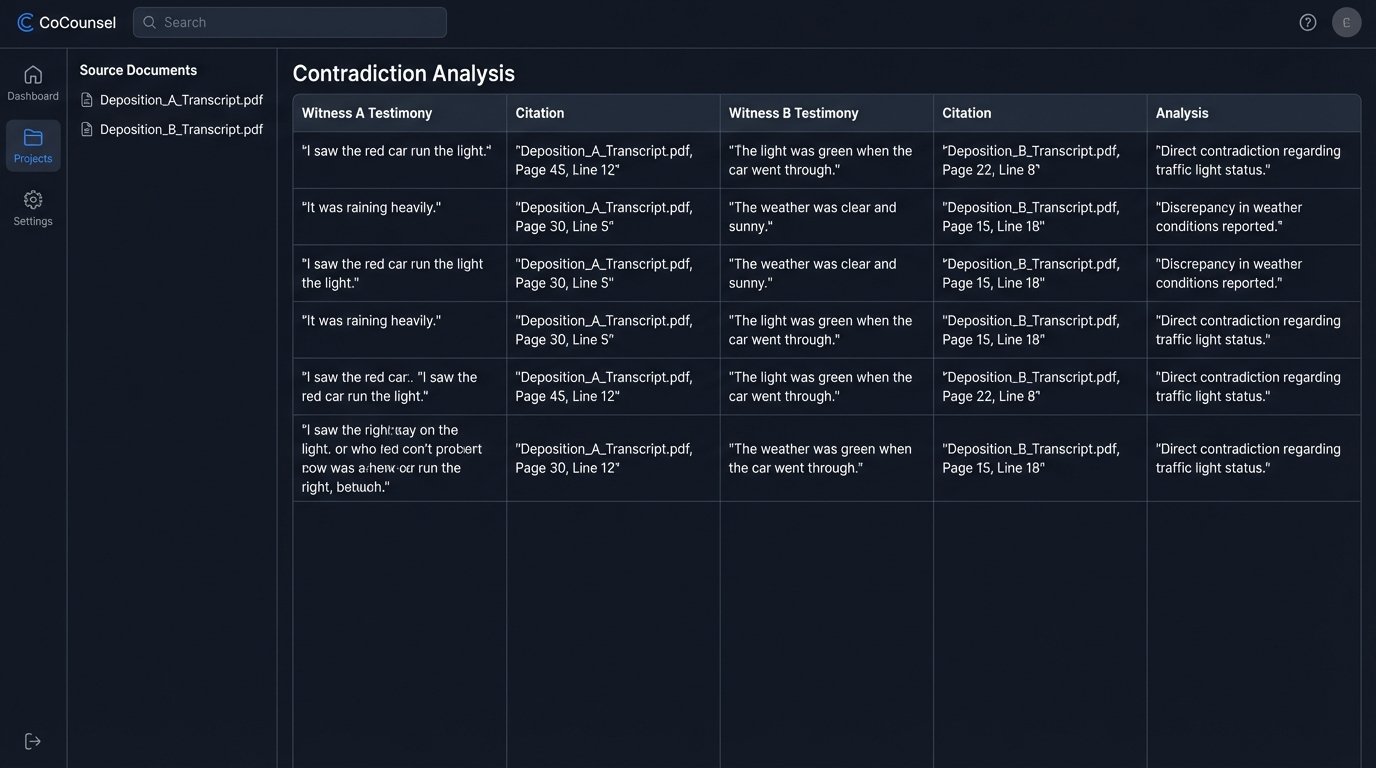
A common application is deposition preparation. An attorney can upload the transcripts from multiple depositions in a single case and ask the system to “identify all instances where witness A’s testimony contradicts witness B’s testimony regarding the timeline of events on May 1st.” The system will return a table with direct quotes and page citations. This is a task that would otherwise consume dozens of paralegal hours.
Another use case is contract analysis. Feed the system a 100-page commercial lease and ask it to “extract all clauses related to indemnification and force majeure, then identify any non-standard language when compared to New York commercial real estate precedents.” The system strips the relevant clauses and flags deviations from its baseline understanding of standard terms.
The cost is significant, and the reasoning process can feel like a black box, which requires an extra layer of human validation.
vLex (Vincent AI)
vLex’s strength is its global dataset. While US-centric platforms have deep archives of American case law, vLex integrates legal data from over 100 countries. This makes it a specialized tool for matters involving international law, cross-border litigation, or comparative law research. Its AI assistant, Vincent, is built to navigate these disparate legal systems and identify analogous concepts, even when the terminology and legal doctrines differ significantly.
Trying to manually bridge legal frameworks from common law and civil law jurisdictions is like shoving a firehose through a needle. Vincent attempts to automate this by creating a conceptual map between them. It finds cases that address a similar legal problem, even if the underlying statutes and precedents are completely different. This is something keyword search cannot do.
The platform is not a replacement for local counsel, but it is a powerful tool for building an initial litigation strategy in an unfamiliar jurisdiction.
Technical Benefits
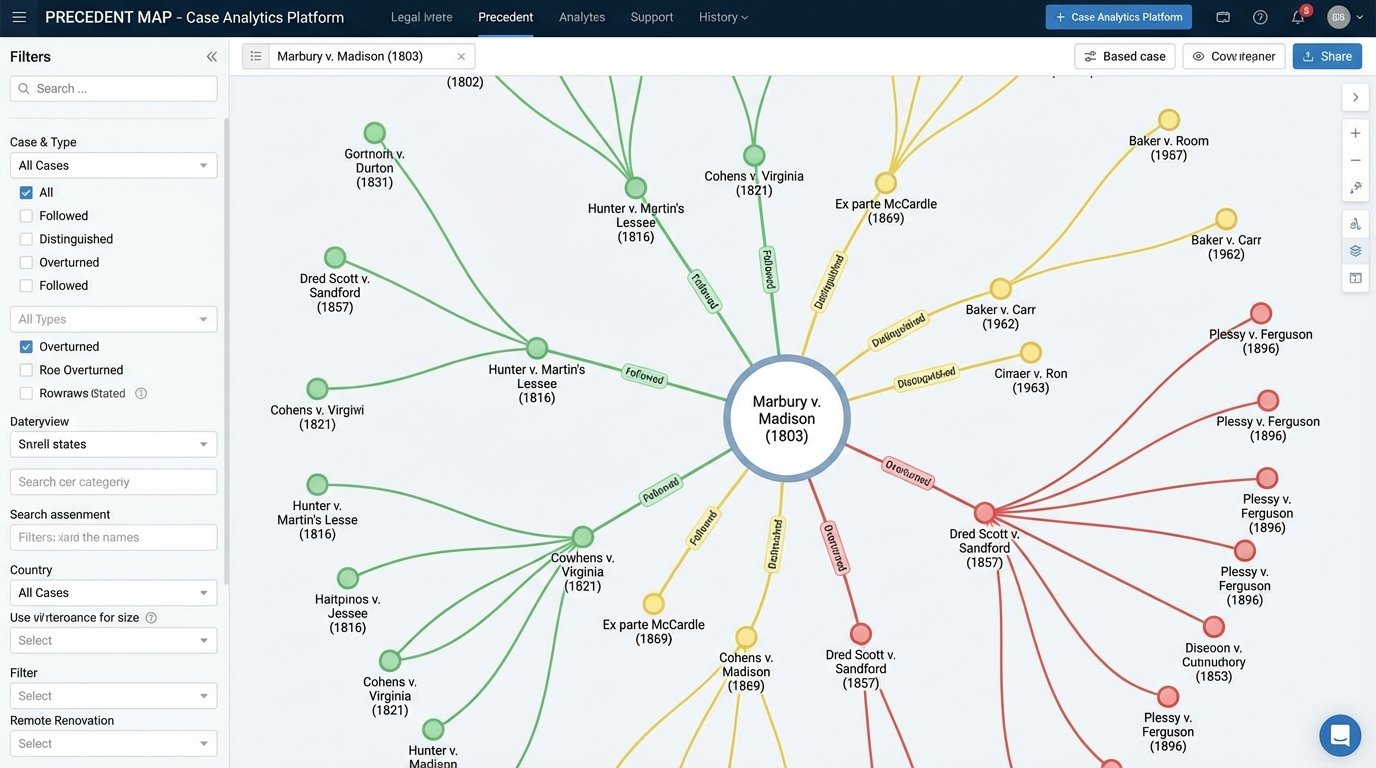
Vincent’s core function is building a “Precedent Map.” This visualizes how a key case is treated by subsequent rulings, showing which points of law were followed, distinguished, or overturned. For complex litigation with a long history, this provides an immediate visual summary of the most influential authorities. The data structure behind this is a sophisticated graph database that tracks citation relationships and judicial treatment.
The multilingual search capability is another key feature. You can enter a query in English about a specific legal issue, and Vincent can find relevant documents in Spanish, French, or German, providing a machine-translated summary. While not perfect, the translation quality is sufficient for initial triage, allowing a lawyer to determine if a document warrants professional translation and deeper review.
Specific Use Cases
Consider a product liability case against a multinational corporation with components manufactured in Germany and assembled in Mexico. Vincent can be used to research German product safety regulations and Mexican consumer protection laws simultaneously. It can identify key statutes and leading cases from both jurisdictions that would be almost impossible to find using separate, country-specific databases.
It is also effective for arbitration. International arbitration often involves parties from different legal traditions. An attorney can upload their brief and ask Vincent to find supporting case law from a neutral, third-party jurisdiction to strengthen their arguments. This demonstrates a broader, more global perspective to the arbitration panel.
The trade-off is that its US database, while extensive, sometimes lacks the depth of the legacy domestic providers for very specific state-level issues.
Alexi
Alexi is not a general-purpose research tool. It is a highly specialized platform designed to do one thing well: generate draft legal memoranda. You input a specific legal question with the relevant jurisdiction and a summary of the facts, and Alexi produces a structured memo complete with arguments, counterarguments, and citations to controlling authority. It is designed to gut the initial, time-consuming phase of legal writing.
The workflow is rigid by design. It forces the user to structure their query in a way that provides the system with sufficient context. This upfront work prevents the “garbage in, garbage out” problem that plagues more open-ended systems. It is less of a conversation and more of a command. You are not exploring the law; you are requisitioning a specific work product.
Technical Benefits
The output is predictable and consistent. Because Alexi focuses on a single output format, its models are highly optimized for that task. The memos follow a standard structure, making them easy for lawyers to review, edit, and integrate into their own work. This avoids the rambling, unstructured text that general LLMs often produce when asked a legal question.
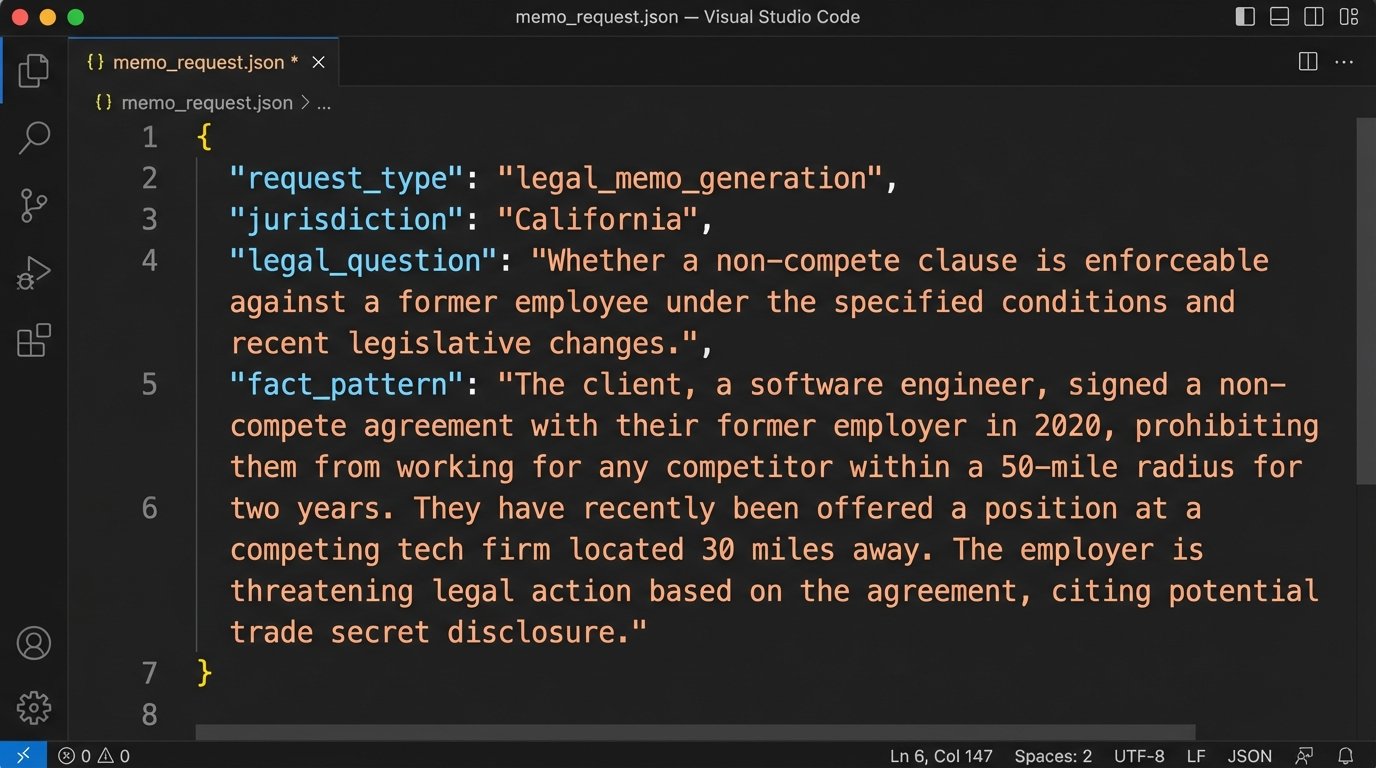
Alexi’s system also includes a key feature that many others lack: it explicitly flags when it cannot find a definitive answer. Instead of hallucinating a response, it will state that the law is unsettled on a particular point or that there is a split in authority. This built-in intellectual honesty is a critical feature for risk management. For a more structured interaction, a query could be framed as a JSON object, forcing the system to address specific parameters.
{

  "request_type": "memo_generation",

  "jurisdiction": "CA",

  "topic": "motion_for_summary_judgment",

  "legal_question": "Does the economic loss rule bar a negligence claim between two sophisticated commercial parties?",

  "fact_pattern": {

    "plaintiff": "Software developer",

    "defendant": "Enterprise client",

    "contract": "Specifies service level agreement, contains no tort liability waiver.",

    "damages_claimed": "Lost profits due to software failure."

  },

  "output_requirements": ["identify_leading_cases", "summarize_plaintiff_argument", "summarize_defendant_argument"]

}
This structure forces a precise query and yields a more reliable, targeted output than a simple text prompt.
Specific Use Cases
The primary use case is handling the high volume of research questions that arise in a busy litigation practice. When a partner asks a junior associate to “find out what the standard is for piercing the corporate veil in Delaware,” Alexi can produce a comprehensive draft memo in minutes, not days. This allows the associate to spend their time on higher-value analysis and strategic thinking rather than basic research.
It is also useful for exploring peripheral legal issues that may not warrant extensive manual research. If a secondary issue arises during a case, a lawyer can quickly get a baseline understanding of the legal landscape from Alexi without diverting significant resources from the core arguments.
Its narrow focus is both its greatest strength and its main limitation. Do not expect it to perform broad document review or prepare for a deposition.
Lexis+ AI
LexisNexis is the incumbent, and Lexis+ AI is their attempt to bolt generative AI onto their massive existing infrastructure. The primary advantage is its native integration with the vast Lexis library of primary and secondary sources, including Shepard’s citation service. The AI is grounded in this proprietary, curated dataset, which theoretically reduces the risk of generating inaccurate or fabricated information. The tool is embedded directly within the familiar Lexis research interface.
This is the safe, enterprise choice. The AI’s capabilities are carefully sandboxed to work within the existing Lexis ecosystem. You can summarize a case, generate a draft argument based on a specific statute, or ask it to rephrase a legal standard in plain language. It is an enhancement to the traditional research process, not a complete replacement of it.
Technical Benefits
The tight integration with Shepard’s is a significant technical benefit. When the AI cites a case in its response, you can immediately see its subsequent history and whether it remains good law. This is a critical validation step that is often manual or clunky in other systems. It provides a layer of trust by tying the generative output directly to a trusted legal analytics tool.
The platform also offers specific skills for drafting. For example, it can generate draft clauses for a contract or generate a set of interrogatories based on a given fact pattern. These features are powered by models that have been specifically trained on these types of documents, resulting in more structured and relevant output than a general-purpose model would provide.
Specific Use Cases
A litigator can use Lexis+ AI to quickly analyze an opponent’s brief. By uploading the document, they can ask the AI to “identify the weakest cases cited by the opposition and provide counterarguments.” The system cross-references the cited cases with Shepard’s to find negative treatment and then searches the broader database for cases with opposing holdings.
For transactional lawyers, the tool can accelerate the drafting process. An attorney can ask it to “draft a non-compete clause for a software engineer in California, ensuring it is compliant with the latest statutory restrictions.” The AI will generate a draft based on its knowledge of California law, which the attorney can then refine. The system functions as a powerful template generator that is aware of the current legal context.
The downside is that you are completely locked into the LexisNexis walled garden. The tool is a wallet-drainer, and its performance is ultimately constrained by the company’s conservative approach to AI development.