
10 Email Automation Tools for Real Estate Agents
Lead routing is a solved problem until it is not. The standard real estate tech stack involves an IDX feed, a lead capture form, a CRM, and an email client, all held together with hope and maybe a Zapier connection that breaks every other Tuesday. The actual challenge is not sending emails; it is triggering the right email based on data that moves between systems that were never designed to speak to each other. Latency is the enemy. A five-minute delay in responding to a Zillow lead is a lifetime.
This is not a list of the “best” tools. “Best” is a marketing term. This is a list of tools with specific technical capabilities that can be forced to solve real estate automation problems, along with their respective failure points and operational costs.
1. Follow Up Boss
Follow Up Boss is a CRM built with a native understanding of real estate lead flow. Its primary technical advantage is the pre-built integrations with lead sources like Zillow and Realtor.com. The system automatically parses incoming lead emails from these portals, extracts contact information, and creates a new contact record. This process bypasses the need for custom email parsing scripts, which are brittle and a constant source of maintenance.
Their API is straightforward for pushing new contacts or updating existing ones. You can logic-check for duplicates based on email or phone number before injecting a new lead. The internal automation engine, “Action Plans,” is a simple drip sequence trigger. It works for basic follow-up but lacks the conditional branching needed for sophisticated nurturing.
Syncing your MLS database directly to this platform is like connecting a fire hydrant to a drip irrigation system. You need middleware to act as a pressure regulator, transforming raw property data into something the CRM can digest. Without it, you are just creating a data swamp.
The biggest weakness is its reporting. The UI provides vanity metrics, but extracting granular data via the API for performance analysis is painful. Expect to build your own data warehouse if you need to track agent performance by lead source with any real accuracy.
2. ActiveCampaign
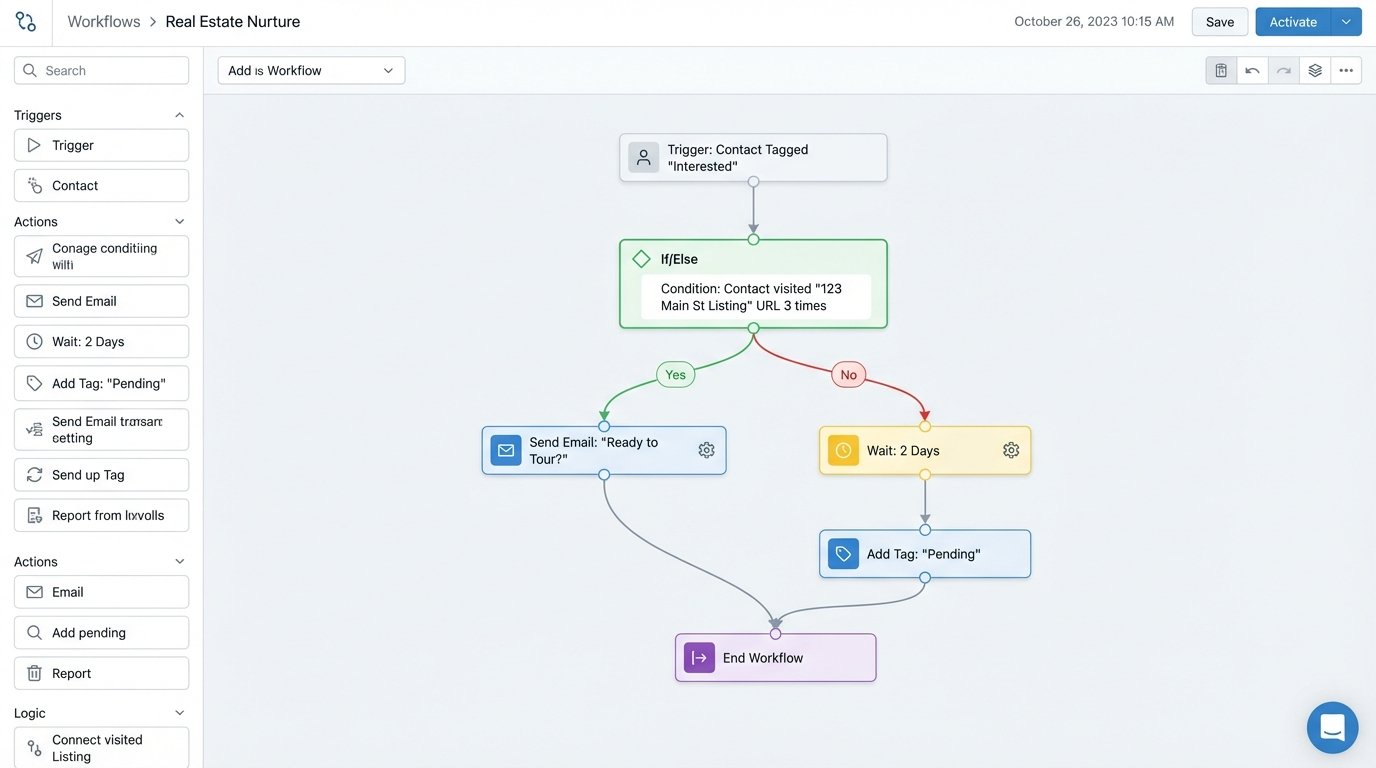
ActiveCampaign provides an automation builder that operates on conditional logic. This is its core value. You can build workflows that branch based on dozens of triggers: email opens, link clicks, page visits via its tracking script, or changes in custom field data. For real estate, this means you can move a lead from a “Just Browsing” automation to a “Ready to Tour” sequence based on them visiting the same listing page three times in one week.
Its REST API is well-documented, allowing you to create and update contacts, add tags, and trigger automations from external systems. For instance, after a showing, an agent can update a custom field in their mobile CRM, which fires a webhook to ActiveCampaign to start a “Post-Showing Feedback” email series.
Do not rely on its internal CRM functionality. It is a feature tacked on for marketing purposes and lacks the deal-tracking and agent-specific views required for a real brokerage.
3. Mailchimp
Mailchimp is the default choice for agents who need to send a monthly newsletter and nothing more. Its template builder is easy for non-technical users, and its deliverability is solid for standard marketing broadcasts. The platform can handle basic segmentation based on static tags, which is sufficient for separating a “Past Clients” list from a “New Leads” list.
The automation capabilities are primitive. You can build a simple welcome series or a happy birthday email, but complex, behavior-driven sequences are out of the question. Trying to implement lead scoring or dynamic content based on browsing history is a dead end. Their API is functional for adding subscribers to a list, but it’s not designed for the high-frequency, transactional data updates a real estate operation generates.
Use it for what it is: a digital mailbox for mass communication. Any attempt to make it the central nervous system of your lead nurturing strategy will result in failure.
4. HubSpot
HubSpot is a monolithic platform that attempts to solve everything: CRM, email marketing, and landing pages. Its strength is having all this data in one place. When a lead opens an email, clicks a link, and then visits your pricing page, that entire history is visible on a single contact record. This unified data model simplifies building automations, as you are not bridging data gaps between separate systems.
The automations, called “Workflows,” are powerful. They include if/then branching, lead rotation to assign new inquiries to agents in a round-robin, and internal notifications. You can build a workflow that says, “If a lead from Zillow has a budget over $500k and has not been contacted within 15 minutes, send an SMS to the team lead.”
This is a wallet-drainer. The platform gates its most useful features behind expensive subscription tiers. Expect to pay a premium for the convenience of an all-in-one system, and be prepared for a difficult data migration if you ever decide to leave.
5. Twilio
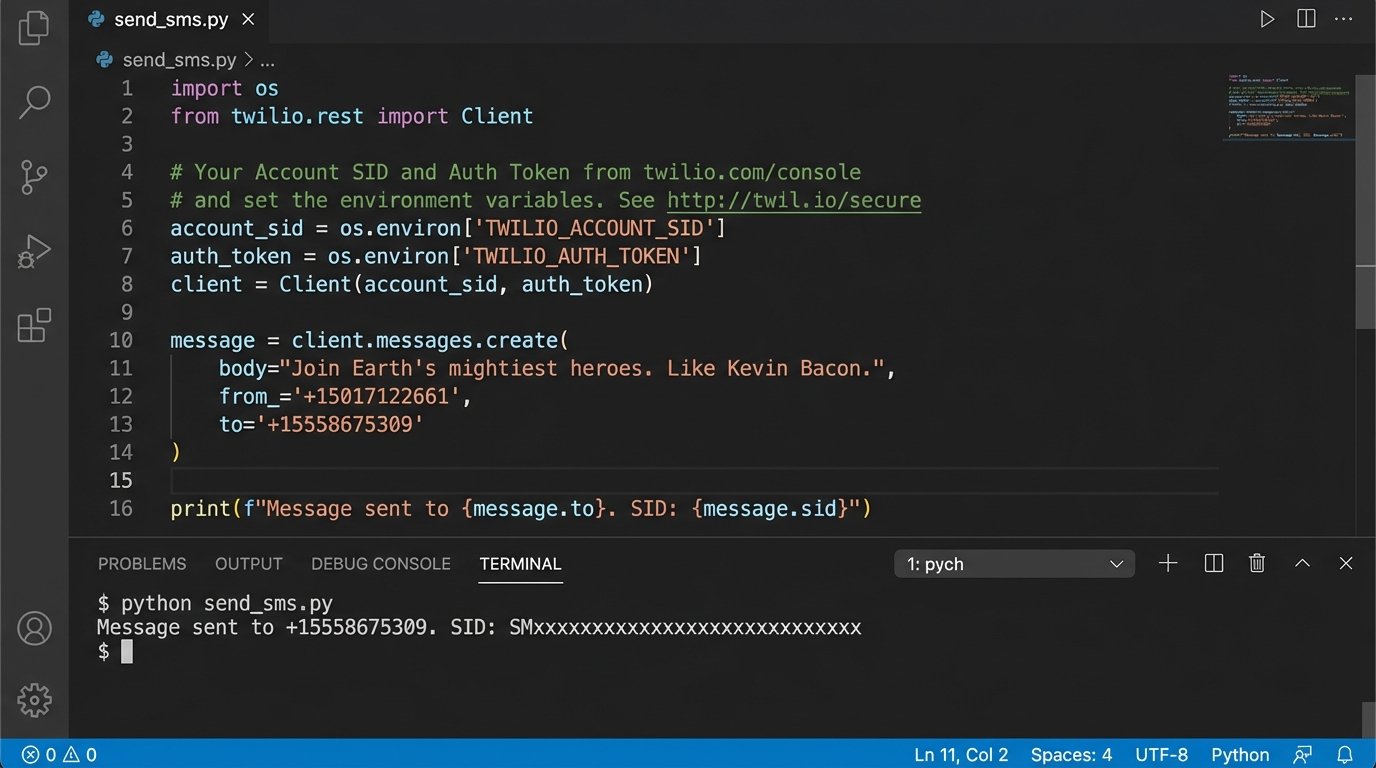
Twilio is not an email platform; it is a communication API. It gives you programmatic access to SMS, voice, and WhatsApp. For real estate, its primary function is immediate lead response. The moment a lead comes in from your website, you can fire off an API call to Twilio to send an instant, personalized SMS: “Hi [FirstName], this is John. I just got your inquiry about 123 Main St. Are you free for a quick call in 5 minutes?”
This requires development resources. You need to write the backend code to handle the API requests, manage responses, and log the activity. There is no user-friendly interface for building campaigns. This is raw infrastructure.
Below is a simple Python snippet showing how you might send an SMS when a new lead is received via a webhook.
from twilio.rest import Client
# Your Account SID and Auth Token from twilio.com/console
account_sid = 'ACxxxxxxxxxxxxxxxxxxxxxxxxxxxxx'
auth_token = 'your_auth_token'
client = Client(account_sid, auth_token)
def send_initial_sms(lead_phone_number, lead_name, property_address):
message_body = f"Hi {lead_name}, I just received your inquiry for {property_address}. I'll call you in a few minutes to discuss."
try:
message = client.messages.create(
body=message_body,
from_='+15017122661', # Your Twilio Number
to=lead_phone_number
)
print(f"Message sent to {lead_phone_number}. SID: {message.sid}")
return True
except Exception as e:
print(f"Error sending SMS: {e}")
return False
# Example usage from a webhook payload
# new_lead = {'name': 'Jane Doe', 'phone': '+15558675309', 'address': '456 Oak Ave'}
# send_initial_sms(new_lead['phone'], new_lead['name'], new_lead['address'])
Integrating Twilio is about speed. The difference between a 30-second SMS response and a 10-minute email response is the difference between a conversation and a dead lead.
6. Make (Formerly Integromat)
Make is an integration platform that operates at a lower level than Zapier. It gives you more granular control over data manipulation and logic. Instead of simple “if this, then that” recipes, you can build complex scenarios with multiple branches, error handling routes, and data stores. You can pull a new lead from a Google Sheet, query your MLS API for property details using the listing ID, and then push the enriched contact data into Follow Up Boss.
The visual builder is its main feature, letting you map out data flows and transformations without writing extensive code. It handles JSON and XML parsing natively, which is critical for working with various real estate APIs. Error handling is also more explicit; you can define what should happen if an API call fails or returns empty data, preventing the entire automation from halting.
Its execution model is based on “operations,” and you pay for the volume of data processed. A complex scenario that syncs hundreds of listings daily can burn through your operation allowance quickly. Monitor your usage carefully.
7. SendGrid
SendGrid is another API-first platform, but focused entirely on email deliverability. You use it when you need to programmatically send transactional emails, like property alerts, password resets, or showing confirmations. You do not build campaigns in SendGrid; you build the logic in your own application and use SendGrid as the delivery engine.
Its key advantage is reputation management. It provides tools for managing IP addresses, monitoring bounce rates, and handling spam complaints. When you are sending thousands of unique property alerts per day, maintaining a high sender reputation is mandatory to avoid landing in the spam folder. Platforms like Mailchimp are not designed for this kind of high-volume, personalized, transactional email.
The learning curve is steep. You need a developer who understands SMTP relays, DKIM, and SPF records. Misconfigure your DNS settings, and none of your emails will get delivered.
8. LionDesk
LionDesk is another real estate-specific CRM that bundles email, SMS, and even video email. Its automation is centered around pre-built campaign templates for different lead types: new online leads, open house visitors, past clients. For an agent without the time or technical skill to build custom flows, these templates offer a functional starting point.
The platform’s main value proposition is bundling. It includes a power dialer and SMS marketing in the base package, which would be separate, costly add-ons in other systems. The video email feature is also unique, allowing agents to record and send a quick, personal video message, which can be effective for initial contact.
The user interface is notoriously clunky and slow. Data import and export processes are cumbersome, and the API is less flexible than its competitors. It is a closed ecosystem that works reasonably well as long as you stay within its walls.
9. Gmass
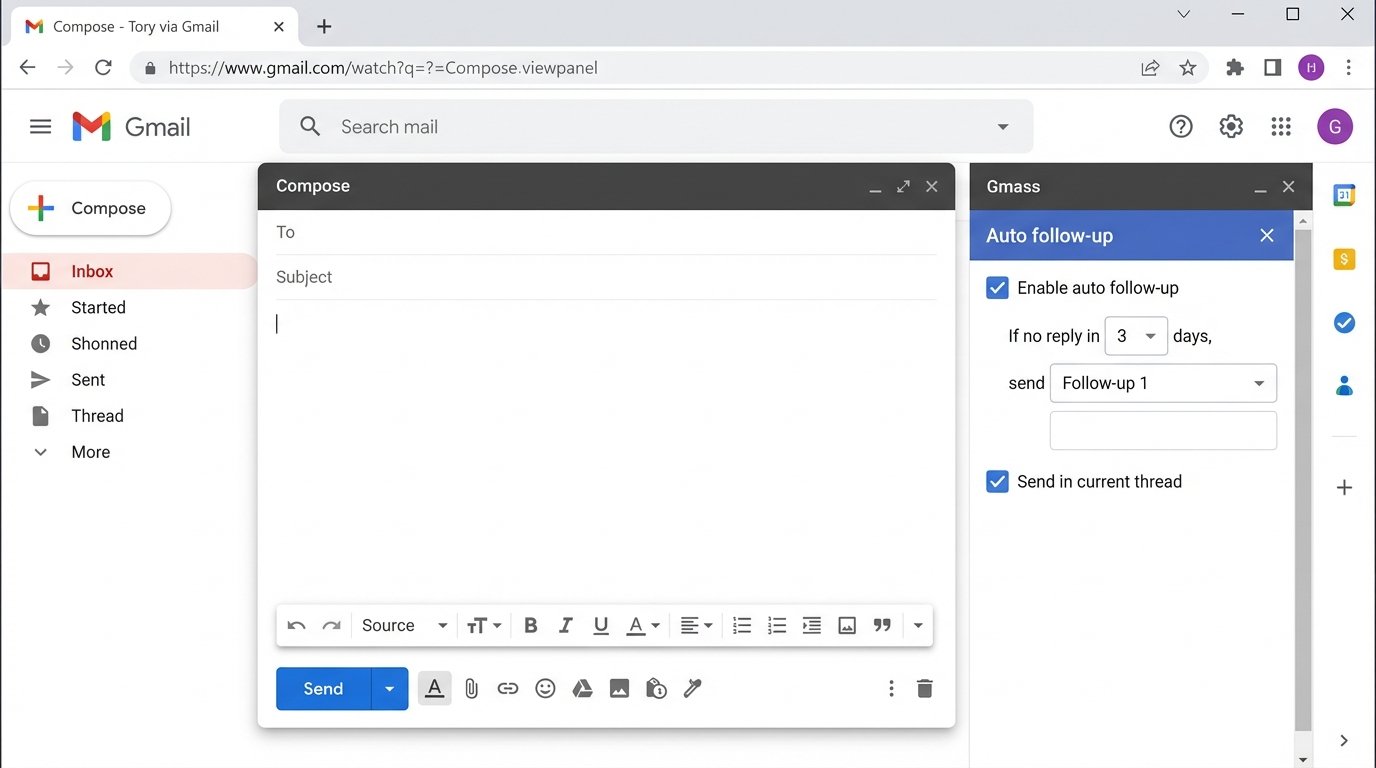
Gmass is not a platform; it is a Chrome extension that bolts onto a standard Gmail account. It allows for mail merge, automated follow-ups, and open/click tracking directly from the Gmail interface. This is a tool for individual agents, not teams. Its purpose is to automate the manual, repetitive emails an agent sends every day.
An agent can create a sequence that sends an initial email and then follows up automatically three and seven days later if no reply is received. The follow-ups stop the moment the lead responds. It pulls data directly from Google Sheets, making it simple to manage small-to-medium-sized contact lists without a full-blown CRM.
This lives and dies with your Google account. If your account gets flagged for spam activity, your entire business communication channel is compromised. It bypasses the infrastructure of a dedicated email service provider, putting all the deliverability risk on you.
10. Custom Solution (e.g., AWS Lambda + SES)
For brokerages with development talent, building a custom solution offers maximum control. You can use AWS Lambda functions to process incoming leads from a webhook, Amazon SES (Simple Email Service) for email delivery, and DynamoDB to store contact data and track state. This architecture is serverless, meaning you only pay for the compute time you actually use.
The control is absolute. You can build any logic you want. For example, you could geolocate a new lead’s IP address, cross-reference it with property data to guess their area of interest, and send a highly targeted welcome email, all within a few hundred milliseconds.
Here is what a sample JSON payload from a website lead form might look like, which would trigger a Lambda function.
{
  "source": "Zillow",
  "lead_id": "abx-123-xyz",
  "contact": {
    "first_name": "John",
    "last_name": "Smith",
    "email": "john.smith@example.com",
    "phone": "2125551234"
  },
  "property_inquiry": {
    "mls_id": "78910",
    "address": "123 Main St, Anytown, USA",
    "price": 550000
  },
  "timestamp": "2023-10-27T10:00:00Z"
}
This is also the most expensive option in terms of human capital. You are now responsible for everything: security, scalability, deliverability, and maintenance. When an API you depend on changes, it is your problem to fix at 3 AM. This path is for organizations where automation is a core competitive advantage, not a convenience.