
Stop Treating Compliance as a Checkbox
The number of TCPA lawsuits isn’t decreasing. The cost of a violation isn’t a slap on the wrist. It’s a production-down event that bleeds cash and operator time. Most compliance advice is legal fluff written for marketing departments. This is not that. This is about building systems that force compliance by design, because relying on humans to remember rules during a sales blitz is a losing strategy.
We’re talking about the architectural decisions that prevent the 3 AM page from a panicked legal department. These aren’t suggestions. They are the minimum viable guardrails for any real estate communication platform that hopes to survive an audit.
1. Log Consent Like It’s a Financial Transaction
Every single opt-in must be an immutable, timestamped event. A boolean `is_subscribed` flag in your contact table is a rookie mistake and completely indefensible. You need to prove *when* and *how* consent was given. This means a dedicated event log or table that records the user ID, the specific communication channel (e.g., ‘sms_new_listings’, ’email_market_updates’), the source URL or form ID, the user’s IP address, and a UTC timestamp.
The database schema should enforce integrity. Make the timestamp and source fields non-nullable. If you are using a relational database, consider using a trigger to prevent any `UPDATE` operations on this log table. Once written, a consent record is history. It can be superseded by a new opt-out record, but never altered.
This is your get-out-of-jail card. It’s the only thing that stands between you and a massive fine.
A simple JSON object stored against the consent event can capture the exact context of the opt-in. This is far superior to a dozen nullable columns in a SQL table that nobody remembers how to populate.
{
"contactId": "cst_a1b2c3d4e5",
"channel": "sms",
"topic": "weekly_open_house_reminders",
"consentState": "granted",
"timestamp": "2023-10-27T18:30:00Z",
"source": {
"type": "web_form",
"identifier": "landing_page_q4_2023",
"ipAddress": "203.0.113.75",
"userAgent": "Mozilla/5.0 (Windows NT 10.0; Win64; x64) ..."
},
"auditTrailId": "evt_f6g7h8i9j0"
}
This structure gives you a precise, auditable record. You can trace every permission back to a specific action. The trade-off is storage. This event table will grow massive, and querying it requires proper indexing on `contactId` and `timestamp`. Without it, your unsubscribe process will become sluggish and timeout-prone.
2. Engineer Granular Preference Centers, Not a Single “Unsubscribe” Button
A global unsubscribe link is a blunt instrument. In real estate, a client might want market reports but despise new listing alerts via SMS. Forcing them to kill all communication channels is a direct path to list churn. You need a system that manages subscriptions on a per-channel, per-topic basis. This is not a UI problem. It is a data architecture problem.
Your system must maintain a state machine for each contact-topic pair. A contact isn’t just “subscribed” or “unsubscribed”. They are subscribed to `email_market_reports` and unsubscribed from `sms_price_drops`. This logic cannot live in a third-party email service provider. It must be mastered in your own database, with the ESP acting only as a dispatch agent that receives explicit instructions.
The biggest failure point here is the CRM sync. An agent manually updates a contact in the CRM, and a poorly configured batch job runs overnight, sees a generic “Opt-in” checkbox, and overwrites your granular preferences, re-subscribing a user who explicitly opted out of a specific topic.
This is how you get sued.
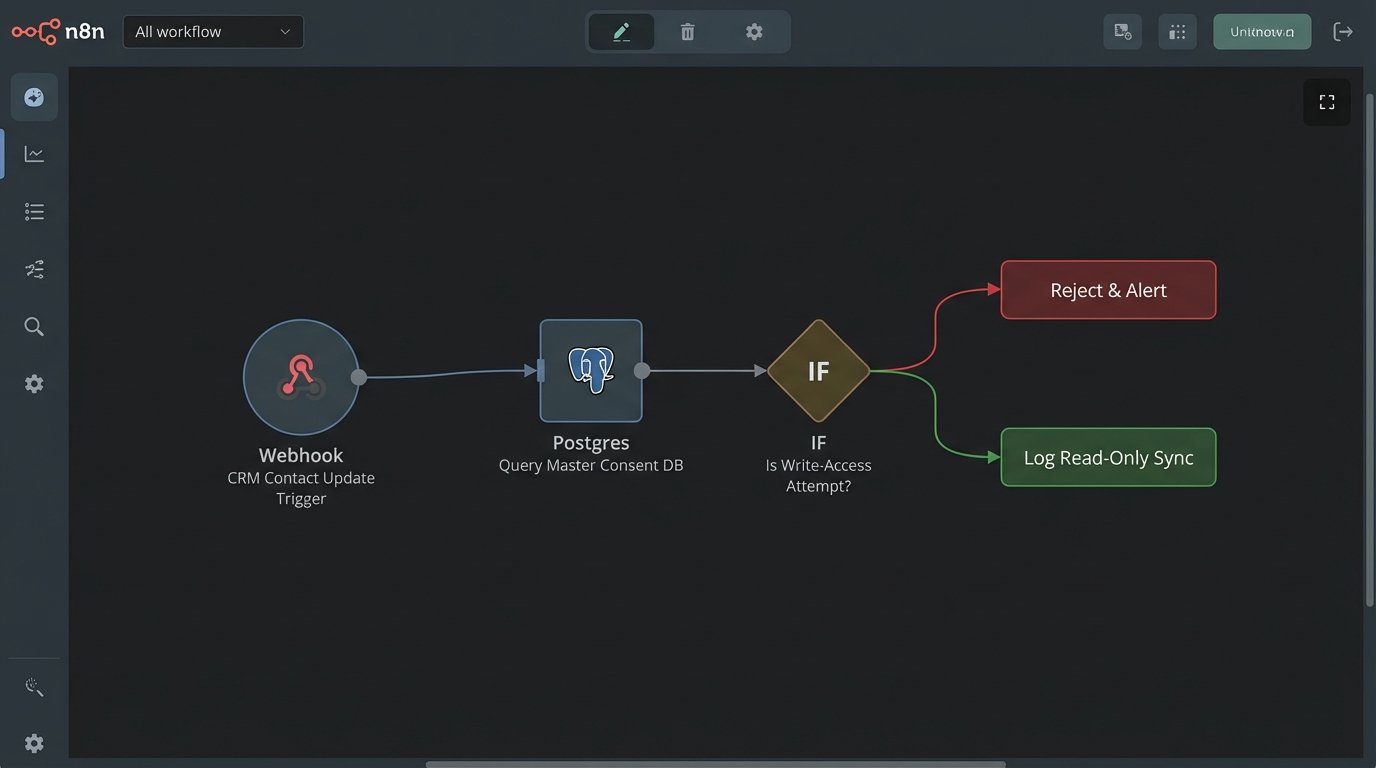
The solution is a one-way data flow for subscription status. The preference center is the single source of truth. It writes to your master database. The CRM can *read* this status via an API or a read-only replica, but it should have no write access to subscription flags. Any attempt by a CRM sync process to modify a subscription field must be rejected or routed for manual review.
3. Isolate and Throttle Outbound Traffic by Time Zone
Sending an SMS at 2 AM because your cron job fires on a UTC schedule is pure negligence. “Quiet hours” are legally mandated in many places, typically from 9 PM to 8 AM local time. Implementing this requires more than a simple `if` statement. You need to know the recipient’s local time zone, which is data you often don’t have or can’t trust.
First, attempt to collect time zone data during sign-up. If that’s not available, you must geolocate the user’s phone number prefix or IP address. This data is often imprecise. The only safe way to operate is to build a time-zone-aware message queue. When a message is triggered, it’s not sent immediately. It’s injected into a queue (like RabbitMQ or AWS SQS) with a calculated delay.
The logic checks the recipient’s presumed time zone against the current time. If it’s inside the quiet hours, the message is queued with a visibility timeout that pushes its delivery to the next valid window, for example, 8:01 AM local time. Trying to manage this with a monolithic script that sleeps and loops is like shoving a firehose through a needle; it’s brittle, doesn’t scale, and will fail silently.
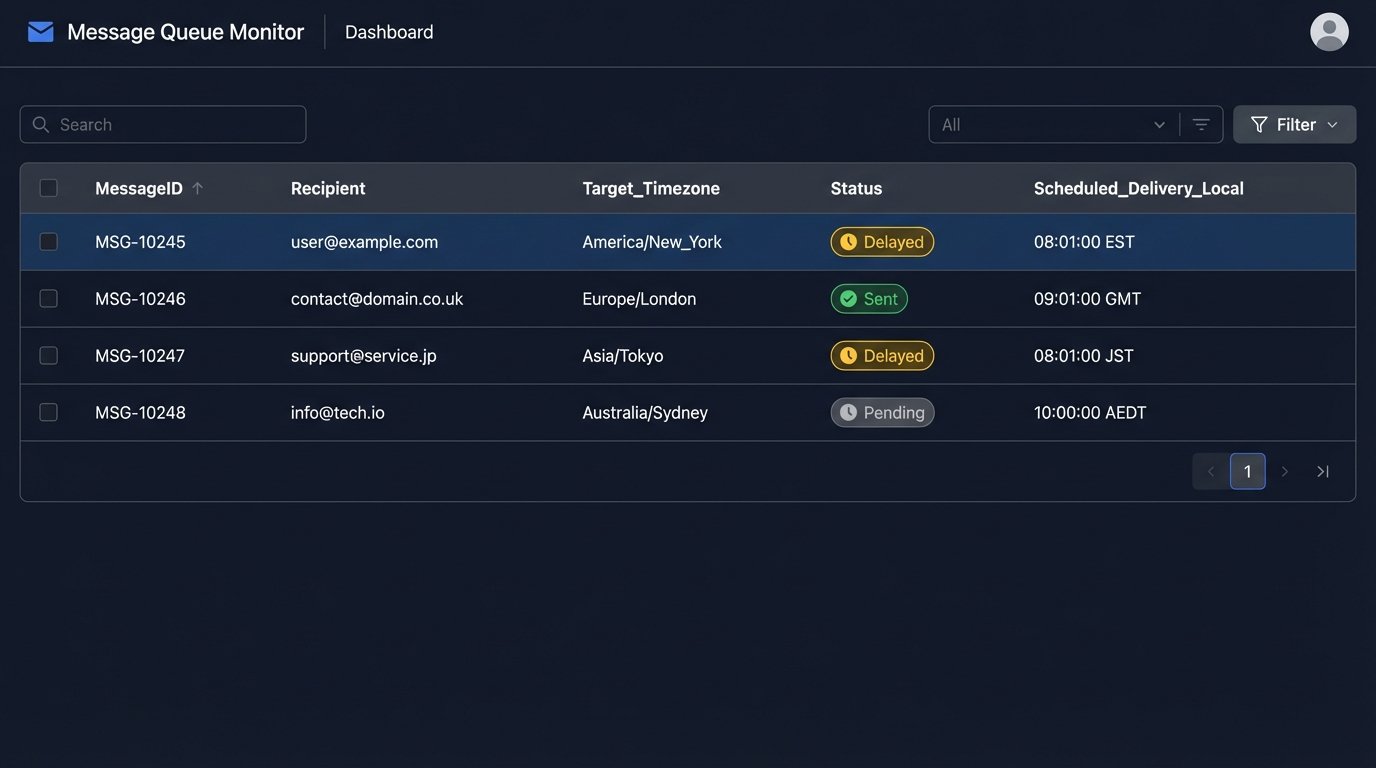
This architecture decouples message generation from message delivery. Your application can fire off events 24/7, but the dispatcher service acts as the gatekeeper, respecting local time constraints. The overhead is the cost and complexity of the queueing infrastructure. But that cost is a rounding error compared to the financial and reputational damage of a single TCPA class-action lawsuit for blasting thousands of contacts in the middle of the night.
4. Implement Pre-Send Content Analysis
Your agents and marketing teams will write copy that creates legal risk. They’ll use phrases that could violate fair housing laws (“perfect for couples”) or make financial promises that trigger RESPA audits (“guaranteed appreciation”). You cannot train this problem away. You have to build a system that inspects message content *before* it gets dispatched.
This involves building a pre-send validation webhook or service layer. Before any message is handed to Twilio or SendGrid, its content is passed through a series of regex filters and keyword checks. The system should scan for problematic terms, URL shorteners from untrusted domains, or missing mandatory elements like “STOP to unsub” text in an initial SMS.
A simple implementation in Python could look something like this:
import re
PROHIBITED_PHRASES = [
r"guaranteed return",
r"exclusive neighborhood",
r"no kids",
# ... add dozens more from your legal team
]
def validate_message_content(content):
for phrase in PROHIBITED_PHRASES:
if re.search(phrase, content, re.IGNORECASE):
raise ValueError(f"Prohibited phrase found: {phrase}")
# Check for mandatory unsubscribe language if it's an SMS
# Check for valid physical address if it's an email
return True
If the validator flags a message, the API call should reject it with a clear error message explaining what needs to be fixed. Don’t just log it. Force the sender to correct it. The trade-off is latency. This check adds milliseconds to each send. You also risk false positives, where a valid message is blocked. This system requires constant tuning with feedback from your legal and marketing teams.
It’s a pain to maintain, but it’s a necessary one.
5. Audit Your Data Sources Relentlessly
The most common point of compliance failure is data ingress. An agent buys a list of leads. A third-party portal pushes contacts into your CRM via a leaky API. A manual CSV upload bypasses all your web form logic. You must treat every data source as hostile and untrusted until proven otherwise. Your system’s default position should be to *not* message a new contact.
Map every single entry point for contact data. For each source, you must be able to attach the consent metadata we discussed in the first point. If a source cannot provide that proof of consent, contacts from it must be quarantined in a state where they cannot be added to any outbound communication lists until they complete a double opt-in process initiated by your system.

This means architecting your data flow so the CRM is not the master record for communication consent. The CRM is just another client of your central contact and consent database. When an agent adds a contact directly to the CRM, a webhook should fire to your system. Your system then checks if it has a valid consent record. If not, it flags the contact in the CRM as “uncontactable” and can optionally trigger an opt-in invitation email.
This introduces significant friction for the sales team. They will complain. They will try to find workarounds. Your job is to make the compliant path the easiest path. Build tools that make it simple for them to send a compliant opt-in link and track its status, giving them visibility without giving them the ability to bypass the entire compliance apparatus.