
6 Automation Integrations for Real Estate Contracts
The average real estate closing package is 50 to 100 pages. Multiply that by dozens of deals a month, and the single point of failure becomes obvious. It is not the system, it is the human manually keying data from one PDF into another system at 11 PM. This is not about efficiency. It is about reducing unforced errors that kill deals.
Automation in this space is not a single button press. It is a chain of discrete, often brittle, API calls that bridge disconnected systems. Get one link in that chain wrong, and you have just created garbage data at machine speed. Here are six integrations that actually work, provided you understand their failure points.
1. CRM to Document Generation API
The most fundamental integration is bridging your Customer Relationship Management system directly with a document generation platform. This is about taking client and property data that already exists and injecting it directly into contract templates. The goal is to stop the copy-paste routine that introduces typos in names, addresses, and legal descriptions.
Technical Breakdown
This typically involves a webhook or a scheduled job originating from the CRM. When a deal stage changes to “Contract Prep” in Salesforce or HubSpot, a trigger fires. This trigger packages a payload, usually a JSON object, containing deal-specific data like buyer name, seller name, property address, and offer price. An API endpoint on the document generation side, like DocuSign Gen or PandaDoc, ingests this payload.
The core of the work is mapping the CRM fields to the template placeholders. You define ‘BuyerFirstName’ in the JSON to populate the `{{BuyerFirstName}}` field in the document. The real complexity comes from conditional logic. A `has_hoa_addendum` boolean in the payload can determine whether to append an entire multi-page addendum to the base contract. This logic lives in the template, not the API call, which simplifies the integration but centralizes the headache.
It sounds clean until an agent types “N/A” into a currency field, breaking the data type validation and killing the entire workflow.
Use Case: Purchase Agreement Automation
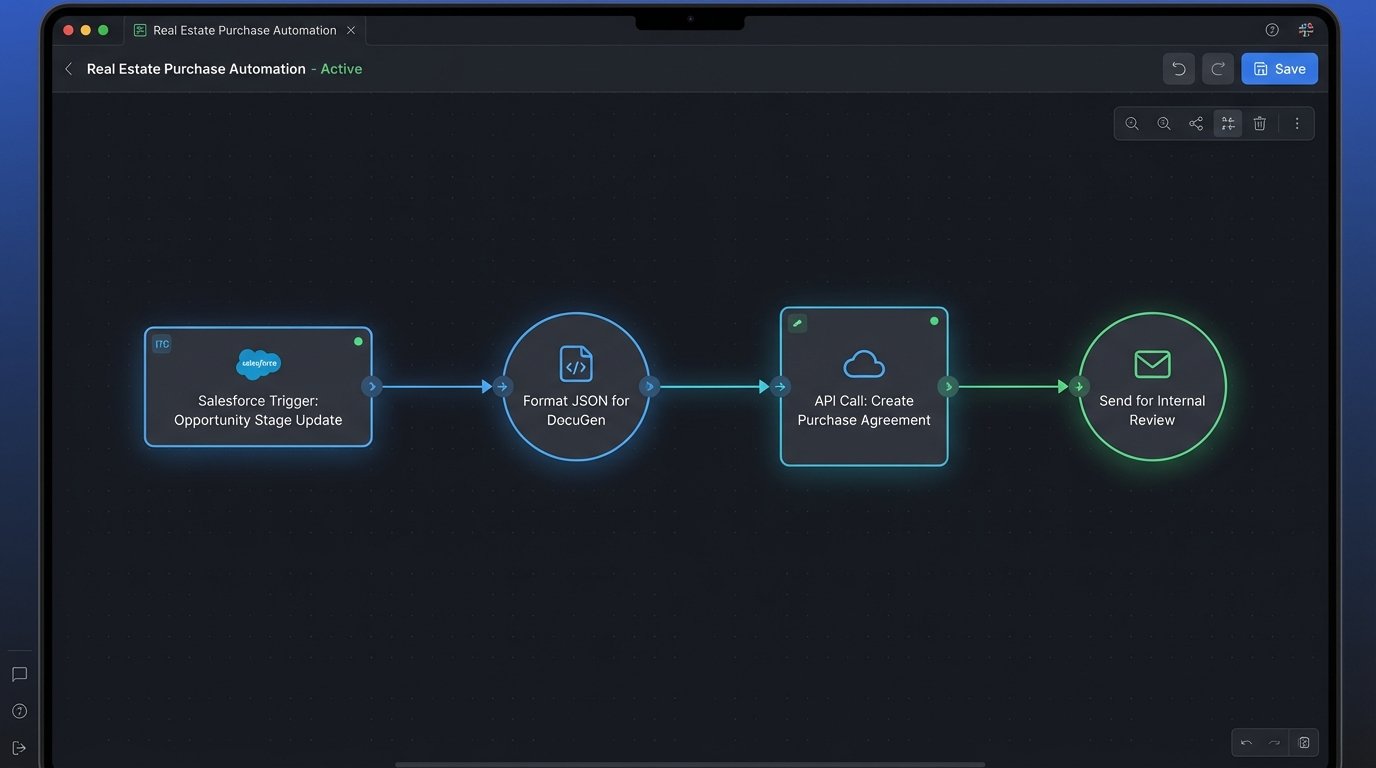
An agent moves an opportunity in Salesforce to the “Drafting Agreement” stage. A Salesforce Flow triggers an Apex callout to the DocuSign API. The callout sends the Account, Contact, and Opportunity data. DocuSign receives the data, populates a state-specific purchase agreement template, includes the correct financing addendum based on the “Financing_Type__c” custom field, and routes it for internal review. The agent never manually types a name or an address.
2. OCR for Legacy Document Data Extraction
Not every document starts its life in your system. You inherit scanned purchase agreements from other agents, blurry PDFs of old title reports, and faxed inspection addenda. Optical Character Recognition services are essential for pulling structured data out of these image-based documents to avoid re-typing everything.
Technical Breakdown
The process starts by feeding a scanned document to an OCR engine like AWS Textract, Google Vision AI, or Azure Form Recognizer. These services do not just dump raw text. They can identify key-value pairs (‘Property Address’: ‘123 Main St’) and tables (like a list of included appliances). The API returns a massive JSON response detailing every detected word, its coordinates on the page, and its confidence score.
Your job is to write a parser that navigates this JSON. You search for specific keys to find their corresponding values. This is not a simple lookup. You have to account for variations in phrasing, typos in the original scan, and fields broken across multiple lines. This is where you spend 80% of your development time, writing defensive code to handle OCR’s inevitable misinterpretations.
Extracting data from a clean, machine-generated PDF is one thing. Trying to get a property parcel ID from a scanned document with a coffee stain is another. You are essentially reassembling a shredded document in a wind tunnel.
Use Case: Ingesting a Competing Offer
A competing offer arrives as a 12-page scanned PDF via email. An automation script pipes this attachment to AWS Textract. A Lambda function parses the resulting JSON, looking for specific keys like ‘Purchase Price’, ‘Contingency Deadline’, and ‘Buyer Name’. It then populates these key fields into a record in your CRM, allowing you to compare offer terms without manual data entry. You set a confidence threshold, and if Textract’s confidence score for a key field is below 95%, it flags the record for human review.
3. NLP for Clause Analysis and Anomaly Detection
Once you have the text, you can begin to analyze it. Natural Language Processing integrations are about programmatically reading contract clauses to identify risks, non-standard language, or missing critical sections. This is not about replacing legal review. It is about providing a first-pass filter that flags potential issues for the humans in the loop.
Technical Breakdown
This is where you might connect to a large language model API like OpenAI or a purpose-built legal tech service. You feed the extracted contract text to an endpoint with a carefully constructed prompt. The prompt might ask the model to identify any clauses related to appraisal contingencies, check for the presence of a specific arbitration clause, or verify that the seller’s and buyer’s names are consistent throughout the document.
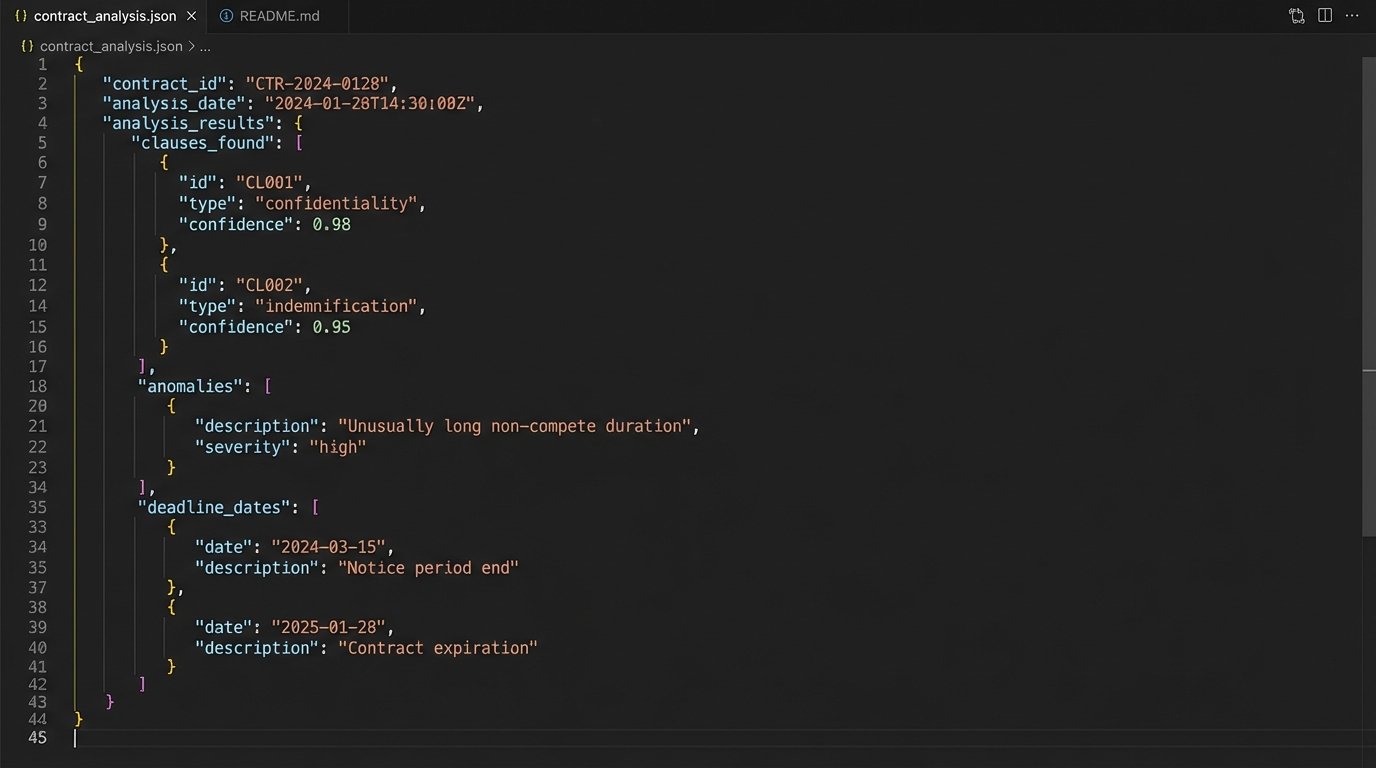
The engineering challenge is in prompt engineering and response validation. You must design prompts that force a structured response, like a JSON object with boolean flags for `arbitration_clause_present` or a list of extracted dates for deadlines. Relying on a free-form text response is asking for inconsistent results that are impossible to parse reliably. These models are non-deterministic, so what works today might give a slightly different answer tomorrow.
This is a wallet-drainer. Running hundreds of contracts through a powerful LLM gets expensive, fast. You need to be selective about what you analyze.
Use Case: Flagging Non-Standard Addenda
A contract is generated or ingested. The full text is sent to a fine-tuned NLP model. The model has been trained on thousands of your company’s standard contracts. It compares the submitted contract’s clauses against its trained data set and flags any language that deviates significantly from the norm. The system then alerts the transaction coordinator, pointing them directly to the unusual clause for legal review before it goes out for signature.
    {

      "contract_id": "PA-2024-4581",

      "analysis_results": {

        "clauses_found": [

          {"name": "Financing Contingency", "present": true, "page": 4},

          {"name": "Inspection Contingency", "present": true, "page": 5},

          {"name": "Arbitration Agreement", "present": false, "page": -1}

        ],

        "anomalies": [

          {

            "page": 7,

            "clause_text": "Buyer reserves the right to market the property for backup offers...",

            "reason": "Uncommon clause; typically reserved for seller."

          }

        ],

        "deadline_dates": {

          "inspection_period_ends": "2024-10-28T23:59:59Z",

          "financing_approval_due": "2024-11-05T23:59:59Z"

        }

      }

    }
4. GIS Integration for Property Data Verification
A surprising number of deals get delayed because of an incorrect legal description or parcel number. Integrating with a Geographic Information System API allows you to programmatically verify property data against official county or municipal records. This shifts validation from a manual post-contract task to an automated pre-generation check.
Technical Breakdown
This workflow involves taking a property address and hitting a GIS API, like the Esri ArcGIS API or a direct county assessor API if one is available. You send the street address and get back a trove of structured data: the official parcel ID number (APN), zoning designation, lot size, flood zone status, and sometimes even recent tax assessment values. The key is to cross-reference this authoritative data with the data in your CRM before the contract is even generated.
The integration logic builds a validation step into your workflow. Before calling the document generation API, you first call the GIS API. Then you logic-check the results. Does the parcel number in your system match the one from the county? Is the property in a flood zone that requires a specific addendum? A mismatch triggers an exception and halts the process, forcing a human to correct the source record.
These APIs are not always fast or free, and smaller counties may have no API at all, forcing you back to manual lookups.
Use Case: Pre-emptive Flood Zone Addendum
When an agent enters a new listing into the system, a background process sends the address to a national GIS data provider. The API response indicates the property is in FEMA flood zone ‘AE’. The system automatically adds a “Flood Zone Addendum Required” tag to the property record. When a contract is generated for this property later, the system sees the tag and automatically includes the mandatory federal flood insurance addendum. The agent does not need to remember to look it up.
5. Blockchain for Title and Transaction History
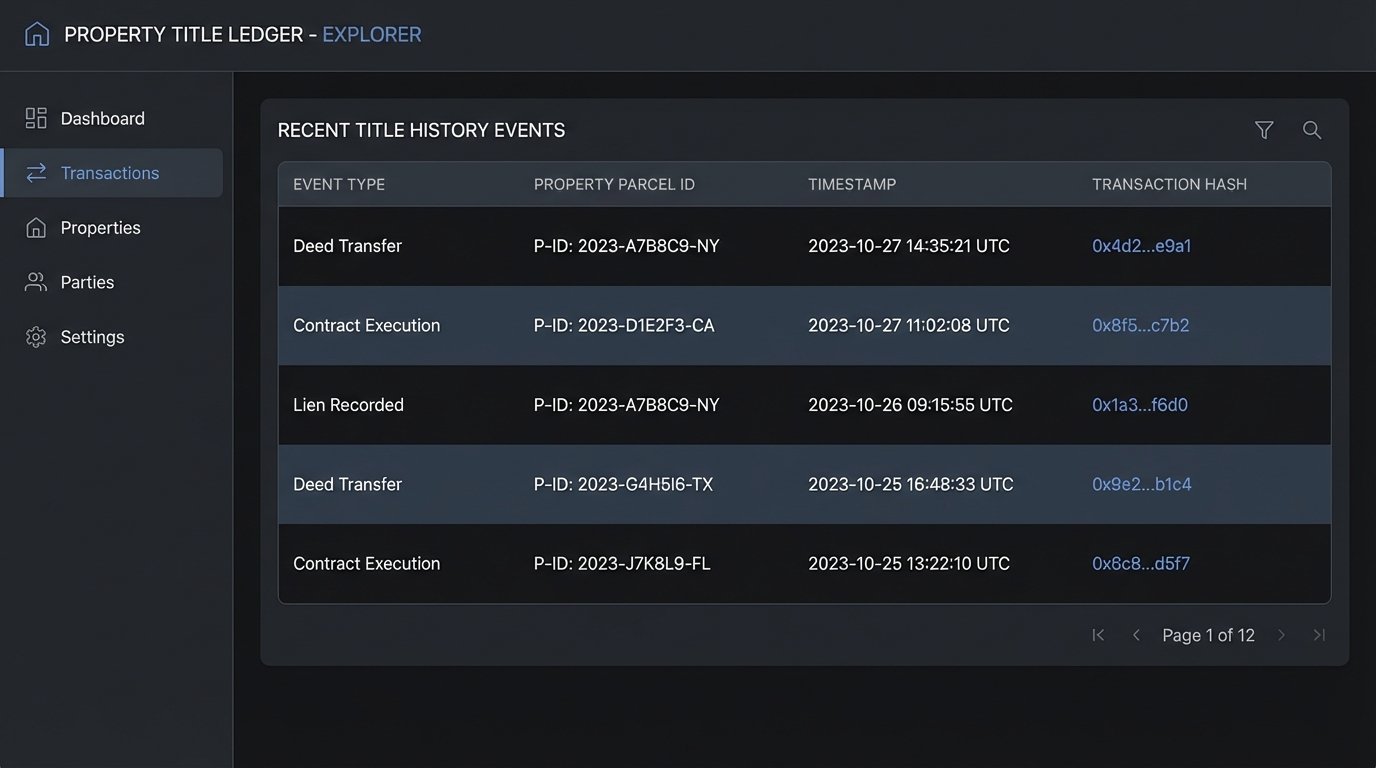
This is the most forward-looking and least implemented integration. The concept is to use a distributed ledger to create an immutable, transparent record of a property’s history. Instead of relying on a centralized, often paper-based, title company record, the chain of ownership is recorded as a series of cryptographically secured transactions.
Technical Breakdown
In a theoretical implementation, key events in a contract’s lifecycle would be recorded as transactions on a private or public blockchain. Events like the execution of the purchase agreement, release of contingencies, and the final deed transfer would be recorded as blocks. Each block is linked to the previous one, creating a verifiable chain of custody. A smart contract, a piece of code that lives on the blockchain, could automatically trigger certain events, like releasing escrow funds once both buyer and seller have digitally signed the closing documents.
The engineering complexity here is astronomical. It requires building or integrating with a blockchain platform like Ethereum, managing wallets for all parties, and paying “gas fees” for transactions. The bigger problem is not the technology, but the ecosystem. It requires adoption from county recorders, lenders, and title companies to be remotely useful.
Right now, this is mostly a solution in search of a problem that is not already solved, albeit clumsily, by title insurance.
Use Case: Verifiable Earnest Money Deposit
A buyer and seller execute a smart contract on a blockchain. The smart contract holds the buyer’s earnest money deposit in a digital escrow. The terms are coded into the contract. For example, if the inspection contingency is not met by a specific date and the buyer backs out, the smart contract automatically returns the funds to the buyer’s digital wallet without manual intervention from an escrow agent. This reduces disputes and speeds up fund transfers.
6. Automated Compliance Checks via Regulatory APIs
Real estate is governed by a web of local, state, and federal laws. An integration that checks a contract against these regulations can prevent costly legal errors. This involves connecting to APIs that provide access to regulatory databases, ensuring the correct disclosures and clauses are included.
Technical Breakdown
This is the hardest integration to build because the data sources are fragmented and rarely available via clean APIs. The process would involve parsing the contract, identifying the property’s location (city, county, state), and then querying a database of regulations for that specific jurisdiction. Does this county require a specific wildfire risk disclosure? Does this state mandate a specific format for the lead paint disclosure?
Building this requires subscribing to multiple data providers that specialize in tracking real estate law. Your system would need a rules engine that maps regulations to contract clauses. For example, if a property was built before 1978, the engine must verify the presence of a lead-based paint disclosure. If it is missing, the workflow is blocked.
The maintenance is a nightmare. Laws change constantly, and it is your job to update the rules engine. This is less of a one-time integration and more of an ongoing, resource-intensive operational commitment.
Use Case: Missing Disclosure Detection
A transaction coordinator prepares a closing package. Before sending it for signature, they run it through a compliance checker tool. The tool’s API takes the property address and the contract text. It queries a regulatory database and determines the property is in a special tax district that requires a Mello-Roos disclosure form. The API response indicates this form is missing from the package, and the system alerts the coordinator to add it before proceeding.