8 Real Estate Tech Events That Aren’t Just Vendor Pitches
Most real estate tech conferences are a firewall of marketing copy. They promise innovation but deliver vendor-centric keynotes and panels staffed by people who haven’t written a line of code in a decade. The actual engineering value is buried under three layers of sales pitches. Sifting through this is like trying to find a specific commit in a git history that has been rebased fifty times. Your job is to bypass the noise and find the sessions where people discuss system architecture, API limitations, and data model failures. This is a filtered list of events where those conversations are more likely to happen.
1. Inman Connect
Technical Focus
Inman is where you go to understand the strategic direction of the residential real estate market. It is not a hardcore engineering conference. The value for a technical architect is in deciphering the business problems that will eventually become engineering requirements. You will hear executives complain about agent adoption, data fragmentation, and customer retention. These complaints are the genesis of your next project epic.
Signal vs. Noise
The main stage is almost entirely noise. Skip it. The signal is found in the smaller breakout sessions, specifically those labeled “Broker,” “Tech,” or “Data.” This is where mid-level managers and directors speak with less polish and more honesty about their operational pains. They will talk about the nightmare of stitching together five different SaaS platforms to create a single agent workflow. They will name the vendors whose APIs are unreliable. That information is gold.
Integration Gotchas
The dominant theme is the all-in-one platform versus the best-in-class point solution. You will hear vendors promise seamless integration. The reality is a mess of poorly documented REST APIs, rate limits that are never mentioned in the sales deck, and data schemas that change without warning. Your job is to listen for the specific pain points mentioned by brokers and build a mental map of the fragile integration ecosystem they operate within.
It’s the difference between a product demo and a production log file.
2. CREtech
Technical Focus
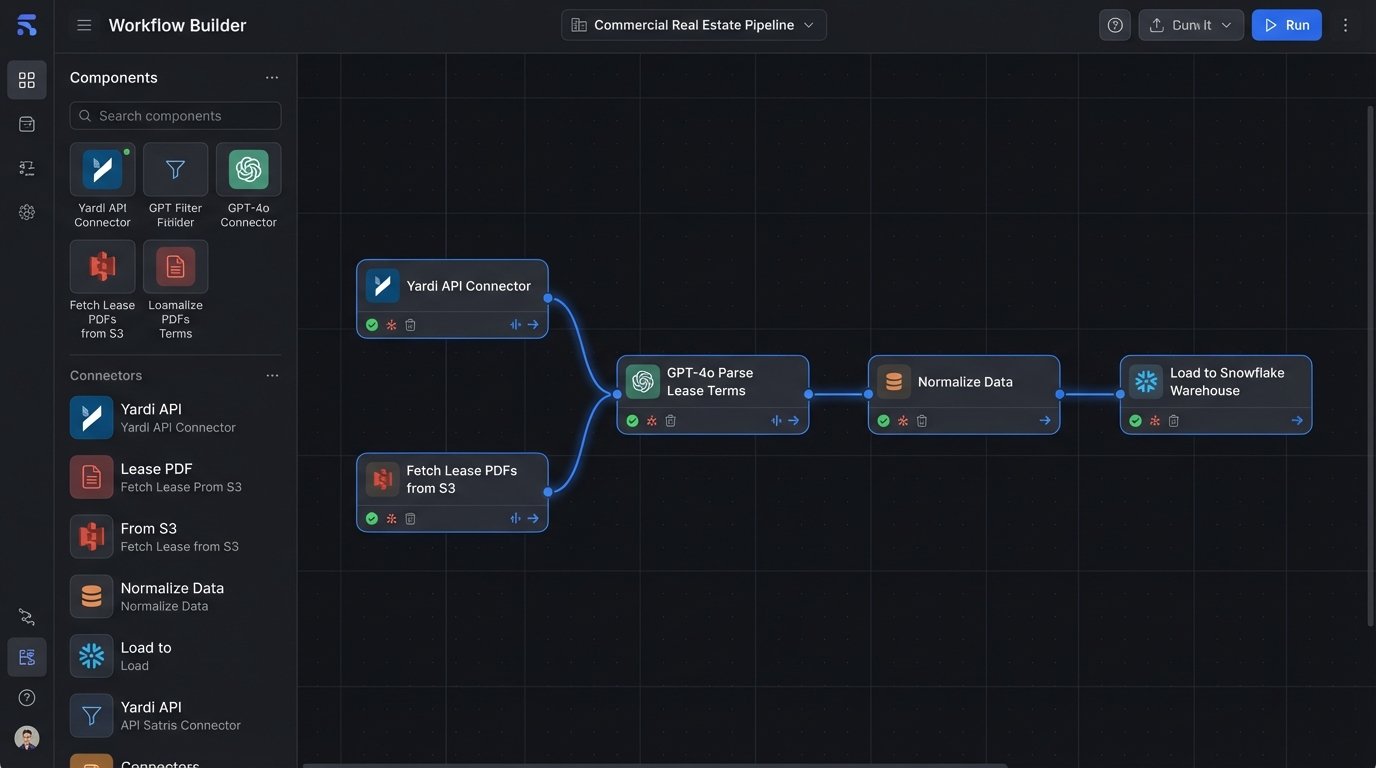
CREtech is the hub for commercial real estate technology. The problems here are an order of magnitude different from residential. The focus is on asset management, tenant experience platforms, and property operations. From a data perspective, this means dealing with unstructured lease documents, complex financial modeling, and sensor data from IoT devices in smart buildings. The technical discussions revolve around data warehousing, ETL pipelines for legacy systems, and the application of machine learning for predictive analytics on property performance.
Signal vs. Noise
The signal comes from the speakers who represent property owners and operators, not the tech vendors. Listen to the VPs of Innovation from companies like Brookfield, Tishman Speyer, or Prologis. They will speak candidly about pilot programs that failed and the challenges of deploying new tech across a global portfolio. They are less interested in shiny objects and more interested in solutions that can handle the brutal reality of legacy property management systems like Yardi or MRI. Integrating with these old systems is like bolting a modern jet engine onto a horse-drawn carriage. It’s messy, expensive, and prone to catastrophic failure.
Integration Gotchas
The core challenge in CRE is the lack of standardized data. Every lease is a unique legal document. Every building has a different set of systems. A vendor might claim their AI can “read” leases, but that often means a massive human-in-the-loop effort to train the model on your specific document formats. Always ask about the data ingestion and normalization process. If they cannot give you a clear answer, their solution is not ready for enterprise scale.
3. National Association of REALTORS (NAR) Tech Edge
Technical Focus
This is a series of one-day events, not a massive conference. The focus is squarely on technology for real estate agents. For an engineer, this is the place to understand the hellscape of Multiple Listing Service (MLS) data access. The conversations are about the Real Estate Standards Organization (RESO) Web API, which is slowly replacing the archaic Real Estate Transaction Standard (RETS). Understanding the politics and technical limitations of MLS data feeds is critical for anyone building agent-facing products.
Signal vs. Noise
Ignore the sessions on social media marketing. The signal is any talk given by an MLS executive or a representative from RESO. They will discuss the roadmap for the RESO Web API, the challenges of getting hundreds of local MLS boards to adopt the standard, and the quirks of the data dictionary. You learn which MLSs are progressive and which are still running on servers from the early 2000s.
Integration Gotchas
The RESO Web API is a standard, but its implementation varies wildly between MLSs. Some have robust, well-documented endpoints. Others are slow, unreliable, and have custom fields that break the standard. You cannot build one integration and expect it to work everywhere. It requires a dedicated team to manage the nuances of each MLS feed. Here is a trivial example of what a basic property query looks like using Python to hit a RESO endpoint. The complexity is not in the request itself, but in managing the authentication, pagination, and error handling for 200 different versions of this API.
import requests

import pandas as pd
# This is a simplified example. Production code needs robust error handling.
RESO_API_ENDPOINT = "https://api.some-mls-provider.com/v1/property"
# Auth tokens are typically Bearer tokens obtained via OAuth2
AUTH_TOKEN = "your_bearer_token_here"
headers = {
"Authorization": f"Bearer {AUTH_TOKEN}",
"Accept": "application/json"
}
# OData query syntax is part of the RESO standard
# This filters for active listings in a specific city with 3+ bedrooms
params = {
"$filter": "StandardStatus eq 'Active' and City eq 'Austin' and BedroomsTotal ge 3",
"$top": "100" # Limit the number of results per page
}
try:
response = requests.get(RESO_API_ENDPOINT, headers=headers, params=params, timeout=30)
response.raise_for_status() # Force an HTTPError for bad responses (4xx or 5xx)
data = response.json()
properties = data.get('value', [])
if properties:
df = pd.DataFrame(properties)
# Select and rename columns for clarity
df_clean = df[['ListingId', 'ListPrice', 'StreetNumber', 'StreetName', 'City', 'BedroomsTotal']]
print(df_clean.head())
else:
print("No properties found matching the criteria.")
except requests.exceptions.RequestException as e:
print(f"API request failed: {e}")
The real work begins after this script runs successfully. You have to normalize the data, geocode addresses, and handle the inevitable data quality issues.
4. Blueprint
Technical Focus
Blueprint is where real estate tech meets construction tech and finance. It has a heavy venture capital presence, so expect a lot of startup pitches. The technical value is in understanding the flow of data from the construction phase into the operational phase of a building’s lifecycle. This means discussions about Building Information Modeling (BIM), digital twins, and connecting data from Autodesk or Procore with property management systems.
Signal vs. Noise
The main stage is for VCs to talk about their investment theses. The signal is on the demo stage and in the technical breakout tracks. Watch the demos with a critical eye. When a startup claims to have a “digital twin” of a building, ask them what that actually means. Is it just a 3D model, or is it a live, bi-directional data model connected to the building’s operational systems? Most of the time, it is the former.
Integration Gotchas
The chasm between construction data and operational data is massive. BIM data is incredibly rich but is typically generated by architects and contractors in formats that are useless to a property manager. The challenge is extracting and transforming this data into a format that can be ingested by systems like Yardi or integrated with an enterprise data warehouse. This is not a simple API call. It is a complex ETL process that requires deep domain expertise in both construction and property management. A vendor’s promise of a “universal API” for this is often just a multi-tool where the only thing that works is the bottle opener.
5. Zillow Tech Webinars
Technical Focus
This is not a conference but a series of free webinars where Zillow engineers discuss their internal tech stack. They do deep dives on specific problems like search indexing at scale, their machine learning models for the Zestimate, and their platform architecture. This is a rare opportunity to see how one of the largest players in the space solves real-world engineering challenges.
Signal vs. Noise
It is all signal. There is no sales pitch. These are engineers talking to other engineers. They will show code, system diagrams, and performance metrics. They discuss failures and the lessons learned. The topics are highly specific, such as “Optimizing Real-Time Data Ingestion for Home Valuations” or “Migrating a Monolith to a Service-Oriented Architecture.”
Actionable Insights
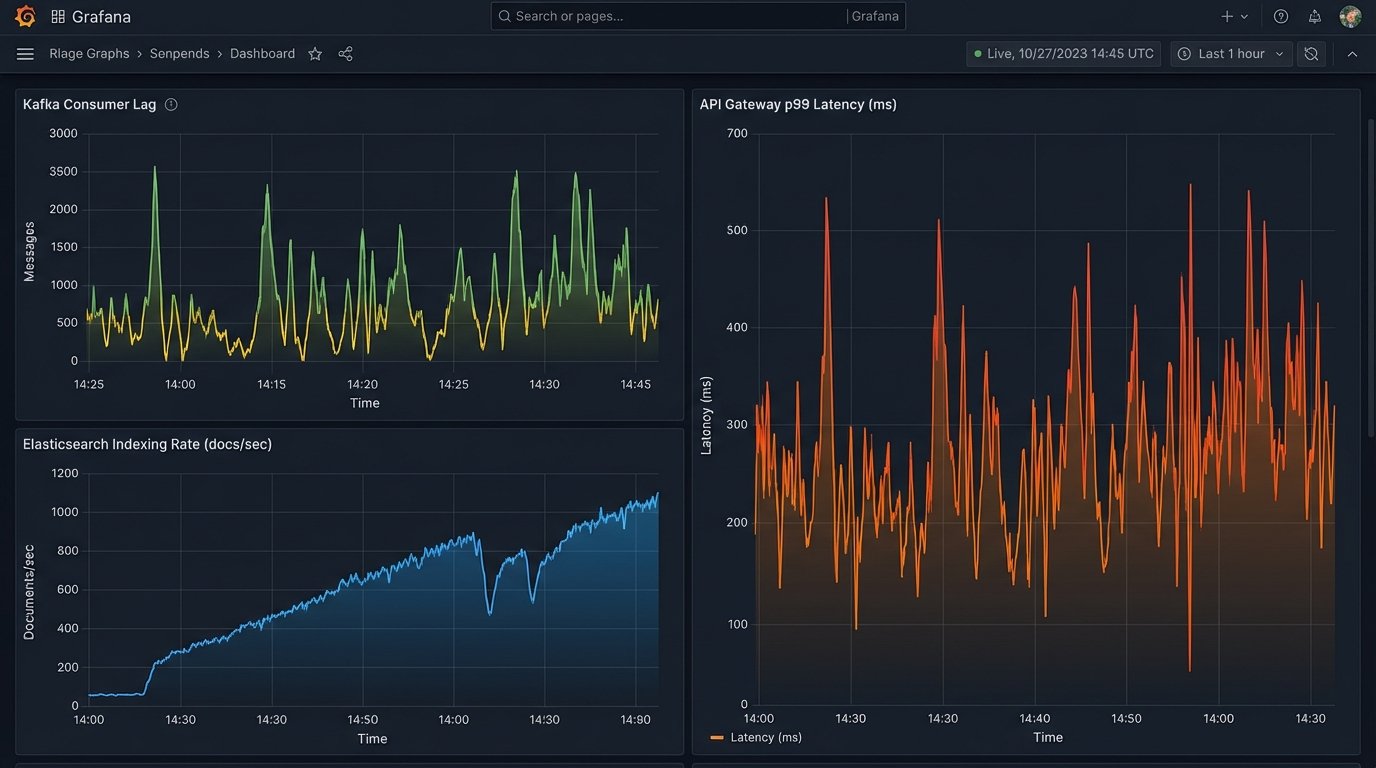
Pay close attention to their discussions on data infrastructure. Zillow processes a staggering amount of public record data, listing data, and user-generated data. Their choices of databases (e.g., PostgreSQL, DynamoDB), search engines (Elasticsearch), and stream processing technologies (Kafka, Kinesis) provide a battle-tested roadmap for building a scalable real estate data platform. You can learn more in one hour from their architects than in three days at a typical conference.
6. Propel by MIPIM
Technical Focus
This is the technology-focused offshoot of the massive MIPIM conference in Europe. The context is global, with a heavy emphasis on the European market. The technical discussions are colored by different regulatory environments, especially GDPR. Topics include data privacy by design, the challenges of cross-border data transfers, and the impact of sustainability regulations (ESG) on property data collection and reporting.
Signal vs. Noise
The noise is any panel discussing vague concepts like “The Future of the City.” The signal is found in sessions focused on specific regulations or standards. Look for talks on the practical implementation of ESG data platforms or the architectural patterns required to build a GDPR-compliant tenant application. The conversations are more measured and less hype-driven than in the US market.
Integration Gotchas
Building a platform for the European market means GDPR is not an afterthought. It must be baked into your system architecture from day one. This affects everything from database schema design (e.g., making it easy to anonymize or delete user data) to the choice of cloud providers and data centers. You cannot simply deploy your US product in Europe and expect it to be compliant. The “right to be forgotten” is a difficult engineering problem that many US companies underestimate.
7. RETCON (Real Estate Technology Conference)
Technical Focus
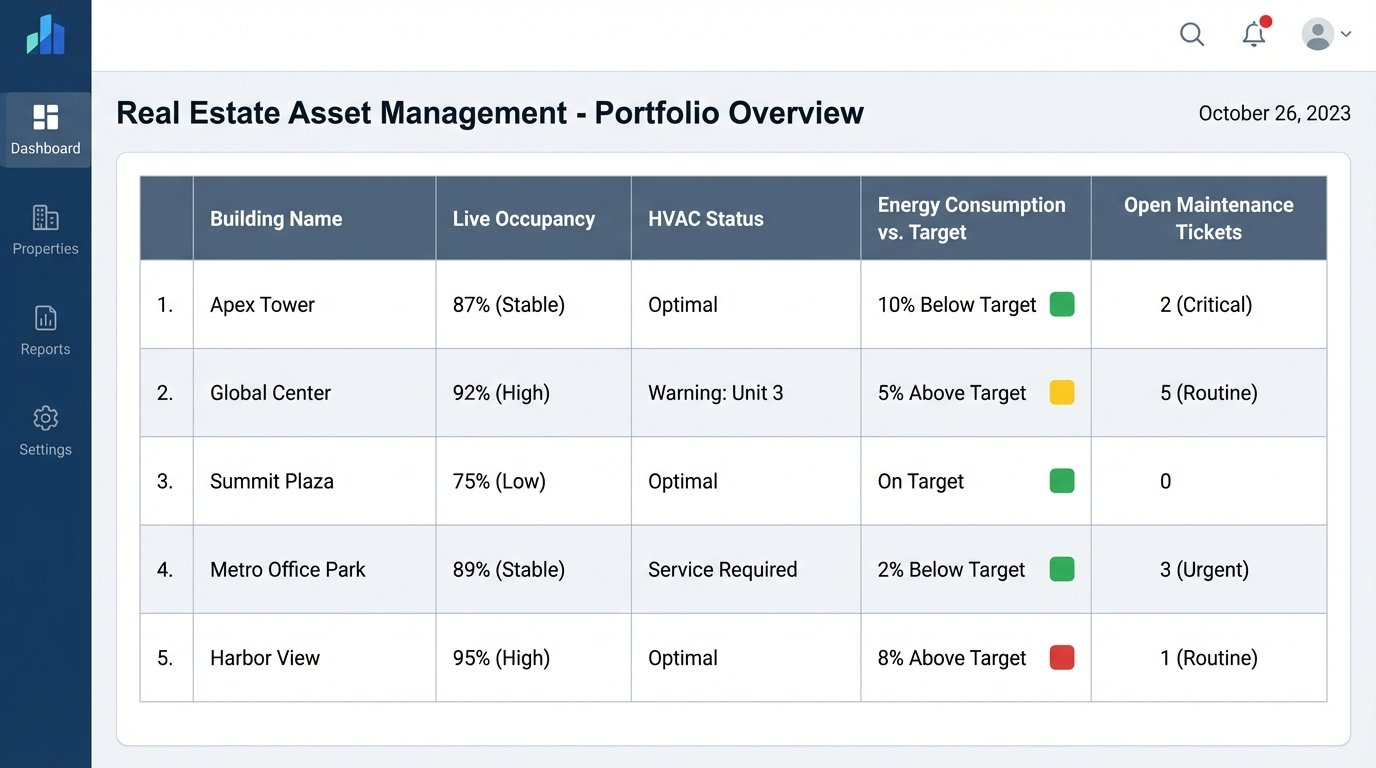
RETCON is heavy on the landlord and asset owner perspective. The focus is on operational efficiency, tenant engagement, and asset-level financial performance. Technically, this translates to conversations about integrating smart building systems (HVAC, lighting, access control), data analytics platforms, and accounting systems. The goal is to create a single source of truth for an asset or a portfolio.
Signal vs. Noise
The signal comes from the case studies presented by property owners. They will detail which technology they deployed, how the implementation actually went (versus the sales pitch), and what the measurable impact was. The noise is the “visionary” keynote from a tech CEO promising a fully autonomous building that runs itself. The reality is that most building operators are still struggling to get their HVAC system to talk to their room booking system.
Data Modeling Challenges
The core problem is creating a unified data model for a building. You have data from dozens of disconnected systems, each with its own schema and identifiers. Forcing these systems to talk to each other is a brutal data engineering task. It involves mapping proprietary protocols, building custom connectors, and dealing with a constant stream of dirty data. The process of cleaning unstructured building data is like translating a document that has been through a paper shredder and then taped back together by a toddler.
8. ULI Tech & Innovation Council Meetings
Technical Focus
The Urban Land Institute (ULI) is a non-profit research and education organization. Their Tech & Innovation Council meetings are not open to the public; you have to be a member. This is where senior executives from real estate, investment, and tech firms get together to discuss industry-wide challenges. It is not a vendor showcase. It is a working group.
Signal vs. Noise
This is 100% signal. The topics are strategic and forward-looking. Discussions here often precede the development of new industry standards or best practices. You will hear about the challenges of data sharing between competitors for market-level analytics, the need for better cybersecurity standards for smart buildings, and the long-term impact of climate change on asset valuation models.
Why It Matters
Getting access to these conversations provides a roadmap for the future. The problems being debated in a ULI council meeting today will become the RFPs and product requirements of tomorrow. Understanding the high-level strategic concerns of the industry’s largest players allows you to build systems and platforms that are aligned with where the market is going, not where it has been. Your time is better spent understanding the root problem than watching another demo of a product that solves a symptom.