
The Problem: A Paper-Fueled Bottleneck
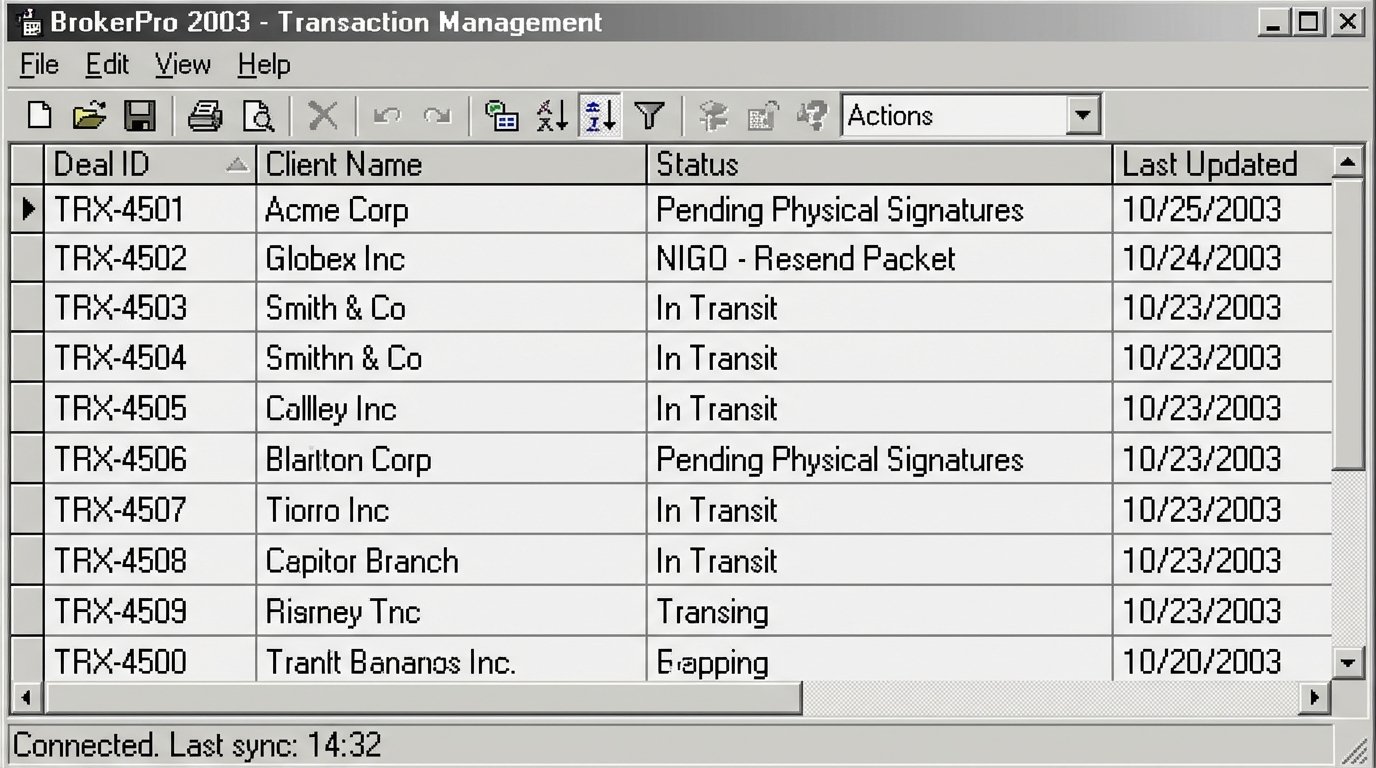
We were approached by a mid-sized brokerage drowning in paper. Their core transaction process for closing deals involved printing a 50-page document packet, getting physical signatures from multiple parties, scanning the entire stack back into a dated document management system, and then shipping the original hard copies via courier. The process was a slow, expensive, and error-prone mess. Each transaction was a physical object that could be lost, damaged, or filled out incorrectly.
The direct costs were obvious. They were spending over six figures annually on paper, toner, and courier services alone. The indirect costs were worse. A single mistake, like a missed initial on page 37, would force a reset of the entire physical process. This delayed closings, frustrated agents, and created a significant compliance risk from documents being “in-transit” rather than securely stored. Their “system” was a monument to manual inefficiency.
Quantifying the Failure Points
Before touching a single line of code, we had to map the existing workflow to get a baseline. The numbers were grim. The average deal cycle, from document generation to final archival, was 7.2 days. A staggering 15% of all submitted packets were flagged as Not In Good Order (NIGO) due to human error. Agent productivity was crippled by hours spent printing, chasing signatures, and scanning.
Their existing CRM was a proprietary relic with no real API. Data extraction was a manual copy-paste job, a guaranteed recipe for typos. The document management system was an on-premise server that required a VPN connection and three separate logins to access. This wasn’t just an outdated process. It was actively working against the business.
The Solution: Gutting the Manual Process with an API-First Approach
Replacing the entire paper chain with a digital workflow was the only logical path. This meant selecting an e-signature platform and building the connective tissue between their CRM, the new platform, and their final document archive. We didn’t need a platform with a fancy user interface. We needed one with a well-documented, reliable API that didn’t have draconian rate limits.
The chosen solution had to do three things without fail: pre-populate documents with data from the CRM, manage the signature lifecycle through its API, and push the final, executed document back to a secure storage location. This sounds simple. It rarely is.
Architecture and Data Bridging
The brokerage’s CRM had no outbound API, so we had to get creative. We built a lightweight service that used a database connector to directly query the CRM’s backend database. This service exposed a simple internal REST API endpoint. The main automation script would hit this endpoint with a deal ID, and the service would return a clean JSON object with all the required client and transaction data. This approach bypassed the CRM’s useless front-end entirely.
This intermediate service became our single source of truth for document generation. It was responsible for stripping out bad characters, reformatting dates to the ISO 8601 standard required by the e-sign API, and logic-checking critical fields before the data ever left our environment. You never trust data from a legacy system.
The core process flow was re-engineered. An agent initiates a transaction in the CRM. A trigger fires off a request to our new middleware. The middleware pulls and sanitizes the data, then constructs a request to the e-sign API to create a signing envelope from a predefined template. The e-sign platform handles all the email notifications and the signing ceremony itself. We didn’t have to build any of that client-facing infrastructure.
Mapping CRM data fields to the e-sign template placeholders was the most tedious part of the project. We had over 200 fields to map. The smallest typo in a field name in the JSON payload would cause the API call to fail silently. We wrote a simple Python script to validate our JSON payloads against a schema before sending them, which saved us from hours of debugging.
# Simplified Python example for payload validation

import json

from jsonschema import validate
# Define the expected schema for the e-sign API template
signer_schema = {
"type": "object",
"properties": {
"template_id": {"type": "string"},
"signers": {
"type": "array",
"items": {
"type": "object",
"properties": {
"email": {"type": "string", "format": "email"},
"name": {"type": "string"},
"role": {"type": "string"}
},
"required": ["email", "name", "role"]
}
},
"merge_fields": {"type": "object"}
},
"required": ["template_id", "signers"]
}
# Sample payload generated from our middleware
payload = {
"template_id": "d-a1b2c3d4e5",
"signers": [
{"email": "client@email.com", "name": "John Doe", "role": "Buyer"},
{"email": "agent@brokerage.com", "name": "Jane Smith", "role": "Agent"}
],
"merge_fields": {
"property_address": "123 Main St",
"purchase_price": "500000"
}
}
try:
validate(instance=payload, schema=signer_schema)
print("Payload validation successful.")
# Proceed to make the API call...
except Exception as e:
print(f"Payload validation failed: {e}")
# Halt process and log the error...
Webhook Implementation for Real-Time Status
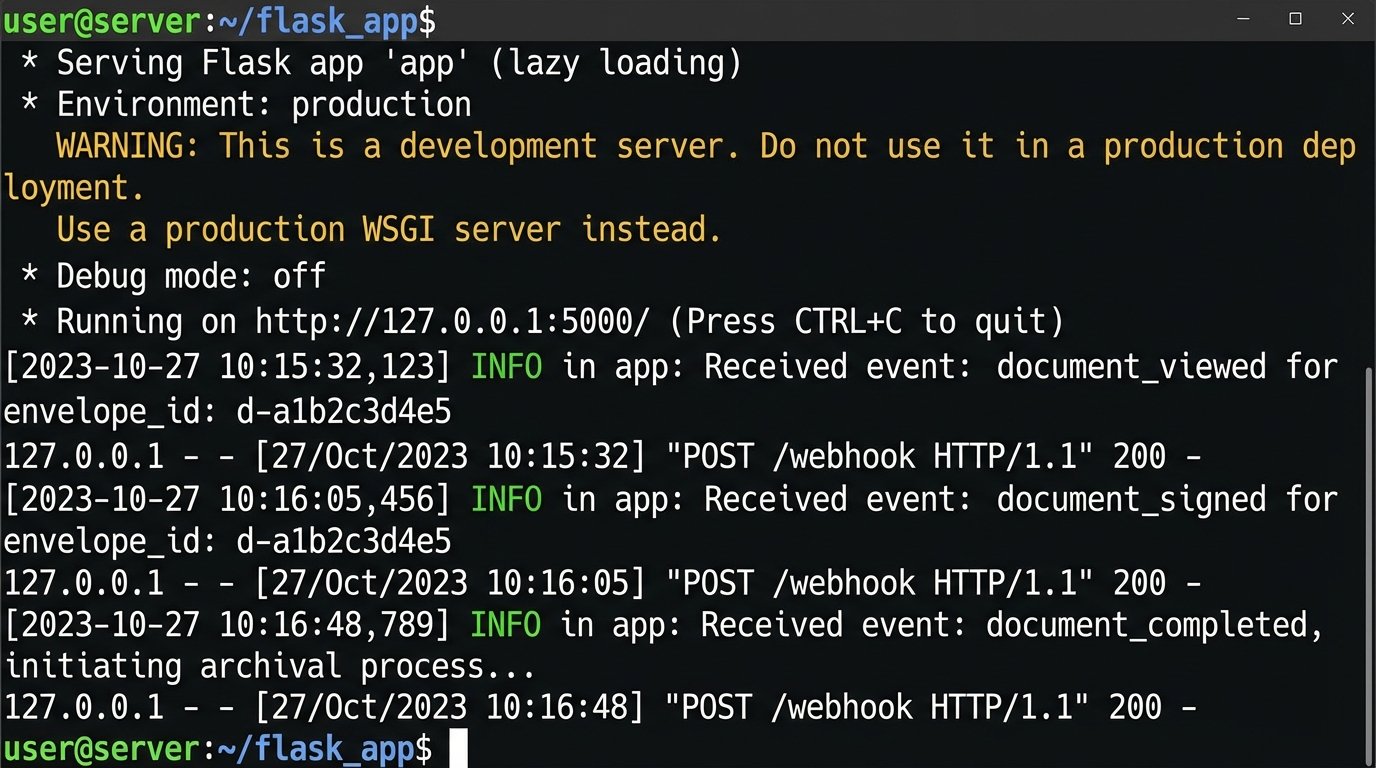
Polling an API for status updates is inefficient and a great way to hit your rate limits. We configured webhooks in the e-sign platform to notify our system of key events: ‘sent’, ‘viewed’, ‘signed’, ‘completed’. We built a small listener application using Flask to catch these incoming POST requests. This gave us a real-time, event-driven architecture.
When the ‘completed’ event webhook fired, it triggered the final part of the automation. The listener app would parse the webhook payload, extract the completed document ID, and then make a separate API call back to the e-sign platform to download the signed PDF. The PDF, along with its audit trail, was then programmatically uploaded to a cloud storage bucket and a final status update was pushed back to the CRM. This entire sequence was hands-off.
This process of pulling data from the CRM, transforming it, and injecting it into the e-sign API felt like trying to force-feed a JSON payload through a keyhole. We had to melt the data down into a perfectly structured format before it would even be accepted, stripping away years of inconsistent data entry practices from the source system.
Error Handling and Fallbacks
An event-driven system is great until an event gets missed. If our webhook listener was down for maintenance or the e-sign platform failed to send a webhook, a transaction could get stuck in digital limbo. To prevent this, we built a fallback mechanism. A nightly batch job runs, querying the e-sign API for any documents that are marked as ‘completed’ but haven’t been archived by our primary webhook process. It then forces the archival and updates the CRM.
This dual approach gave us the speed of webhooks with the reliability of a batch process. It’s not elegant, but in production, you build for failure. You assume every external service will eventually fail.
The Results: Hard Metrics and Operational Shifts
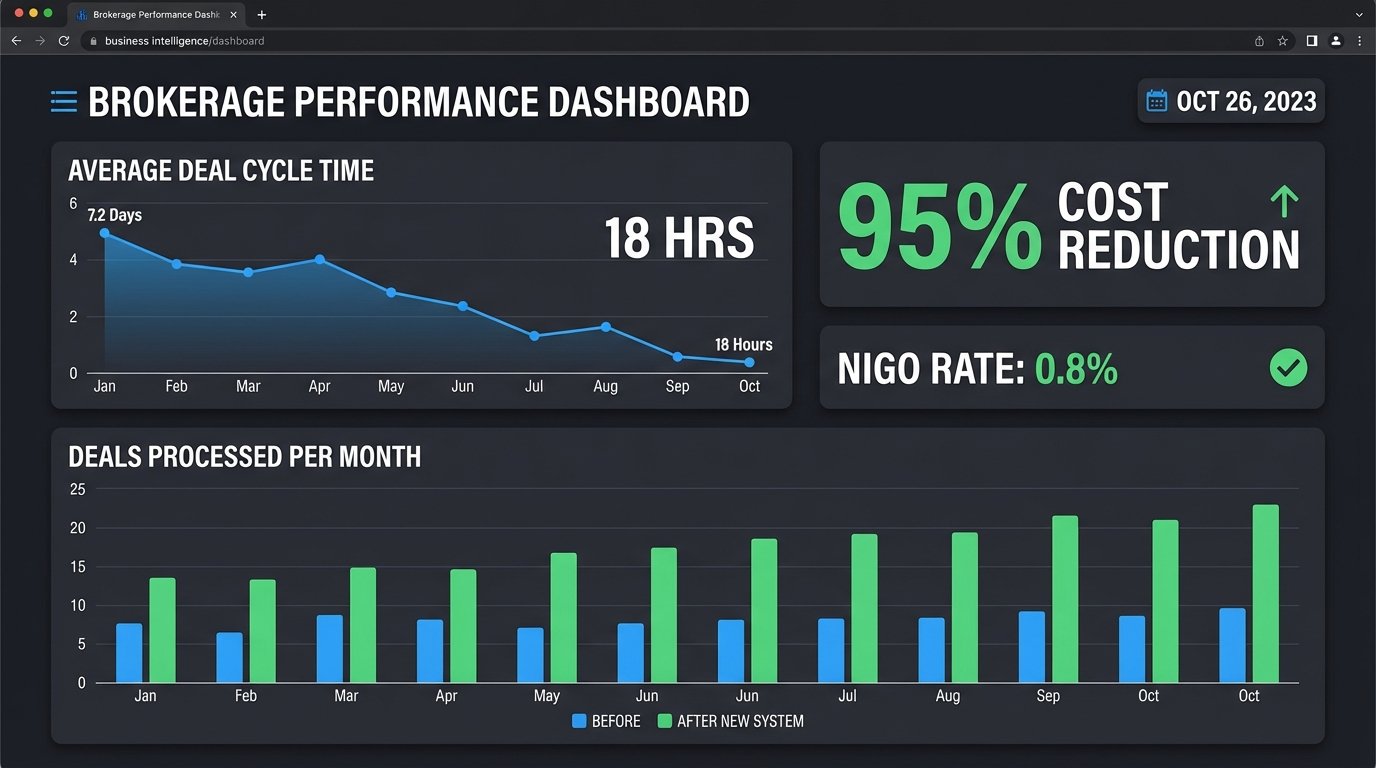
The impact was immediate and measurable. We tracked the key performance indicators from the day the system went live. The data demonstrated a fundamental shift in their operations, moving from a process governed by physical logistics to one governed by API response times.
- Cost Reduction: Within the first year, spending on paper, printing, and couriers was reduced by 95%. The annual savings exceeded $120,000, which covered the entire project cost and first-year software licenses in under eight months.
- Cycle Time Improvement: The average deal cycle time collapsed from 7.2 days to just 18 hours. Some simple transactions were completed end-to-end in under an hour. This acceleration had a direct impact on revenue recognition.
- Error Rate Elimination: The NIGO rate dropped from 15% to less than 1%. The only errors that remained were from incorrect data in the CRM itself, not from the document process. Pre-population of fields eliminated missed signatures and incorrect entries entirely.
- Compliance and Auditability: Instead of tracking paper packets, they now have a digital, time-stamped audit trail for every document. Responding to an audit request went from a week-long scramble to a five-minute search query.
The project paid for itself quickly. The real win, however, was the shift in agent behavior. Agents could now initiate and manage transactions from anywhere, without being tethered to an office printer. They spent more time closing deals and less time managing paperwork.
This wasn’t a flashy project. It was about methodically identifying a core business bottleneck and applying a straightforward technical solution to remove it. We ripped out a broken, manual process and replaced it with a controlled, automated workflow. The results speak for themselves.