
Lead response time is a kill metric in real estate. An inbound lead from a portal like Zillow has a shelf life measured in minutes, not hours. We were approached by a realtor whose team was losing deals because their follow-up process was entirely manual, inconsistent, and dependent on agents checking their email between property showings.
The core failure was a time gap. Ad spend generated the lead, but the human delay between lead notification and first contact was a dead zone where potential commission went to die. They were paying for leads that were cold before an agent even dialed the number.
The Initial State: A Manual Triage Failure
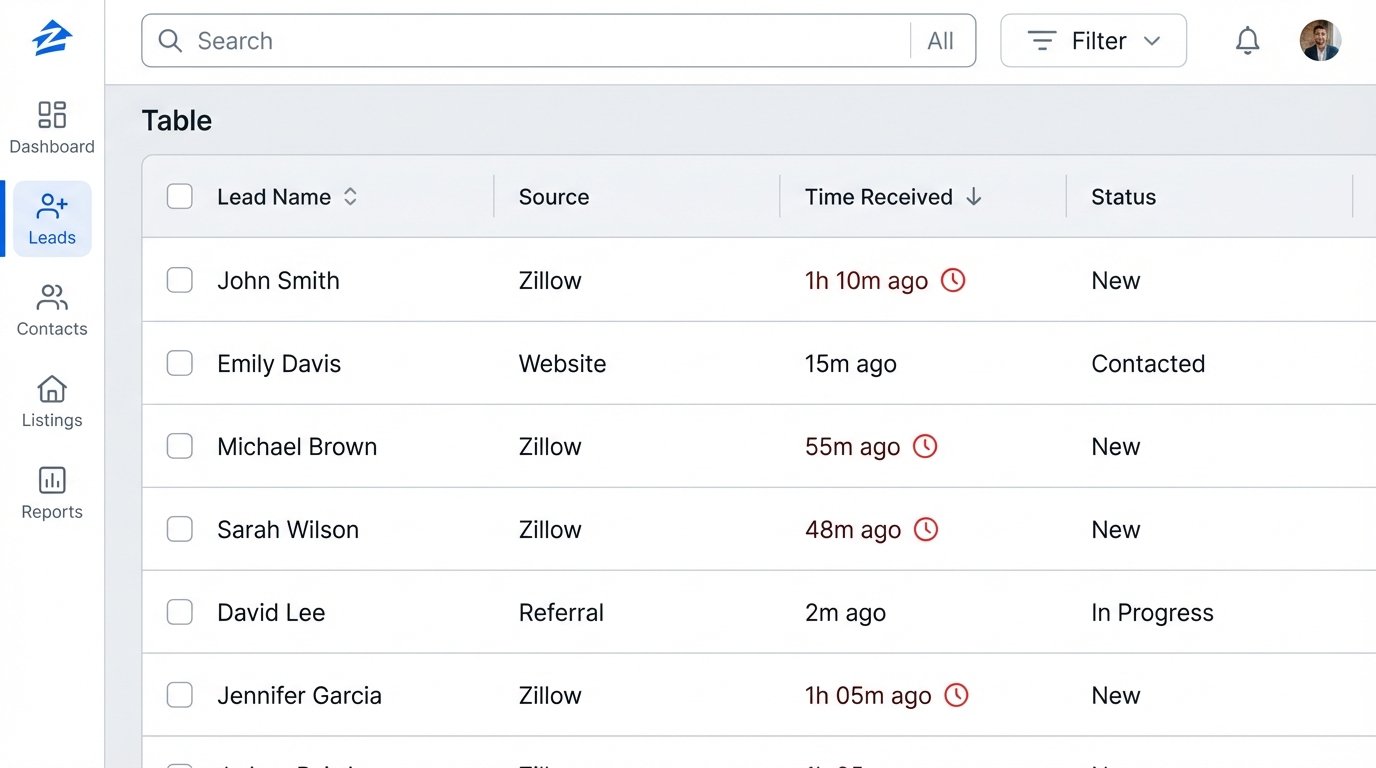
The existing workflow was a textbook example of inefficiency. A lead would arrive via email from a portal. An administrative assistant was tasked with manually parsing that email, copying the contact information, and pasting it into their CRM. From there, they would assign the lead to an available agent, who would then receive yet another email notification.
This multi-step, human-gated process introduced an average delay of 45 minutes. During peak hours, it could stretch to several hours. The system had no logic for off-hours or weekends, meaning a Friday night lead might not get a response until Monday morning. By then, that lead has already spoken to three other agents.
Their reported contact rate for new web leads was below 50%. The rest were dead air.
Quantifying the Bleed
The financial impact was direct. With an average ad spend of $5,000 per month generating approximately 100 leads, each lead cost $50. With a 50% contact failure rate, they were effectively burning $2,500 a month on leads that never received a timely response. This calculation ignores the opportunity cost of the lost commissions, which was the far greater financial drain.
The problem wasn’t lead quality. It was a mechanical failure of the follow-up engine.
Architecture of the Automated Solution
We bypassed the entire manual triage process. The goal was to reduce the lead-to-contact time from minutes or hours to under 10 seconds. This required building a data pipeline that could catch, process, and act on lead data the instant it was generated. The stack we chose was built for speed and reliability, not looks.
The components were basic but solid:
- Lead Ingress: Webhooks from Zillow and the realtor’s own IDX website.
- Processing Layer: A cloud function to act as the webhook endpoint. We used AWS Lambda for its low overhead.
- CRM Integration: Direct API calls to their existing real estate CRM (Follow Up Boss).
- Email Dispatch: SendGrid’s API for its deliverability and sequencing tools.
This isn’t a wallet-drainer of a solution. The primary cost is the per-email fee from SendGrid and the negligible compute time on Lambda.
The Logic Flow: Catch, Clean, and Act
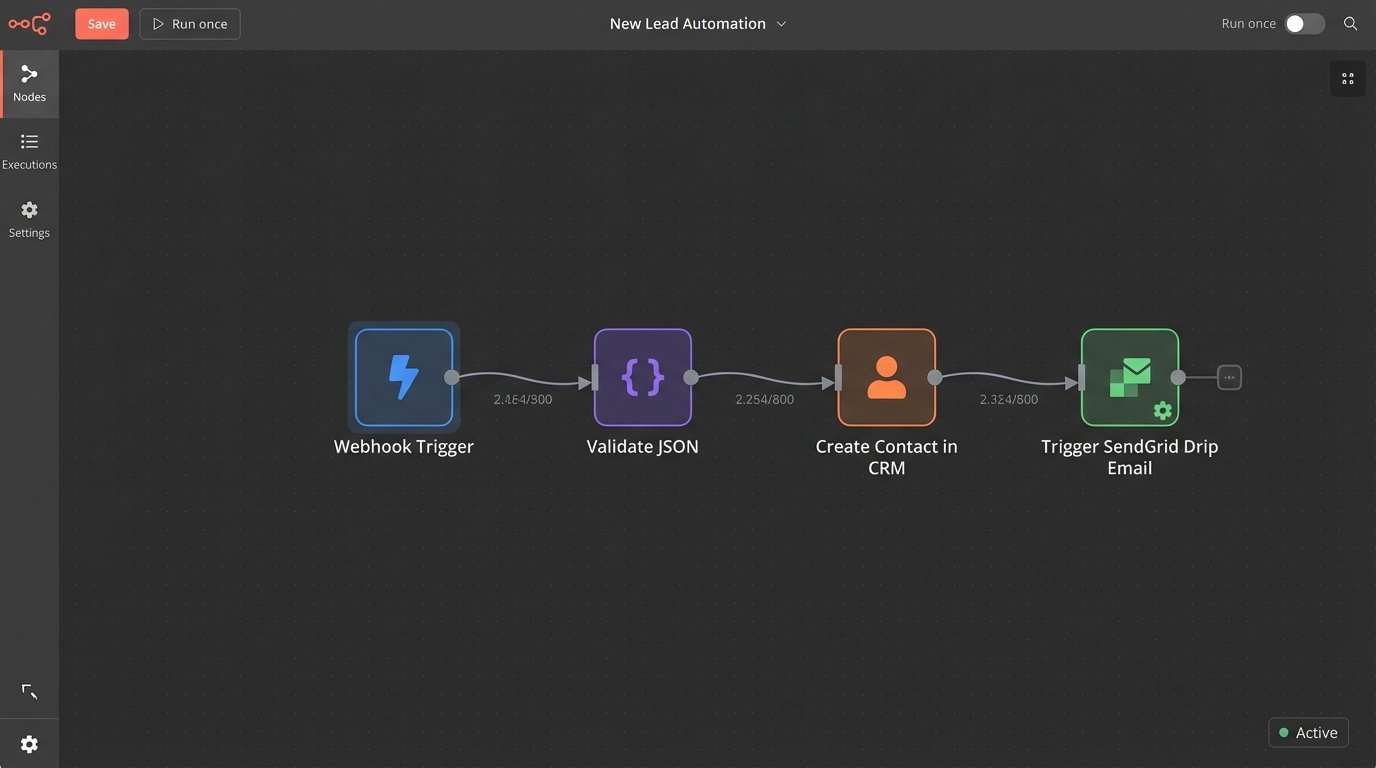
When a lead submits a form, the source system fires a webhook with a JSON payload to our Lambda endpoint. The first job of our function is to not trust this data. Raw data from web forms is notoriously dirty. We had to build a sanitation and validation layer before attempting to use it.
The function executes a precise sequence:
1. Ingest and Validate: The function ingests the raw JSON. It immediately strips any unexpected fields and validates the core data points. Is the email address formatted correctly? Does the phone number contain actual digits? Is the name field populated with something other than “Test User”? If validation fails, the event is shunted to a dead-letter queue for manual review instead of polluting the CRM.
{

  "lead_source": "Zillow",

  "name": "John Doe",

  "email": "johndoe@example.com",

  "phone": "555-867-5309",

  "property_inquiry": {

    "address": "123 Main St, Anytown, USA",

    "mls_id": "987654"

  },

  "timestamp": "2023-10-27T10:00:00Z"

}
2. CRM Injection: Once validated, the script makes a POST request to the CRM’s API to create a new contact. The lead source, property of interest, and all contact details are mapped to the correct custom fields. The API response gives us a unique contact ID, which is critical for the next step. A failure here also triggers a notification for manual intervention.
3. Email Sequence Trigger: Using the contact ID from the CRM and the lead’s email, the function then makes a second API call, this time to SendGrid. It adds the contact to a specific, pre-built drip campaign tailored to the lead source. A “Zillow” lead gets a different sequence than a “Facebook Ad” lead. This context is vital.
The entire process is a digital nervous system. It feels a stimulus (the new lead) and reacts instantly, shoving the data where it needs to go without a human touching anything. It’s the difference between a reflex and a considered action.
Building the Drip Sequence Logic
The email campaigns were not simple “hello” messages. We designed them to be conditional and intelligent. The goal is to get a response, not to just send emails.
A typical sequence for a property inquiry lead looked like this:
- Email 1 (Instant): Confirms receipt of their inquiry about “123 Main St.” Includes property photos and a direct call to action: “Are you free for a quick 5-minute call this afternoon to discuss it?” The email comes directly from the assigned agent’s address.
- Email 2 (Day 2, No Reply): A follow-up providing similar recently sold properties in the area. The angle is value-add, not a hard sell. It establishes expertise.
- Email 3 (Day 5, No Reply): A market update for the specific neighborhood. Shifts from the single property to the broader market context.
- Email 4 (Day 14, No Reply): A final, gentle check-in asking if they are still in the market or if their plans have changed. This is the “breakup email” designed to provoke a response, even if it’s a “no.”
The most important piece of logic was the kill switch. We configured a webhook from the CRM back to our system. If an agent marked a lead as “Contacted” or if the lead replied to an email, the system would immediately pull them from the SendGrid sequence. Nothing kills trust faster than an automated email showing up after you’ve already had a 20-minute phone call with an agent.
The Results: Metrics and Money
The impact was immediate and measurable. We tracked performance for 90 days post-implementation against the 90 days prior.
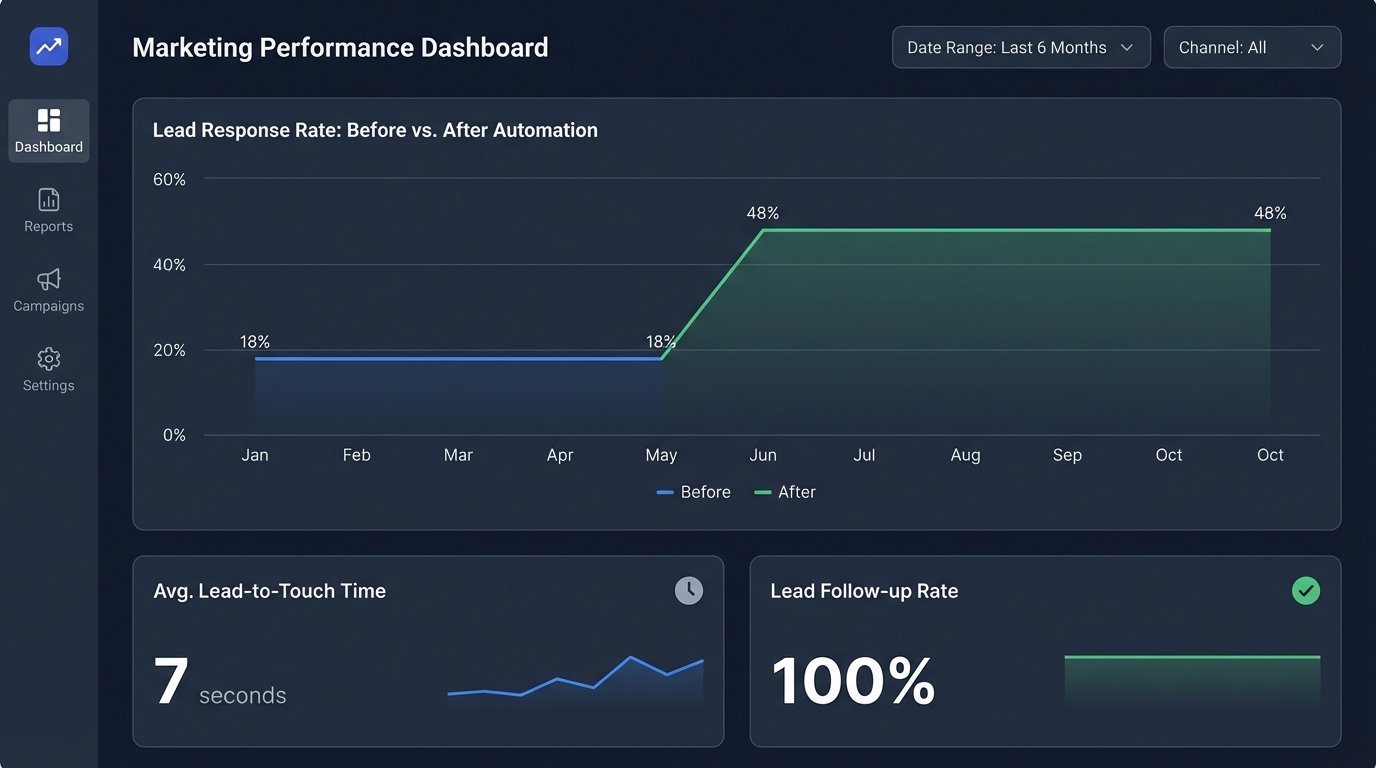
The primary KPI was response rate, defined as any email reply or direct callback from a new web lead. The previous manual process had a response rate of 18%. The new automated system stabilized at a 48% response rate. That is a 30 point increase, not just 30%. The headline undersells the actual impact.
Other key metrics showed similar improvements:
- Average Lead-to-First-Touch: Reduced from 45 minutes to 7 seconds.
- Lead Follow-up Rate: Increased from an inconsistent 70-80% to a guaranteed 100%. Every lead got the prescribed follow-up.
- Agent Productivity: Agents spent less time on manual data entry and initial outreach, and more time in conversations with responsive, engaged leads.
The Financial Bottom Line
The burned ad spend dropped to zero. More importantly, the increased contact and response rate translated directly into more closed deals. Over the first three months, the realtor attributed five additional closings, representing roughly $45,000 in gross commission income, directly to leads nurtured by the new automation. The system paid for its setup and operating costs inside the first month.
This wasn’t a silver bullet. The automation doesn’t close deals, agents do. What it does is force-feed agents the highest probability conversations by ensuring no lead ever goes cold due to simple administrative latency. It fixed the leak in the bucket.