
Your Real Estate CRM is a Data Graveyard
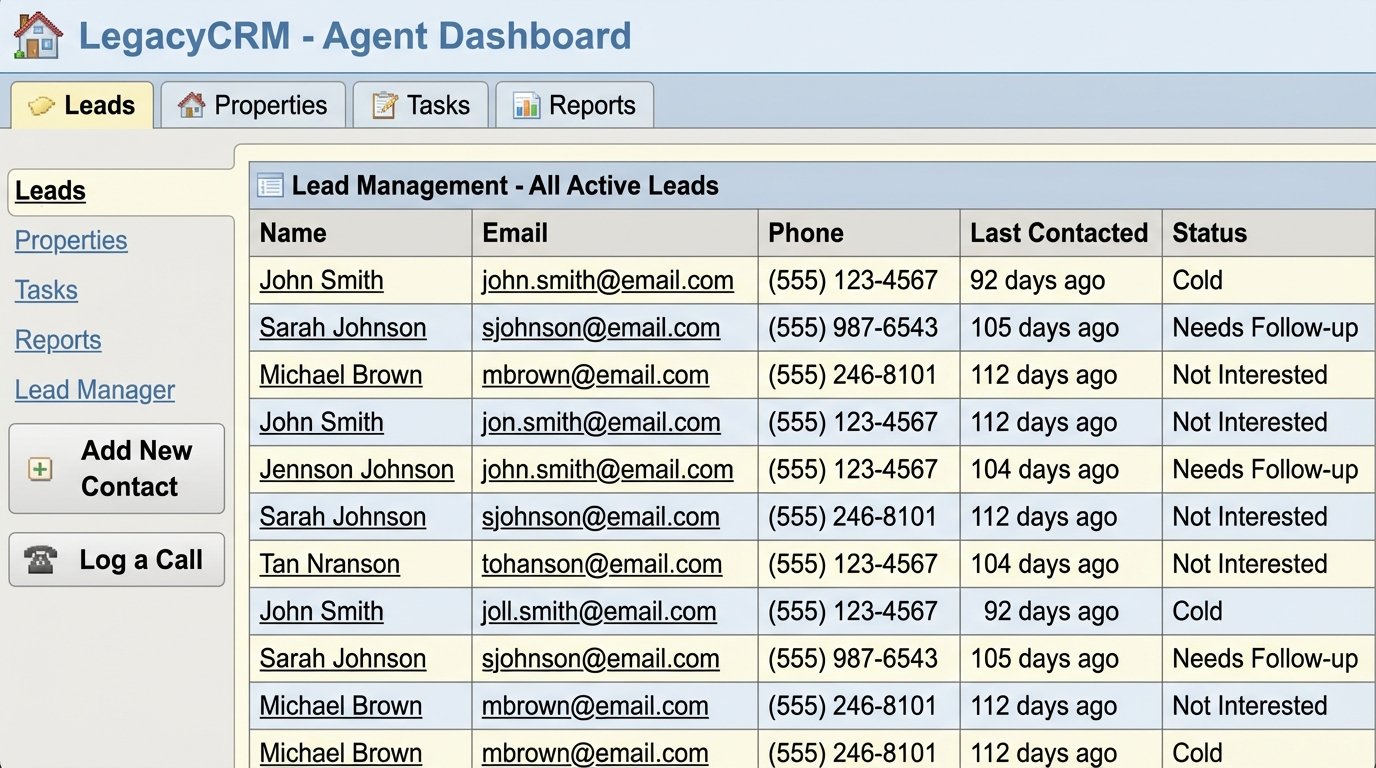
Most real estate CRMs are nothing more than expensive digital rolodexes. Agents are sold a vision of automated client management but spend their days manually entering contact details from open houses or copy-pasting notes from a phone call. The system is a passive bucket, a repository for data that slowly goes stale. It waits for human input and, in return, offers up templated email drips that prospective buyers have learned to ignore with expert precision.
This model is broken. It treats agents like data-entry clerks.
The Myth of “Set It and Forget It” Automation
The standard automation suite in these platforms is a joke. A seven-day email sequence triggered by a new lead form submission isn’t intelligent automation. It’s scheduled spam. It operates without context, sending the same generic “Just Checking In!” message to a first-time homebuyer looking at a starter condo and an investor hunting for a multi-unit property. The system has no awareness of intent, timing, or a client’s actual digital behavior.
We are conditioning our leads to send our emails directly to the trash. The fundamental flaw is that the CRM is the center of the universe, when it should be a reactionary hub processing signals from the outside world. The future isn’t a better database. It’s a nervous system.
Building an Event-Driven Client Engine
Stop thinking about your CRM as a place to store data. Start thinking of it as an orchestration engine that listens for events. An event is any meaningful action that happens outside the CRM itself. A new lead from Zillow, a price change notification from the MLS, a prospect viewing the same listing for the fifth time on your IDX site. Each of these is a trigger, a signal that demands an intelligent, contextual response.
The architecture for this is not about buying another all-in-one platform. It’s about connecting best-in-class tools with a central logic layer. The core components are webhooks, an orchestration platform, and data enrichment APIs. Your CRM becomes the destination, not the source. It’s the place where the *results* of the automation are logged, not where the work gets done.
Webhooks: The Digital Nerves
Everything starts with a webhook. It’s a simple HTTP POST request sent from one application to another when something happens. Your website provider, your lead generation sources, your MLS data feed provider. They all support webhooks. When a user fills out a “Contact Us” form, the web server doesn’t just send an email. It fires a packet of JSON data to a unique URL you control.
That data payload is the raw signal. It’s the beginning of the entire process.
{
  "lead_source": "Zillow",
  "contact": {
    "first_name": "John",
    "last_name": "Doe",
    "email": "johndoe@example.com",
    "phone": "555-123-4567"
  },
  "property_inquiry": {
    "mls_id": "ABC12345",
    "address": "123 Main St, Anytown, USA",
    "price": 750000
  },
  "timestamp": "2023-10-27T10:00:00Z"
}
Orchestration and Enrichment: The Brain
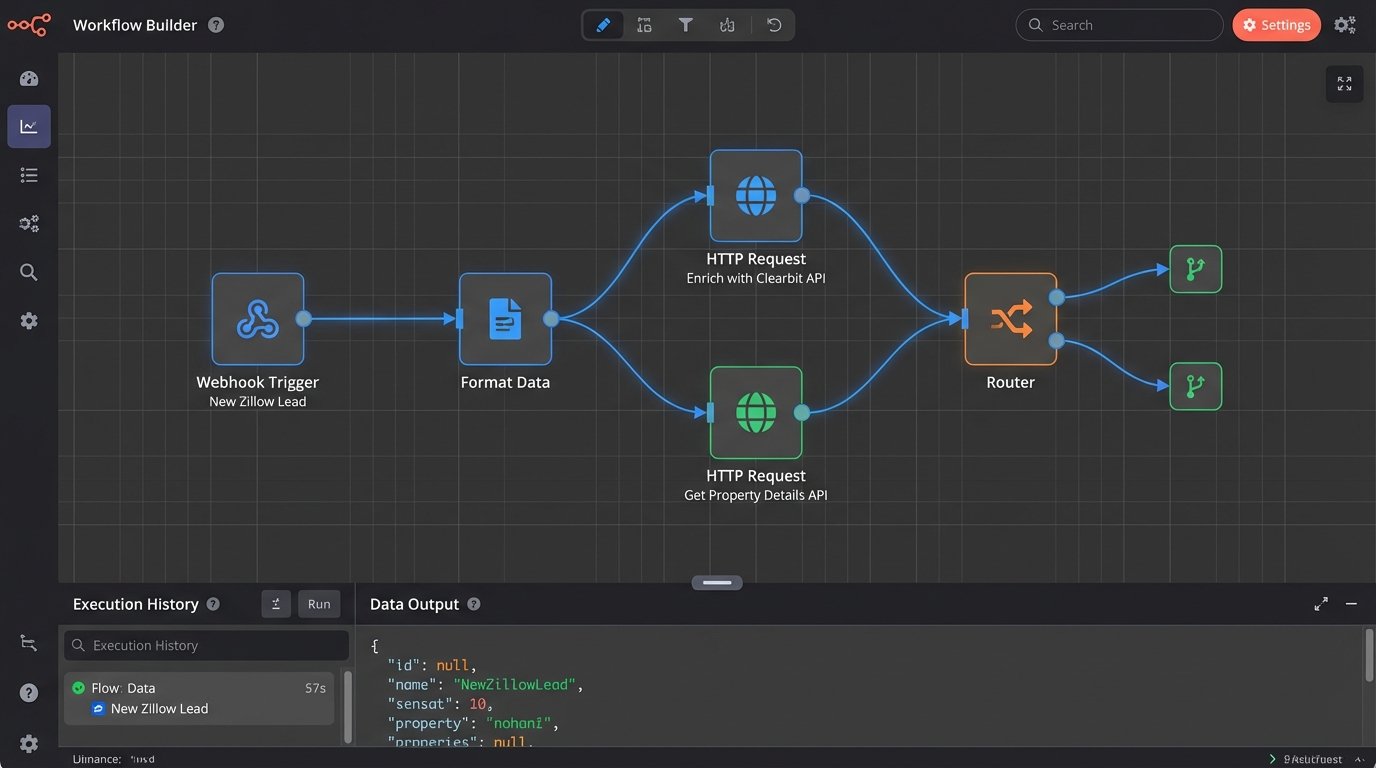
This webhook payload is useless on its own. It needs to be caught, processed, and enriched. This is where an automation platform like n8n or even a custom AWS Lambda function written in Python comes in. This layer acts as the brain. It receives the raw data and begins to add context.
First, we logic-check the data. Is the email valid? Is the phone number formatted correctly? Then, we enrich it. We pipe the email address through an API like Hunter or Clearbit to find a LinkedIn profile or company information. We take the MLS ID and query a real estate data API to pull back property history, school district ratings, and tax records. We are building a complete profile before a human even sees the lead.
Trying to manage this enrichment process inside a typical CRM is like trying to fit a firehose through a needle. The CRM is built for storage and retrieval, not for complex, multi-step API call orchestration.
# Simple Python example using a hypothetical property data API
import requests

def get_property_details(mls_id):
    api_key = "YOUR_API_KEY"
    url = f"https://api.propertydata.com/v1/listings/{mls_id}"
    headers = {"Authorization": f"Bearer {api_key}"}

    try:
        response = requests.get(url, headers=headers)
        response.raise_for_status() # Raise an exception for bad status codes
        property_data = response.json()

        # Extract specific, useful information
        school_district = property_data.get("school_info", {}).get("district_name", "N/A")
        last_sale_date = property_data.get("history", [{}])[0].get("date", "N/A")

        return {
            "school_district": school_district,
            "last_sale_date": last_sale_date
        }
    except requests.exceptions.RequestException as e:
        print(f"API call failed: {e}")
        return None

# Usage
enriched_data = get_property_details("ABC12345")
# Now 'enriched_data' can be added to the lead profile
From Raw Data to Intelligent Action
Once the lead is enriched, the orchestration engine makes a decision. This is where you gut the old-school drip campaign. Instead of a one-size-fits-all email, the system routes the lead based on the data we just collected.
- Scenario A: The Investor. The lead’s email domain matches a known real estate investment firm. The inquired property is zoned for multi-family use. Action: Instead of a generic email, the system creates a high-priority task in the agent’s CRM, assigns it directly to the agent who specializes in investment properties, and attaches a PDF of the property’s potential cap rate analysis.
- Scenario B: The Repeat Viewer. Website tracking shows a known contact has viewed the same property six times in 48 hours. Action: The system sends a push notification to the agent’s phone via Slack or a mobile app. The message: “Jane Smith just viewed 123 Main St for the 6th time. Call her now. Her daughter’s school is rated an A+ and is 2 miles away.”
- Scenario C: The Past Client. An MLS feed alert shows a home you sold three years ago has just been listed by a competitor. Action: The system flags this in your CRM, creates a task for you to “reach out and reconnect,” and drafts an email mentioning your knowledge of the property from the previous sale.
This is dynamic. It’s contextual. A simple conditional split in an n8n workflow can handle this routing.
{{ $json.property_inquiry.price > 1000000 ? "High Value Lead" : "Standard Lead" }}
That one expression is more intelligent than a ten-step email sequence.
The Trade-Offs Are Real
This approach is not for everyone. It’s not an out-of-the-box product. You are building a system, not buying one. The cost shifts from a high monthly CRM subscription to paying for API calls, hosting for your orchestration tool, and the technical expertise to glue it all together. It’s a wallet-drainer if you don’t plan your API usage.
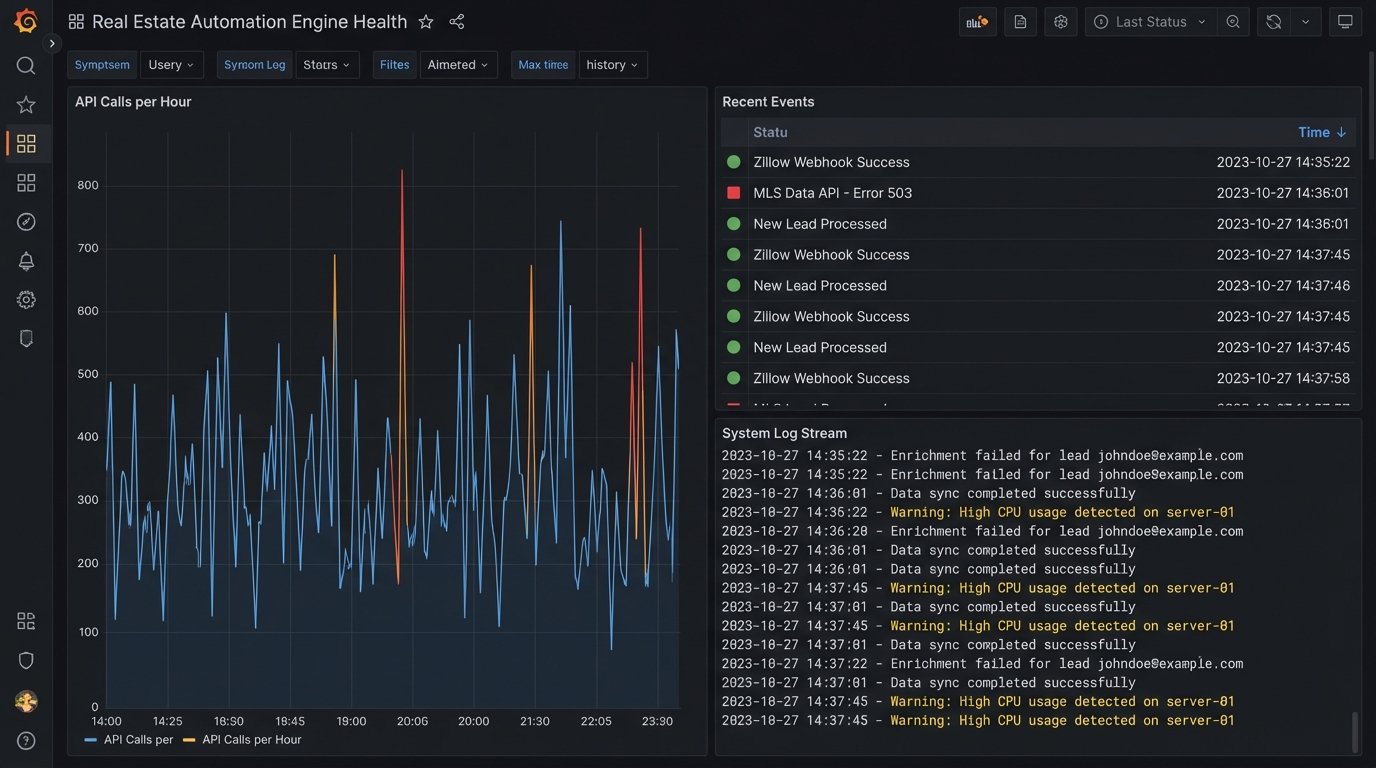
You also introduce more potential points of failure. The Zillow webhook format changes, your enrichment API key expires, the MLS feed goes down. Your beautiful automation engine grinds to a halt. This requires active monitoring and maintenance. You trade the illusion of plug-and-play simplicity for genuine, powerful automation.
The choice is straightforward. You can continue paying for a glorified spreadsheet that makes your agents perform manual labor. Or you can build an intelligent system that listens, thinks, and acts. A system that gets agents out from behind a keyboard and puts them back in front of clients, armed with the right information at the exact right moment.
Stop buying features. Start building an engine.