
The sales pitch for the all-in-one real estate platform is a masterclass in simplicity. One login, one bill, one database to rule them all. It promises a unified world where your CRM, IDX website, marketing automation, and transaction management hold hands and sing together. The reality is that you’ve bought a pre-built house with plumbing you can’t access and electrical wiring that shorts out if you plug in a new appliance.
These platforms are not built for scale. They are built for sales demos. They solve the surface-level problem of vendor management while creating a deep, structural problem of technical debt and inflexibility that most teams only discover a year in, right after the annual contract auto-renews.
The Seductive Logic of a Single System
We must acknowledge the initial appeal. Consolidating technology reduces the immediate cognitive load on an agent or a broker. You eliminate the need to stitch together five different services with five different billing cycles. Data, in theory, flows seamlessly from a new lead captured on the integrated website directly into the CRM, ready for an automated email drip campaign managed by the platform’s marketing module.
This approach presents a single source of truth. An agent can view a contact’s entire history, from their first property view to their final closing documents, all within one interface. The idea is to flatten the tech stack, removing the integration points that so often break or require maintenance. It’s a compelling narrative, especially for brokerages that lack dedicated technical staff.
Performance Choke Points and Feature Anemia
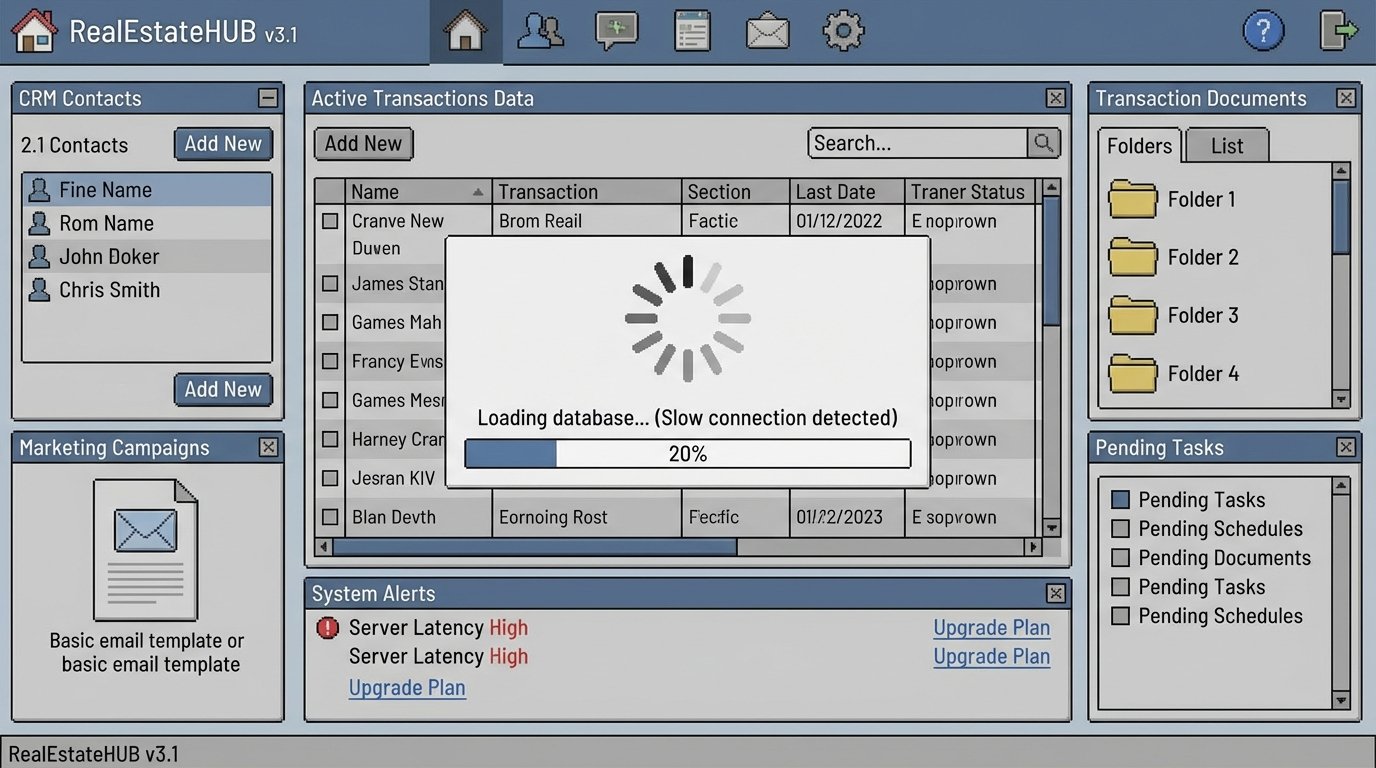
The first crack in the monolithic facade appears under load. A single, shared database must service every request from every module. Your agents are running complex contact searches while the marketing module is blasting 10,000 emails and the website’s IDX feed is trying to update. Querying this system for a simple report on lead source ROI feels like trying to suck a bowling ball through a garden hose. The user interface becomes sluggish, and critical operations time out.
These platforms suffer from feature anemia. They do everything, but they do nothing well. The CRM module lacks the sophisticated tagging and automation rules of a dedicated system like Follow Up Boss. The email marketing component is a stripped-down version of ActiveCampaign, missing critical logic for campaign branching. The transaction management piece is a shadow of what SkySlope or Dotloop offer. You get a spork when what you needed was a fork and a spoon.
API Rigidity: The Digital Handcuffs
Integration is where the “all-in-one” argument completely collapses. Their APIs, if they exist at all, are often an afterthought. They are typically rigid, poorly documented, and aggressively rate-limited. You’re forced to work with outdated protocols like SOAP or XML-RPC, which require massive overhead to parse and manage compared to modern REST or GraphQL endpoints.
Imagine trying to pull deal data. A modern, dedicated API would give you a clean JSON object with a simple GET request. The monolithic platform might force you into a multi-step authentication dance that terminates in an XML file you have to parse with a clunky library. This isn’t just an inconvenience. It actively prevents you from building valuable, custom integrations.
Here is a basic example of the kind of verbose XML you might get back, compared to a clean JSON response from a specialized tool.
<!-- All-in-One Platform's Clunky XML Response -->

<?xml version="1.0" encoding="UTF-8"?>

<Response>

  <Status>Success</Status>

  <Data>

    <Deal>

      <ItemID>98765</ItemID>

      <DealName>123 Main St Purchase</DealName>

      <Fields>

        <Field name="Stage">

          <Value>Under Contract</Value>

        </Field>

        <Field name="CloseDate">

          <Value>2024-10-15</Value>

        </Field>

      </Fields>

    </Deal>

  </Data>

</Response>
<!-- Dedicated Tool's Clean JSON Response -->
{
"status": "success",
"data": {
"deal": {
"id": 98765,
"name": "123 Main St Purchase",
"stage": "Under Contract",
"closeDate": "2024-10-15"
}
}
}
The first example requires a dedicated parser and complex logic to extract values. The second can be handled natively in almost any programming language. That difference is the line between a weekend project and a week-long engineering headache.
The High Cost of Leaving: Data as a Hostage
Vendor lock-in is the business model. Once your brokerage’s entire operational history is inside the platform, leaving becomes a monumental task. Data exports are often incomplete or delivered in proprietary formats like a series of CSV files that have lost all their relational integrity. Getting your transaction documents, contact notes, and communication history out in a usable format can cost thousands in consulting fees, if it’s possible at all.
You are chained to their roadmap and their pricing. If they decide to deprecate a feature you rely on or increase prices by 30%, your options are to pay up or embark on a painful, business-disrupting migration project.
The Alternative: A Composable, API-First Architecture
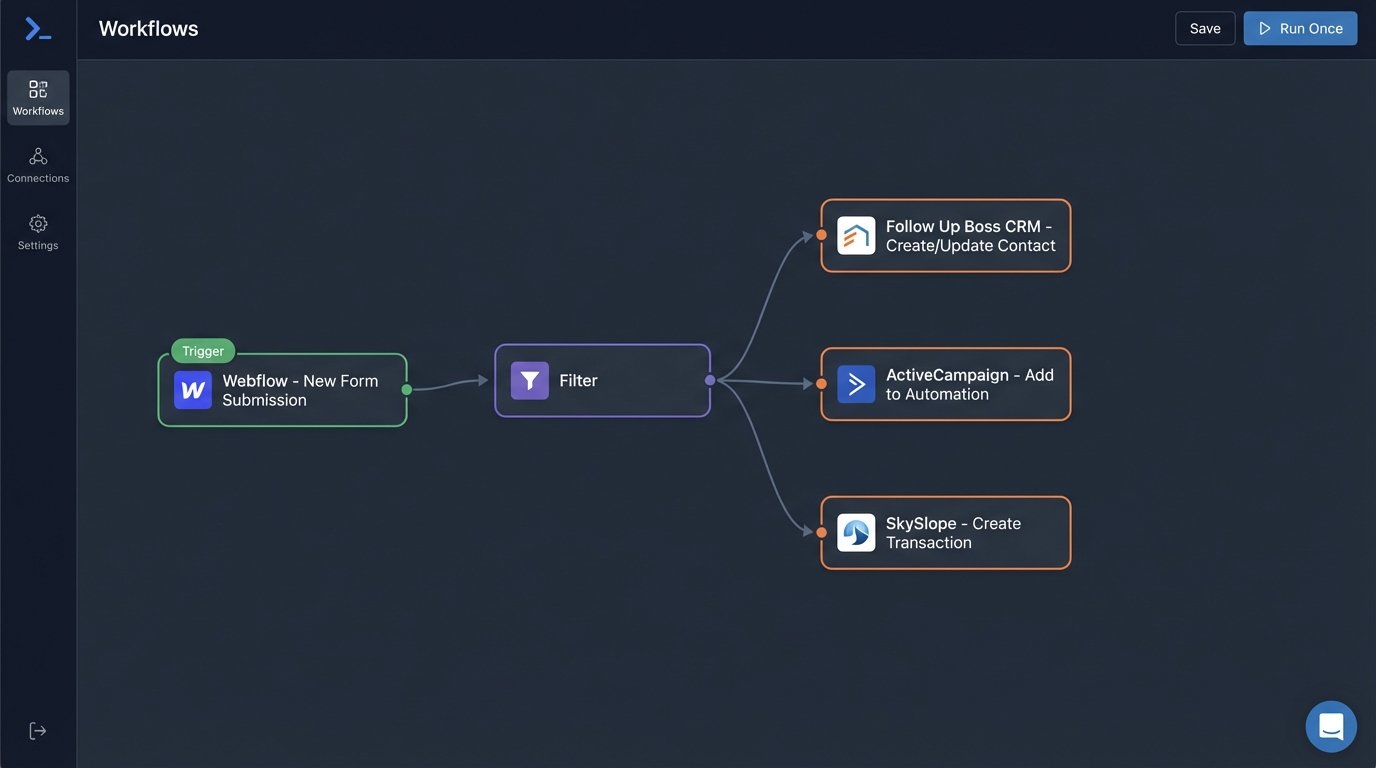
The superior model is a composable stack built from best-of-breed components. This is not about randomly buying a dozen tools. It is a deliberate strategy centered around a powerful hub and connected spokes, all communicating via modern APIs. This architecture delivers flexibility, performance, and control.
The Hub: A Purpose-Built CRM
Your central nervous system must be a dedicated real estate CRM. Its sole purpose is to masterfully manage contacts, deals, and communications. The single most important selection criterion is the quality and openness of its API. This CRM becomes your single source of truth for people and transactions. Every other tool in your stack will read from or write to this hub.
The Spokes: Specialized, Best-in-Class Tools
You surround the CRM hub with specialized tools that are the best at what they do.
- Lead Generation: Your website (built on a flexible platform like Webflow or WordPress), Zillow, and paid ad landing pages all inject new leads directly into the CRM via its API or a webhook.
- Marketing Automation: A tool like ActiveCampaign is triggered by a tag or stage change in the CRM. It handles complex, multi-branch nurture campaigns far more effectively than any all-in-one module.
- Transaction Management: When a deal stage in the CRM is updated to “Under Contract”, an external service like SkySlope or DocuSign is called to create the transaction file. Key dates and documents are synced back to the CRM deal record.
The Glue: An Integration Layer
The bridge between these systems is an integration layer. For simple connections, services like Zapier or Make.com are perfectly sufficient. They listen for triggers in one system and execute actions in another. For more complex workflows, a small AWS Lambda function or a Google Cloud Function written in Python or Node.js provides infinite control.
This allows you to build custom logic. For example, a Lambda function can intercept a new lead, run it against a data enrichment service like Clearbit, format the phone number correctly, and then decide which agent to assign it to based on a round-robin or zip code-based rule before injecting it into the CRM.
# Example Python (using Flask) for a webhook listener

# This script could run on a cheap server or as a serverless function
from flask import Flask, request, jsonify
import requests
import json
app = Flask(__name__)
CRM_API_ENDPOINT = "https://api.greatcrm.com/v1/leads"
CRM_API_KEY = "YOUR_SECRET_KEY"
@app.route('/webhook/new-lead', methods=['POST'])
def new_lead_handler():
data = request.get_json()
# Basic validation and data cleaning
if not data.get('email') or not data.get('name'):
return jsonify({"status": "error", "message": "Missing required fields"}), 400
lead_payload = {
"name": data.get('name').strip(),
"email": data.get('email').lower().strip(),
"phone": data.get('phone', ''),
"source": "Website Form",
"notes": data.get('message', '')
}
# Inject the cleaned lead into the CRM
headers = {
"Authorization": f"Bearer {CRM_API_KEY}",
"Content-Type": "application/json"
}
response = requests.post(CRM_API_ENDPOINT, headers=headers, data=json.dumps(lead_payload))
if response.status_code == 201:
# Trigger follow-up actions via Zapier, Make, etc.
return jsonify({"status": "success", "message": "Lead created"}), 201
else:
return jsonify({"status": "error", "message": "Failed to create lead in CRM"}), 500
if __name__ == '__main__':
app.run(debug=True, port=5000)
This level of control is impossible within the walled garden of an all-in-one platform.
A True Cost-Benefit Analysis
The spreadsheet cost of five different software subscriptions may look higher than one monolithic license fee. This is a flawed analysis. It ignores the hidden costs of the all-in-one: lost agent productivity due to a slow system, missed opportunities from anemic marketing automation, and the engineering cost of working with a terrible API.
The composable stack’s cost is directly tied to value. You pay for what you use, and each component is optimized for its task. More importantly, the cost to switch out one component is minimal. If a better transaction management tool comes along, you just update the API connection. Trying to replace the transaction module of an all-in-one is impossible. You have to detonate the entire system.
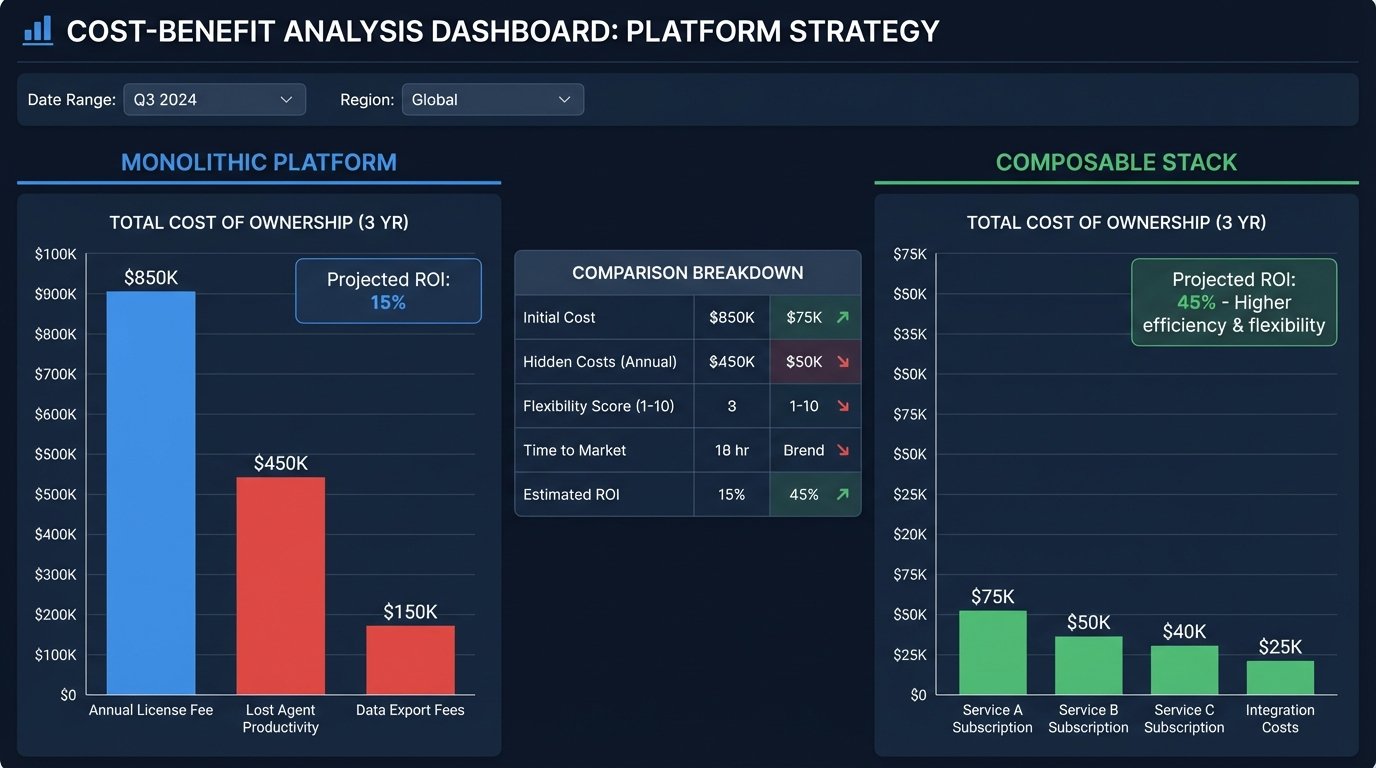
Building a composable stack requires more initial thought than signing a single check. It demands a technical strategy. The payoff is a resilient, scalable, and high-performance system that provides a genuine competitive advantage. You are not beholden to a single vendor’s vision. You build your own.
The all-in-one platform is a shortcut that leads to a dead end. The future of real estate technology is not a walled garden. It is a connected ecosystem of powerful, specialized services that you control.