
Stop Reading the Marketing Slicks. Let’s Talk Technical Debt.
Return on investment isn’t calculated from a vendor’s PDF. It’s calculated in the late-night commits required to patch a leaky API and the cloud computing bill that follows. The sales team promises a turnkey solution. The engineering team gets a poorly documented endpoint and a mandate to “make it work.” The real cost of any real estate tech platform is the engineering effort required to force it into your existing stack.
Forget the buzzwords. We are going to deconstruct the actual points of failure and resource drains you must evaluate before signing any contract. This is about architectural soundness, not feature lists.
1. Baseline the Manual Failure Rate First
Before you evaluate any new tool, you must have a hard metric for the problem you are trying to solve. “Saving time” is a meaningless project goal. “Reducing manual data entry errors from 3% to 0.5%” is a concrete engineering target. Pull the logs. Check the support tickets. Quantify the exact cost of the current human-driven process, measured in hours spent by developers debugging bad data.
The new system’s ROI begins here. Its value is its ability to reduce that specific, measured error rate and the associated support load. If it can’t, it’s just a more expensive way to have the same old problems.
2. Vet the API, Not the Salesperson
The quality of a platform lives and dies by its API. Get sandbox credentials before any money changes hands and perform a technical stress test. Your primary concerns are not the “features,” but the mechanical realities of data transfer. Check the authentication method. If they are still using basic API keys instead of OAuth 2.0, question their entire security posture.
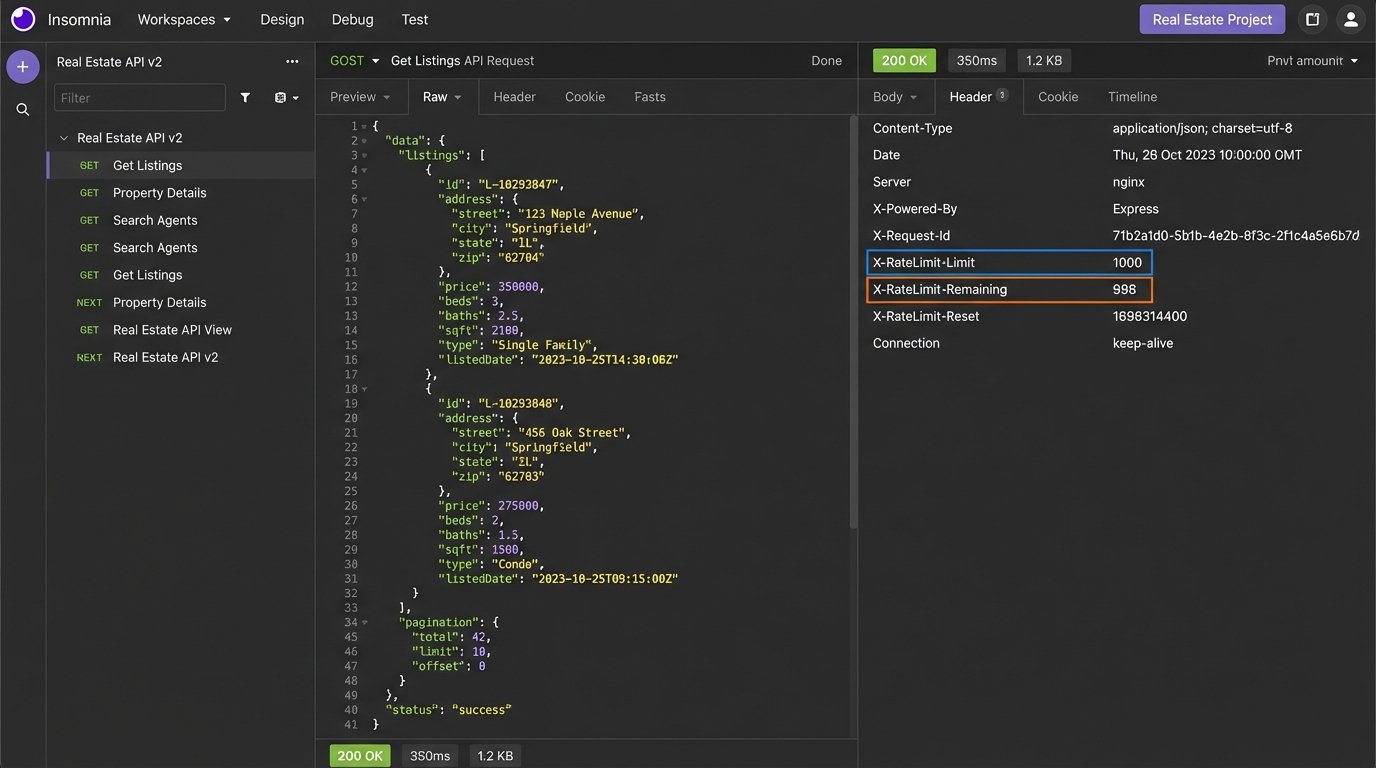
Next, find the rate limits. Hunt for them in the documentation. If you can’t find them, that’s a massive red flag. A platform that doesn’t publish its rate limits is a platform that isn’t built for high-volume, automated workflows. You will hit an invisible wall during your first major data sync, and their support team will tell you it’s “by design.”
3. The Hidden Hell of Data Normalization
Real estate data is a chaotic mess. An MLS feed from one association will have fundamentally different field names and data types than another. One will use `Bdrms`, another `BedroomsTotal`. One provides `list_price` as an integer, another as a formatted string with a dollar sign. The new tech platform doesn’t solve this. It just gives you another source of inconsistent data to wrangle.
Your job becomes building a resilient data mapping and transformation layer. This is where the majority of the integration project’s time is spent. You are essentially building a universal adapter to force all incoming data into your system’s rigid schema. Trying to unify a dozen different data feeds is like trying to plumb a house with parts from three different hardware stores in two different countries. Nothing fits without force and custom fabrication.
Here is a simplified look at what you get from two different property APIs for the exact same attribute.
    // Source A (MLS Feed)

    {

      "listing_id": "AB-12345",

      "property_details": {

        "beds": 4,

        "baths_full": 3,

        "sq_ft": "2,100"

      }

    }
// Source B (CRM API)
{
"internalRef": "prop_9876",
"bedrooms": "4.0",
"bathrooms": 3,
"livingArea": 2100
}
Notice the data types. `sq_ft` is a string with a comma. `bedrooms` is a string representation of a float. Your code has to anticipate and sanitize all of it. This is the real work, and it has nothing to do with the vendor’s platform.
4. Architect for Endpoint Failure
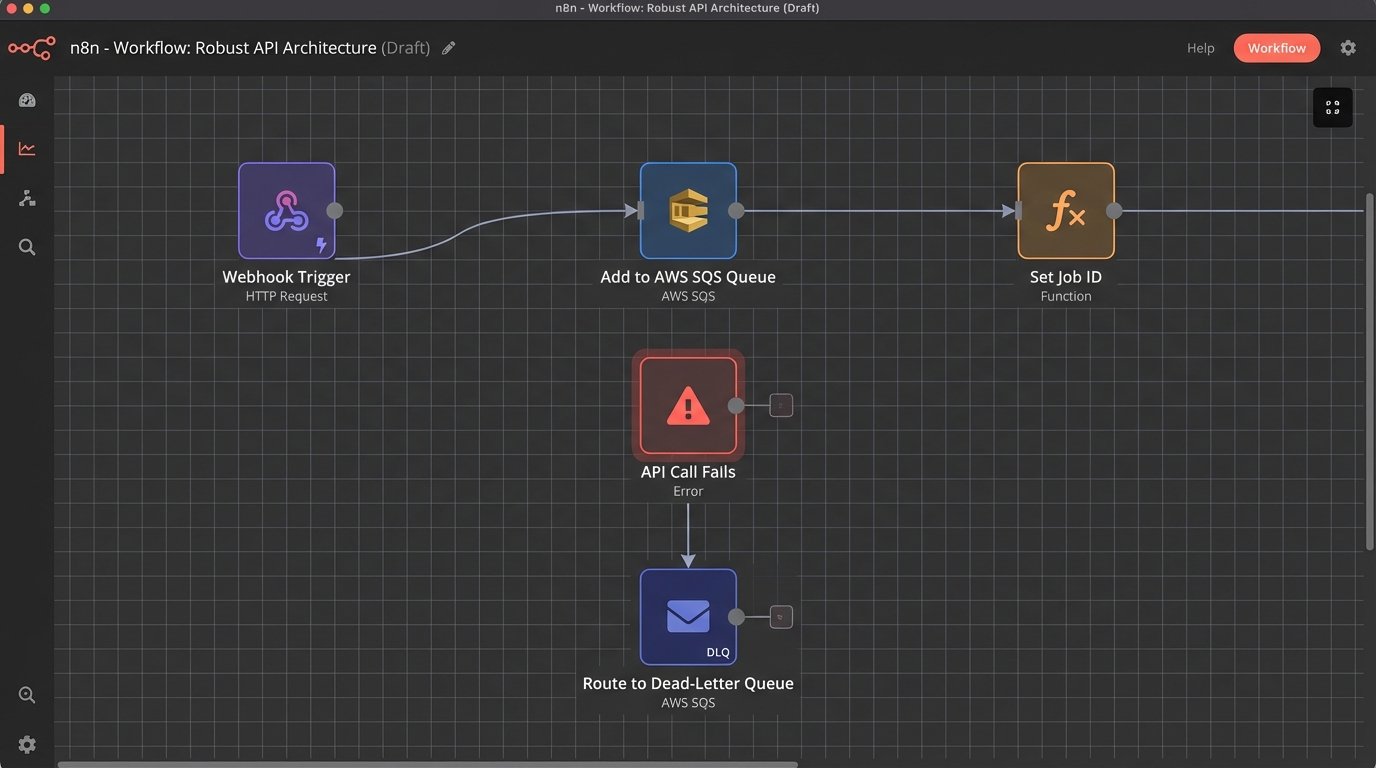
The vendor’s service will go down. It’s not a possibility. It’s a certainty. A direct, synchronous call to a third-party API in your critical path is an architectural liability. If their server hangs, your application hangs. This is unacceptable for any serious operation.
Decouple your ingestion process from the vendor’s uptime. The standard pattern is to use a message queue. When you need to fetch data, your application posts a job to a queue like AWS SQS or RabbitMQ. A separate fleet of workers pulls jobs from that queue and makes the actual API calls. If the vendor API is down, the job fails, gets sent to a dead-letter queue, and can be retried later based on a backoff algorithm. Your core application never even notices the outage.
This isolates your system from their instability. Your uptime is no longer chained to theirs.
5. Model the Cloud Consumption Cost
The license fee for the new tech is just the entry price. The real operational expense is the cloud infrastructure required to support it. A “real-time” data feed that dumps 100,000 property updates an hour into your system isn’t cheap to process. You need to map the entire data lifecycle and attach a price tag to each step.
- Ingestion: How many API calls? What is the data transfer cost from their server to your VPC?
- Processing: Are you using Lambda functions or EC2 instances to normalize the data? Calculate the cost of CPU cycles and memory per million records.
- Storage: Where does the cleaned data land? An S3 bucket? A PostgreSQL database? A DynamoDB table? Each has a different cost profile for writes and reads.
A tool that looks cheap on the contract can become a wallet-drainer once you calculate the AWS bill to actually make it functional. Model this before you sign. A simple pricing calculator exercise can expose a solution that is financially untenable at scale.
6. Beware the “All-in-One” Platform
Vendors love to sell monolithic platforms that claim to solve everything from CRM to transaction management. From an engineering perspective, these are often traps. They create extreme vendor lock-in. Migrating data out of a proprietary, closed system is a nightmare intentionally designed to keep you paying their subscription fees.
A better architecture is often a constellation of best-in-class tools that do one thing well, bridged together by a stable integration layer that you control. Use a dedicated CRM. Use a dedicated document management system. Control the flow of data between them. This approach requires more upfront architectural work but gives you the flexibility to swap out any single component without having to rebuild your entire operation.
If a vendor’s platform doesn’t have a well-documented, comprehensive export API, walk away. They are building a prison, not a platform.
7. Validate the Security Model, Not Just the Features
A data breach originating from a third-party vendor is still your fault. Your due diligence must include a security audit. How do they handle data at rest? Is it encrypted? How do they manage access controls? Do they support SSO and granular permissions, or is everyone a super-admin?
Request their SOC 2 report. Ask hard questions about their incident response plan. A tool with amazing features is worthless if its security posture is weak. The potential cost of a breach, both in fines and reputational damage, dwarfs any potential productivity gains. If their security team can’t answer your questions directly and confidently, it’s a massive indicator of their internal culture.
The technical evaluation of any software is a risk management exercise. The ROI calculation must include the potential cost of total failure.